
Quick Comparison: Carpenter Ant vs. Black Ant
- Size: Carpenter ants are usually much larger. Black ants are usually small household ants.
- Nesting: Carpenter ants nest in damp/softened wood. Black ants often nest in soil, wall voids, cracks, or other sheltered spaces.
- Activity: Carpenter ants forage at night. Many small black ants follow visible trails all day.
- Risk: Carpenter ants weaken wood by excavating galleries. Black ants don’t cause structural damage, they’re just a nuisance.
- Identification: Color alone is unreliable as some carpenter ants are black. Size, body shape, nesting location, and behavior provide better clues.
The Difference Between Carpenter Ants and Black Ants
At a glance, they look alike, especially as carpenter ants can be black. But their size, nesting habits, activity patterns, and potential property risks can differ considerably. Professional identification of the species is useful, especially to distinguish ants from termites, which cause much greater structural damage.
Carpenter Ant
Black Ant
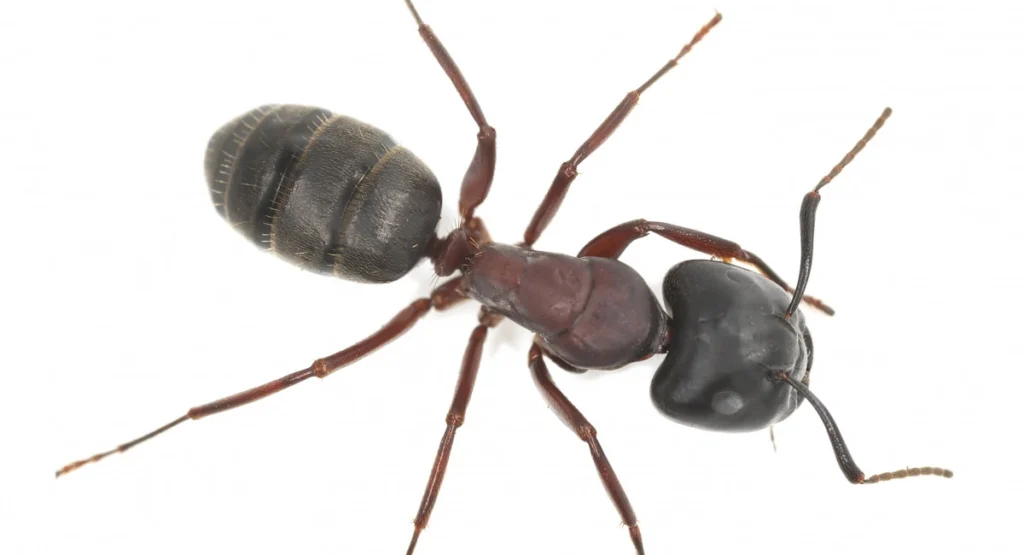
Carpenter ants are large and adaptable. They excavate nesting galleries in suitable materials. In Florida, they may stay active all year round.
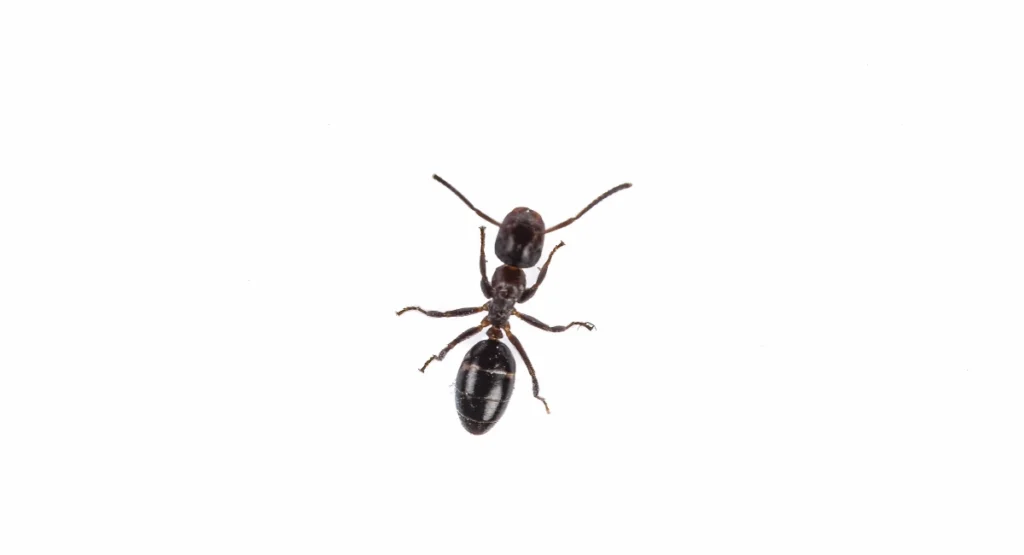
“Black ants” refers to several dark ant species. So color alone can’t confirm the species. “Black ants” are often smaller than carpenter ants, and are indoor nuisance pests.
Appearance:
Carpenter Ant Appearance:
Black, reddish-brown, or both. Medium/large with elbowed antennae, rounded thorax, and one visible waist node.
Appearance:
Black Ant Appearance:
Black or brown. Small, and slender, dark brown or black ants.
Habitat:
Carpenter Ant Habitat:
Moisture-affected wood, tree cavities, stumps, wall voids, attics, crawl spaces, and other protected areas.
Habitat:
Black Ant Habitat:
Soil, mulch, landscaping, foundation gaps, wall voids, cracks, and indoor areas near food or water.
Behavior:
Carpenter Ant Behavior:
Often forage at night for sweets, honeydew, insects, proteins, and moisture. Colonies may have satellite nests.
Behavior:
Black Ant Behavior:
Follow scent trails from colonies to food sources. Often seen around kitchens, break rooms, pantries, patios, and waste areas.
Risks:
Carpenter Ant Risks:
They don’t eat wood, but weaken it by excavating it to create galleries. May bite and squirt formic acid if threatened.
Risks:
Black Ant Risks:
Don’t usually damage structures. Can contaminate exposed food and create nuisance activity in homes/businesses.
Worried about pests? We are one call away.
Book your free inspection to get expert, local advice.
Signs of an Infestation
If you see repeated ant trails, ants emerging from cracks, and ant activity around food or moisture, then you probably have an infestation. Carpenter ants may also leave sawdust (frass) near nesting areas. Black ants usually create visible trails around kitchens, foundations, and entry points.

Signs of Carpenter Ants
If you see large ants at night, winged ants indoors, rustling sounds in walls, or small piles of sawdust (frass) near damp wood,: these are signs of carpenter ants.
Signs of Black Ants
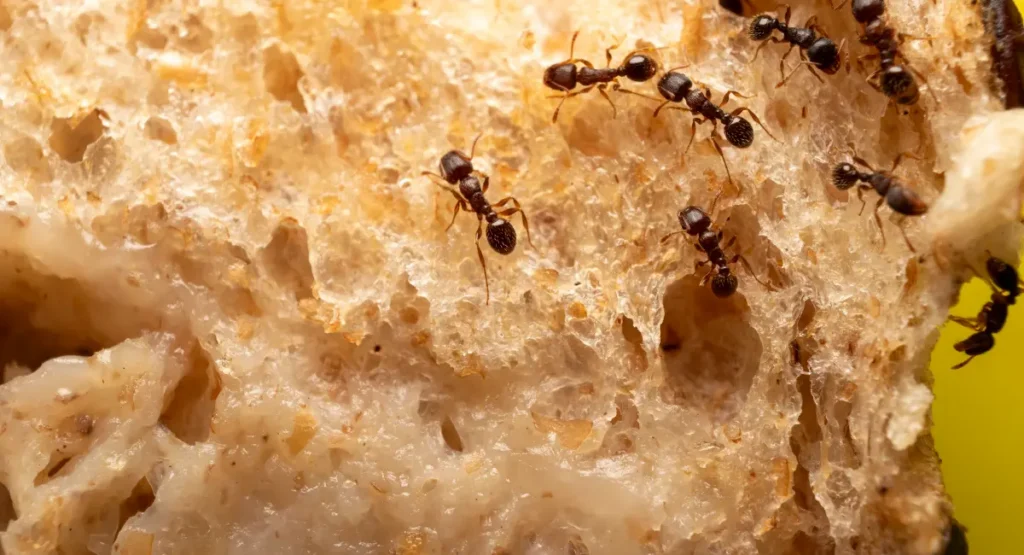
If you see repeated trails of small dark ants around food, sinks, pet bowls, windows, or foundation cracks, then you probably have a black ant infestation.
Prevention Tips
Follow these practical steps to help break the ant cycle:
- Control moisture: Repair leaks, improve ventilation, clear gutters, and correct drainage around the building.
- Remove nesting opportunities: Replace decayed wood, remove stumps and debris, and keep firewood away from exterior walls.
- Close entry points: Seal cracks around windows, doors, foundations, utility lines, pipes, and wall penetrations.
- Reduce food access: Clean spills and crumbs promptly, store food in sealed containers, manage trash, and keep kitchen and processing areas clean.
- Schedule inspections: Professional monitoring can identify nests, moisture problems, entry routes, and recurring activity before the issue escalates.
Frequently Asked Questions
Where Do Carpenter Ants and Black Ants Nest, and How Do Their Habitats Differ?
Carpenter ants often nest in damp or softened wood, trees, stumps, wall voids, attics, and crawl spaces. Black ants commonly nest in soil, mulch, cracks, wall voids, and sheltered spaces near food or moisture.
What Attracts Fleas and Ticks to My Home?
Fleas are drawn to warm resting areas used by pets and wildlife. Ticks are attracted to people and pets, plus they thrive where grass, brush, leaf litter, or wildlife activity creates shelter.
How Can I Spot the Signs of an Infestation?
Look for repeated trails, ants emerging from cracks, winged ants indoors, or activity that returns after cleaning. Sawdust (frass), rustling sounds, and ants around damp wood may point more to carpenter ants.
Which Pest Causes More Damage?
Carpenter ants cause more damage as they can excavate galleries in vulnerable wood. Black ants are usually just nuisance pests. But both types can contaminate exposed food and disrupt operations.
How Can I Manage and Prevent Carpenter Ants and Black Ants?
Start with inspection, sanitation, moisture control, exclusion, and removal of nesting conditions. Need help? Our Integrated Pest Management and targeted professional treatment can address the colony while reducing the chance of recurring activity.
What DIY Prevention Tips Can Homeowners Use?
Store food securely, repair leaks, clean trails, seal gaps, trim vegetation, and remove decaying wood. Avoid relying only on sprays for the ants you see: they won’t target the nest and they can disrupt effective baiting.
Carpenter Ant Control
Our professional ant control combines detailed inspection, nest tracking, moisture assessment, and targeted treatment. We also identify conditions that may support satellite colonies or recurring activity.
Black Ant Control
Our highly-trained expert technicians can identify entry points, food sources, trails, and likely nesting areas. We’ll then develop a practical treatment and monitoring plan for your home or Florida business.