
Quick Comparison: Carpenter Ants vs. Termites
- Carpenter ants tunnel through wood to nest; termites eat the wood itself, causing far more structural damage.
- Carpenter ants have a narrow, pinched waist and elbowed antennae; termites have a broad waist and straight, beaded antennae.
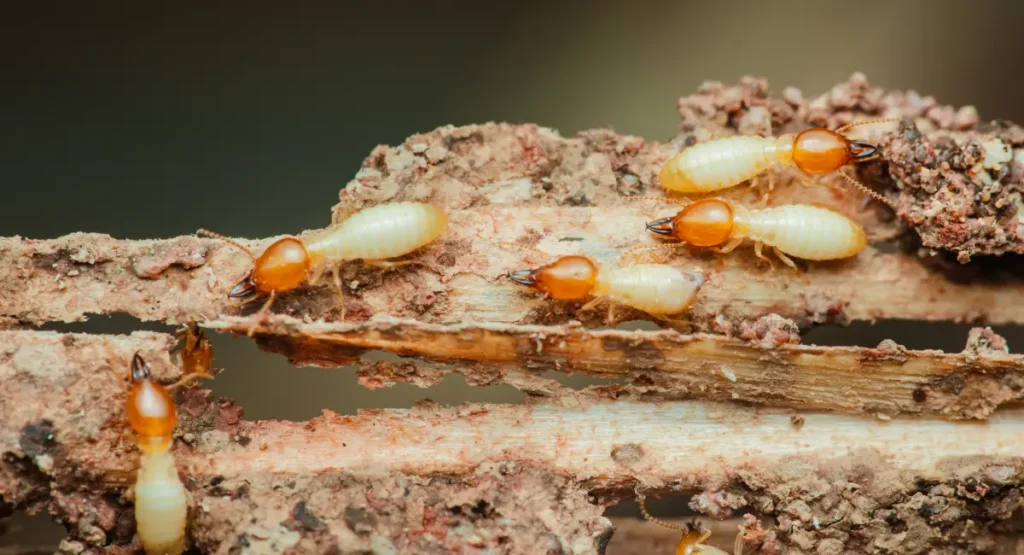
- Termites are typically pale or creamy white; carpenter ants are usually black or dark brown.
- Carpenter ants forage visibly for food; termites stay hidden and are rarely seen outside their tunnels.
- Both swarm during mating season, but termite swarmers leave equal-sized wings behind while ant wings are uneven in size.
- Termites are active year-round in Florida’s warm climate; carpenter ants tend to slow down in cooler conditions.
The Difference Between Carpenter Ants and Termites
Carpenter ants and termites both target wood and can cause serious damage to your home over time—but they’re very different insects. Here’s a closer look at each one so you know exactly what you’re up against.Here’s what sets them apart so you can identify what you’re dealing with and take the right steps.
Carpenter Ants
Termites

A large, wood-nesting ant that excavates tunnels to build its colony—and doesn't stop until you make it.
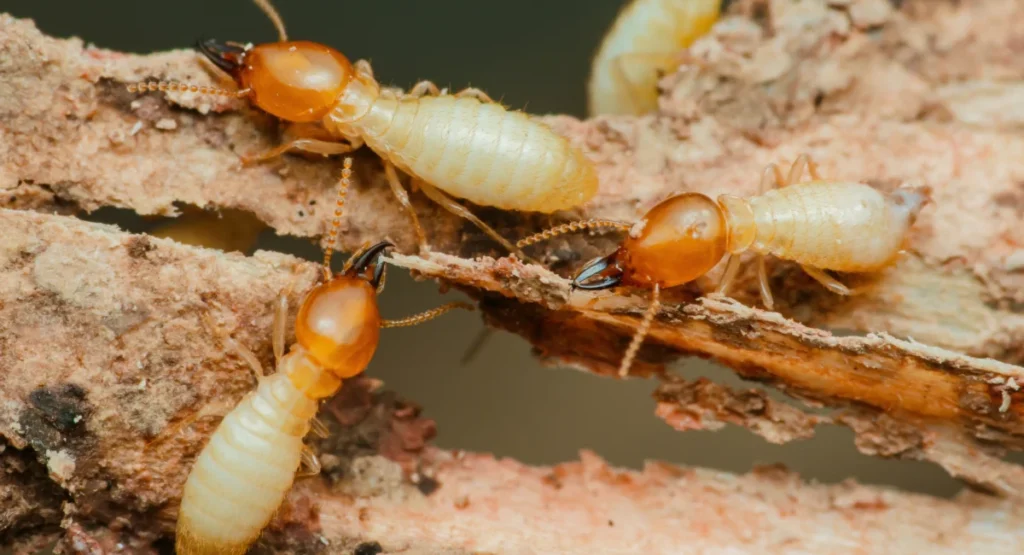
A hidden, wood-eating insect that works silently around the clock—often causing serious damage before anyone notices.
Appearance:
Carpenter Ant Appearance:
Large and black or dark brown with a narrow waist, elbowed antennae, and six legs.
Appearance:
Termite Appearance:
Small, pale to creamy white, with a broad waist, straight beaded antennae, and no visible constriction.
Habitat:
Carpenter Ant Habitat:
Moist or rotting wood in walls, rooflines, window frames, tree stumps, and decking.
Habitat:
Termite Habitat:
Soil, structural timber, wall cavities, and anywhere cellulose-based material is present.
Behavior:
Carpenter Ant Behavior:
Forage actively for food, pushing wood shavings and insect debris out of tunnel openings.
Behavior:
Termite Behavior:
Eat wood continuously from the inside out, traveling via mud tubes and rarely coming into the open.
Risks:
Carpenter Ant Risks:
Weaken wooden structures over time; large or long-established colonies can cause significant property damage.
Risks:
Termite Risks:
Responsible for billions in property damage annually; Florida's warm climate makes year-round activity a constant threat.
Worried About Pests? We Are One Call Away.
Book your free inspection to get expert, local advice.Signs of an Infestation
Both pests can go undetected for months—knowing the warning signs makes all the difference.


Signs of Carpenter Ants
Look for small piles of coarse sawdust mixed with insect parts near walls, windowsills, or baseboards. You may also spot the ants themselves foraging indoors, particularly at night. Hollow-sounding wood is another sign worth investigating.
Signs of Termites
Mud tubes running along foundation walls or wooden surfaces are a key indicator of subterranean termites. Look also for blistered or discolored wood, discarded wings near doors and windows after a swarm, and small dark pellet-like droppings near wooden structures.
Prevention Tips
Reducing moisture and limiting wood-to-ground contact goes a long way toward keeping both pests out of your home. Fix leaking pipes, gutters, and roof issues promptly, as both pests are drawn to damp or decaying wood. Keep firewood, lumber, and debris stored off the ground and away from exterior walls, and seal any cracks in your foundation, siding, or around utility entry points. Trim tree branches and shrubs that touch your roofline: these act as easy highways for carpenter ants. Replace water-damaged wood as soon as you spot it, and schedule an annual inspection to stay ahead of any problems before they take hold.
Frequently Asked Questions
How Do You Tell Carpenter Ants and Termites Apart?
Body shape is the easiest place to start. Carpenter ants have a narrow, pinched waist and elbowed antennae; termites are broader with straight, beaded antennae. Color helps too—carpenter ants are dark, termites are pale. During a swarm, check the wings: equal-length wings suggest termites, uneven wings point to ants.
Which One Causes More Damage to a Home?
Termites are generally the more destructive of the two. They eat wood continuously and can hollow out structural timber over months or years before any visible signs appear. Carpenter ants cause damage too, but more slowly. In Florida’s climate, either pest left untreated can result in costly repairs, so early action matters.
Are Carpenter Ants and Termites Dangerous to People?
Neither pest is considered a direct threat to human health. Carpenter ants can bite if handled, but bites are minor. Termites don’t bite or sting humans at all. The real danger from both is structural—what they do to your home’s woodwork over time rather than any risk to the people living there.
Can You Get Rid of Carpenter Ants or Termites Without a Professional?
DIY products can knock back visible activity temporarily, but they rarely address the colony at the source. Carpenter ant colonies often have satellite nests that are hard to locate without experience. Termite treatment requires specialist equipment and products. For either pest, professional treatment is almost always more effective and better value in the long run.
What's the Best Way to Prevent Both Pests?
Start with moisture control—fix leaks, improve drainage, and replace any water-damaged wood. Keep wood, mulch, and debris away from your foundation. Seal entry points and schedule regular inspections. In Florida especially, termite pressure is year-round, so prevention isn’t a one-time job; it’s an ongoing part of looking after your home.
Carpenter Ant Control
Dealing with carpenter ants in your Florida home? Don’t wait for the damage to get worse. Contact Florida Pest today and let our team track down the colony and put a stop to it.
Termite Control
Termites are a year-round threat in Florida—and the longer they go undetected, the more they cost. Reach out to Florida Pest for a professional inspection and targeted treatment plan built around your home.