
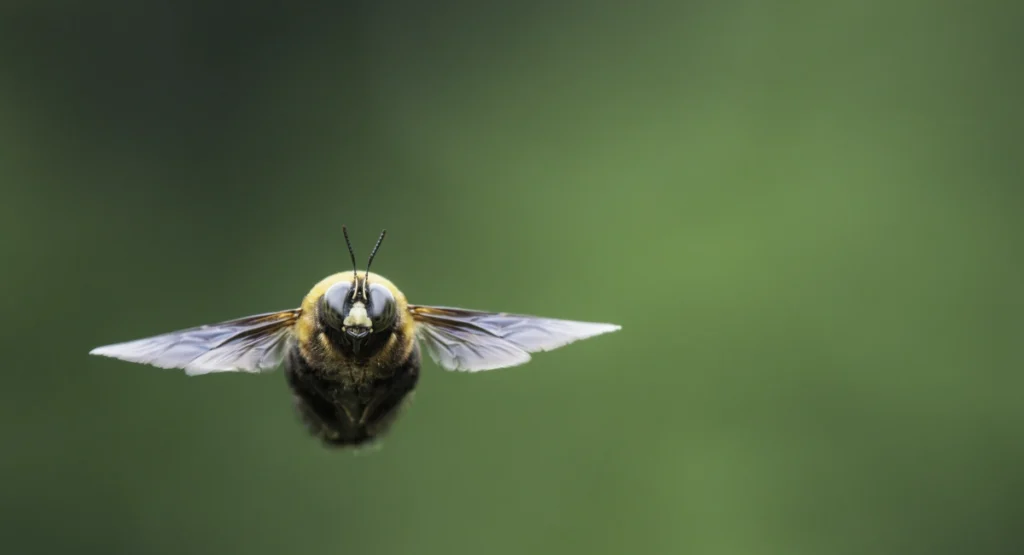
Quick Comparison: Carpenter Bees vs. Bumblebees
- Carpenter bees have a shiny, bare abdomen; bumblebees are fully fuzzy with dense yellow and black banding.
- Carpenter bees drill into bare wood to nest; bumblebees nest underground or in dense grass and leaf piles.
- Bumblebees live in colonies; carpenter bees are largely solitary and nest in small, self-made tunnels.
- Carpenter bees cause direct structural damage to wooden surfaces; bumblebees pose little to no property risk.
- Female carpenter bees can sting but rarely do; bumblebees will sting repeatedly if their nest feels threatened.
- Both are active pollinators in Florida’s warm climate, though carpenter bees are present and active year-round.
- Both types of bee can sting multiple times. Unlike honeybees, they don’t die after stinging.
The Difference Between Carpenter Bees and Bumblebees
Carpenter bees and bumblebees are often mistaken for each other, but they behave very differently, and only one of them can cause real damage to your home. Here’s a closer look at each.
Carpenter Bees
Bumblebees
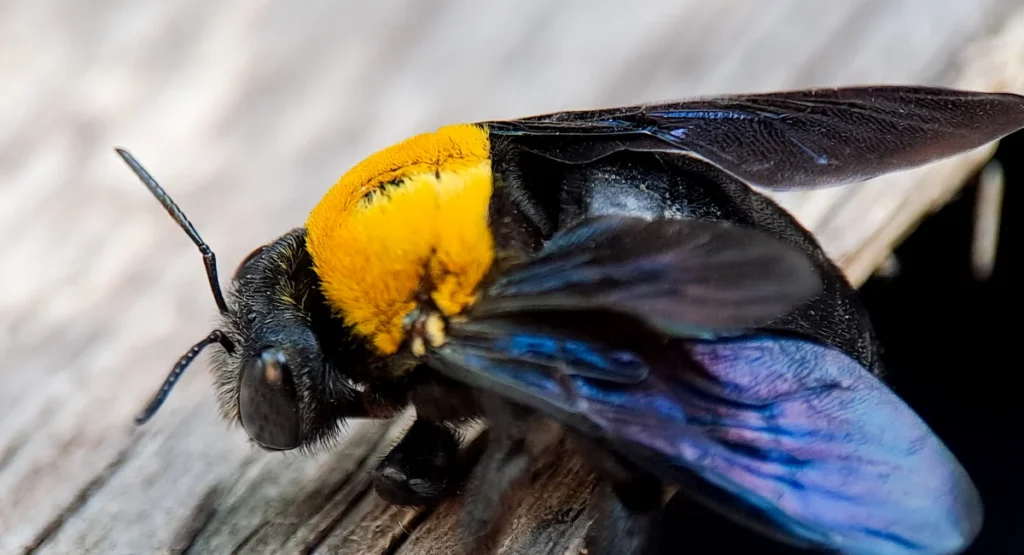
A solitary wood-boring bee that drills into timber to lay eggs, leaving behind damage that adds up fast.
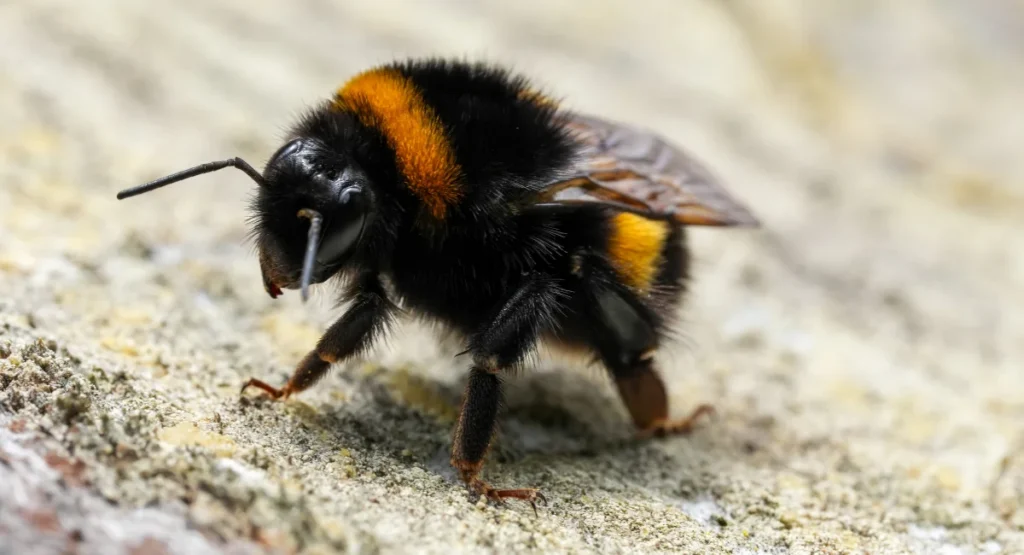
A fuzzy, colony-forming bee that's a vital pollinator—but one that will defend its nest if disturbed.
Appearance:
Carpenter Bee Appearance:
Large and robust with a shiny, hairless black abdomen and yellow thorax.
Appearance:
Bumblebee Appearance:
Round and densely hairy with bold yellow and black banding across the whole body.
Habitat:
Carpenter Bee Habitat:
Bare or weathered wood including decking, eaves, fascia boards, and wooden furniture.
Habitat:
Bumblebee Habitat:
Underground burrows, compost heaps, thick grass, and sheltered spots like garden sheds.
Behavior:
Carpenter Bee Behavior:
Females drill near-perfect round holes to create egg chambers; males hover and guard but can't sting.
Behavior:
Bumblebee Behavior:
Social insects that live in seasonal colonies, foraging actively and returning to a shared nest.
Risks:
Carpenter Bee Risks:
Repeated nesting weakens wooden structures; woodpeckers may worsen damage searching for larvae inside.
Risks:
Bumblebee Risks:
Unlikely to sting unprovoked, but will defend the nest aggressively if they sense a threat.
Signs of an Infestation
Spotting the signs early gives you a better chance of dealing with either bee before problems get worse.
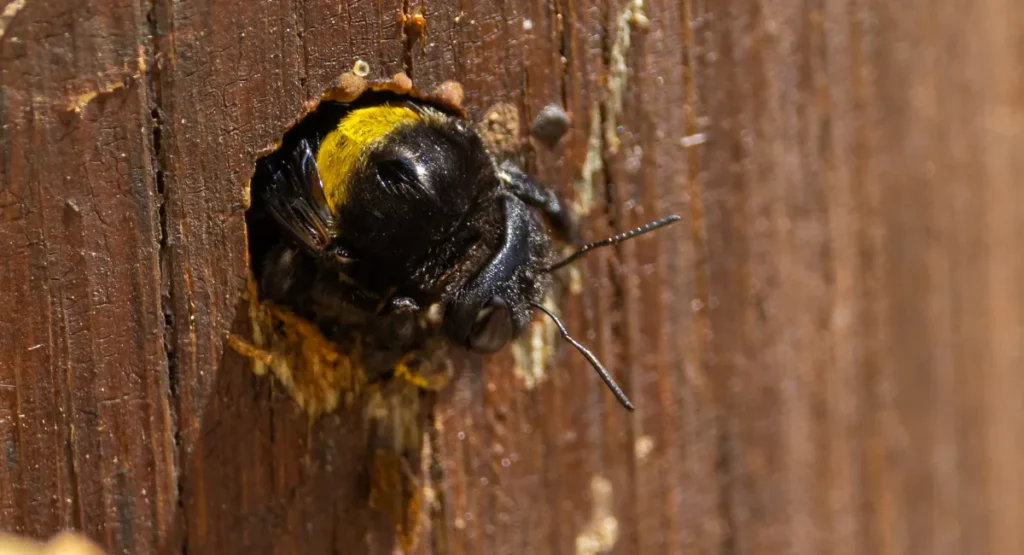
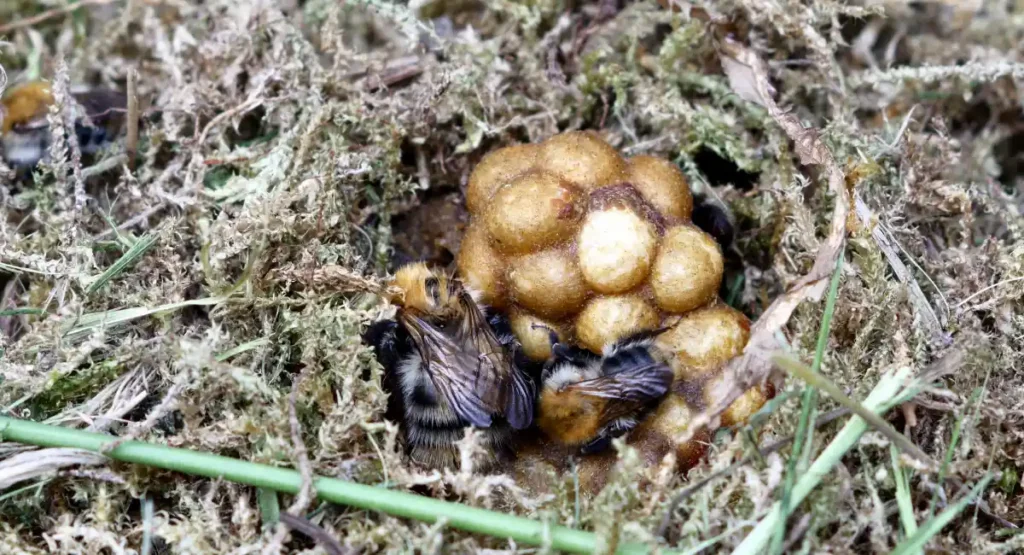
Signs of Carpenter Bees
Look for perfectly round holes about half an inch wide in wooden surfaces, accompanied by a trail of coarse sawdust below. You may also notice yellow staining around entry points from pollen and waste, and hovering male bees guarding the area around tunnel openings.
Signs of Bumblebees
A steady stream of bees entering and leaving a point at ground level or under a garden structure is a strong indicator. You may hear a low hum from a hidden nest, and seeing large numbers of bees in one area of your yard is worth investigating before nest activity picks up.
Prevention Tips
A few simple steps around your home can make it far less appealing to both carpenter bees and bumblebees.
- Paint or stain all exposed wood surfaces—carpenter bees strongly prefer bare, untreated timber.
- Fill any existing holes or cracks in wooden structures before new nesting season begins in spring.
- Keep decking, eaves, and fascia boards in good repair—damaged wood is the easiest target.
- Clear away dense ground cover, leaf piles, and compost close to the house to reduce bumblebee nesting spots.
- Check sheds, garden furniture, and wooden fencing regularly for signs of drilling or hovering activity.
- Seal gaps around the base of structures where bumblebees might establish an underground colony.
Frequently Asked Questions
Do Carpenter Bees and Bumblebees Sting?
Female carpenter bees can sting but rarely do so unless directly handled. Male carpenter bees can’t sting at all, despite their territorial hovering. Bumblebees can sting multiple times and are more likely to do so if they feel their colony is under threat—so avoid disturbing a nest.
How Do You Tell Carpenter Bees and Bumblebees Apart?
The easiest tell is the abdomen. Carpenter bees have a smooth, shiny black abdomen, while bumblebees are fully covered in dense, fuzzy hair with bold yellow and black bands. Size is similar, so look at the body texture and markings rather than overall shape.
Which One Is More Dangerous?
It depends what you mean by dangerous. Bumblebees are more likely to sting if their nest is disturbed and will do so repeatedly. Carpenter bees are less aggressive but cause genuine structural damage to your home over time. In terms of property risk, carpenter bees are the bigger concern.
What's the Best Way to Prevent Carpenter Bees?
Painting or staining exposed wood is the most effective deterrent, since carpenter bees target bare timber. Fill old holes and keep wooden surfaces maintained. If you’ve had carpenter bees before, inspect the same spots each spring—they tend to return to familiar nesting sites year after year.
Should I Remove a Bumblebee Nest Myself?
It’s best not to. Bumblebees will defend their nest if they feel threatened, and disturbing one without the right protective equipment puts you at real risk of stings. A pest professional can assess the nest safely and advise on the most appropriate course of action for your situation.
Bee Control
Are you having problems with bees on your property? Don’t risk disturbing them yourself. Contact Florida Pest Control for safe, professional advice and solutions tailored to your home and yard.