
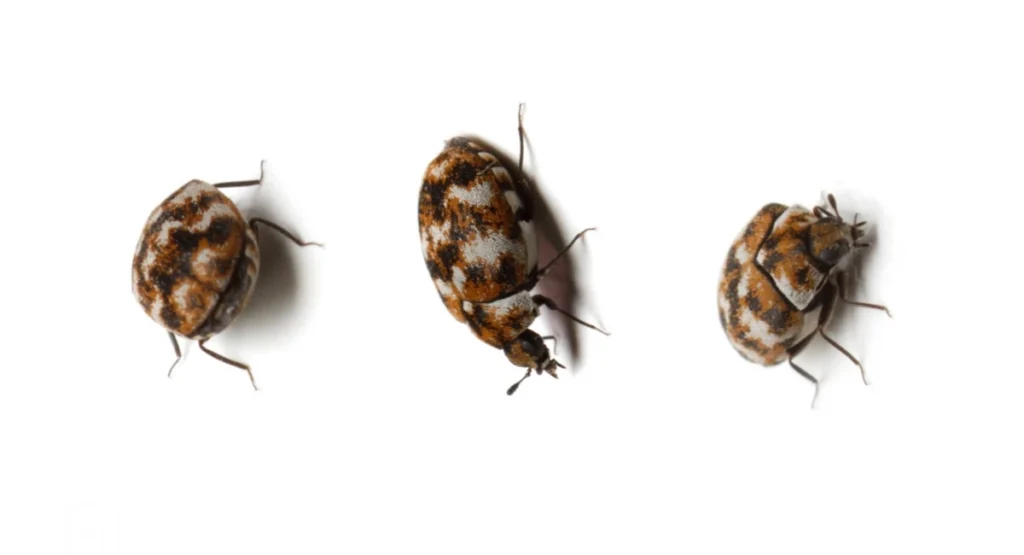
Quick Comparison: Carpet Beetles vs. Bed Bugs
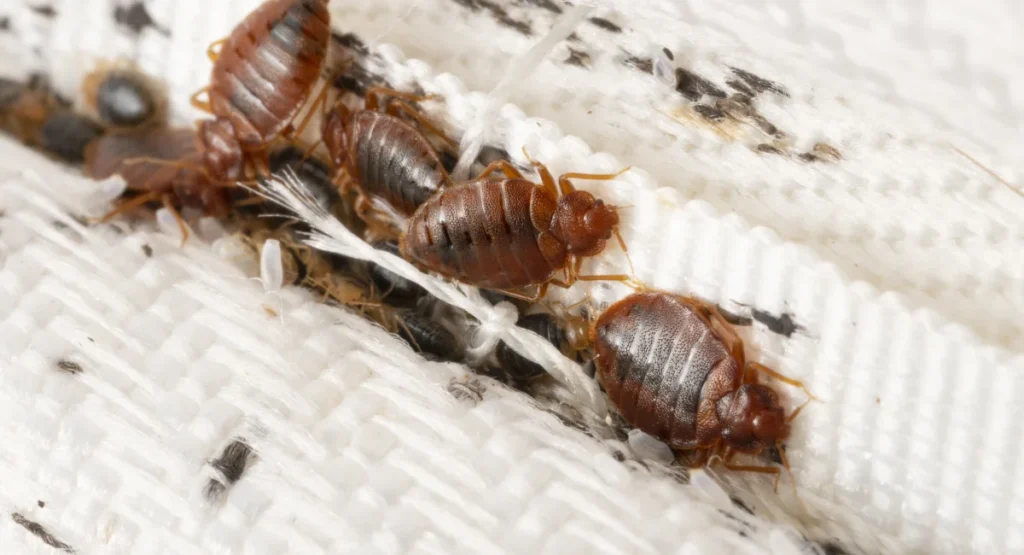
- Body: Carpet beetles are small and rounded, with hard wing covers. Bed bugs are flat, oval, and broad, like tiny apple seeds.
- Color: Carpet beetles are mottled black, white, brown, yellow, or orange. Bed bugs are reddish-brown and look darker after feeding.
- Diet: Carpet beetle larvae feed on wool, silk, feathers, leather, pet hair, and other animal materials. Bed bugs feed on blood.
- Hiding places: Carpet beetles hide in closets, under rugs, stored fabrics, and quiet corners. Bed bugs stay near sleeping/resting areas.
- Main Concern: Carpet beetles damage belongings. Bed bugs cause itchy bites, restless sleep, and disruptions for people.
The Difference Between Carpet Beetles and Bed Bugs
These pests may look similar, but they have some distinct physical and behavioral differences that help to tell them apart.
Carpet Beetles
Bed Bugs
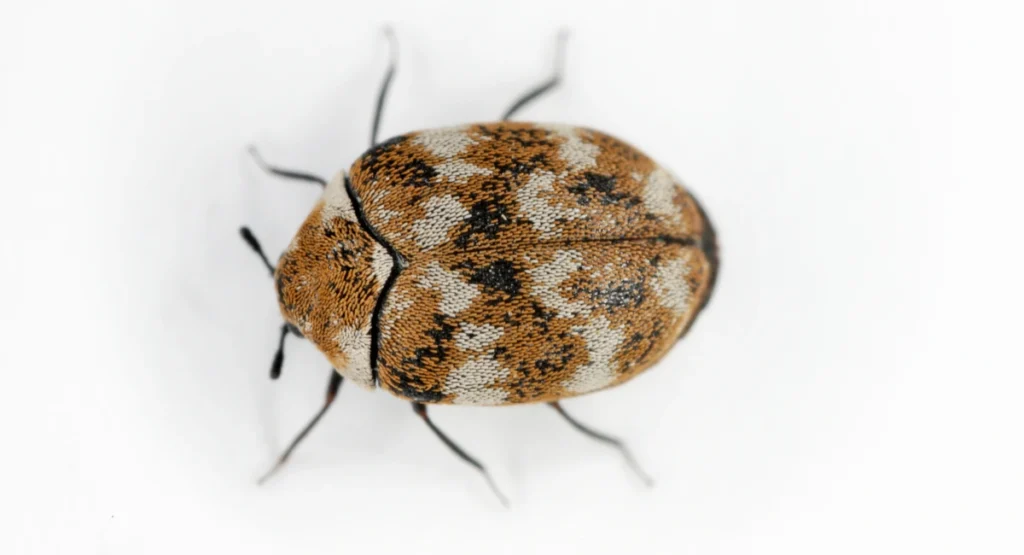
Carpet beetles are small beetles whose larvae feed on animal-based fibers and organic debris inside buildings.
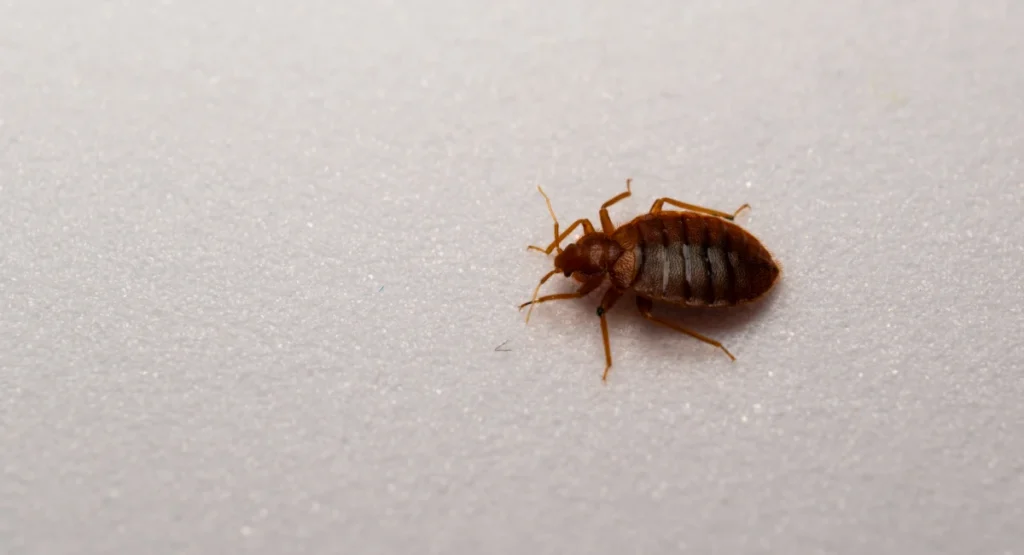
Bed bugs are blood-feeding insects that hide near people and emerge to feed, often when hosts are resting.
Appearance:
Carpet Beetles Appearance:
Adults are round, hard-shelled, and often mottled. Larvae are elongated, fuzzy, or bristly.
Appearance:
Bed Bugs Appearance:
Flat, oval, wingless, and reddish-brown as adults. Young nymphs are smaller and paler.
Habitat:
Carpet Beetles Habitat:
Found in closets, under rugs, upholstered furniture, vents, attics, and stored items.
Habitat:
Bed Bugs Habitat:
Found in mattress seams, bed frames, couches, chairs, baseboards, luggage, and wall cracks.
Behavior:
Carpet Beetles Behavior:
Adults may enter through openings and seek pollen outdoors. Larvae stay hidden while feeding.
Behavior:
Bed Bugs Behavior:
Usually active at night and can hitchhike on bags, furniture, linens, and personal items.
Risks:
Carpet Beetles Risks:
Larvae can create holes and thinning areas in natural fabrics. Their hair may irritate sensitive skin.
Risks:
Bed Bugs Risks:
Bites can cause itching and skin irritation. Not known to spread disease, but infestations can affect sleep and well-being.
Worried about pests? We are one call away.
Book your free inspection to get expert, local advice.
Signs of an Infestation
The evidence around your home or facility can reveal if you have fabric-feeding carpet beetles or blood-feeding bed bugs. Look closely at the location and type of damage before deciding which one you’re dealing with.
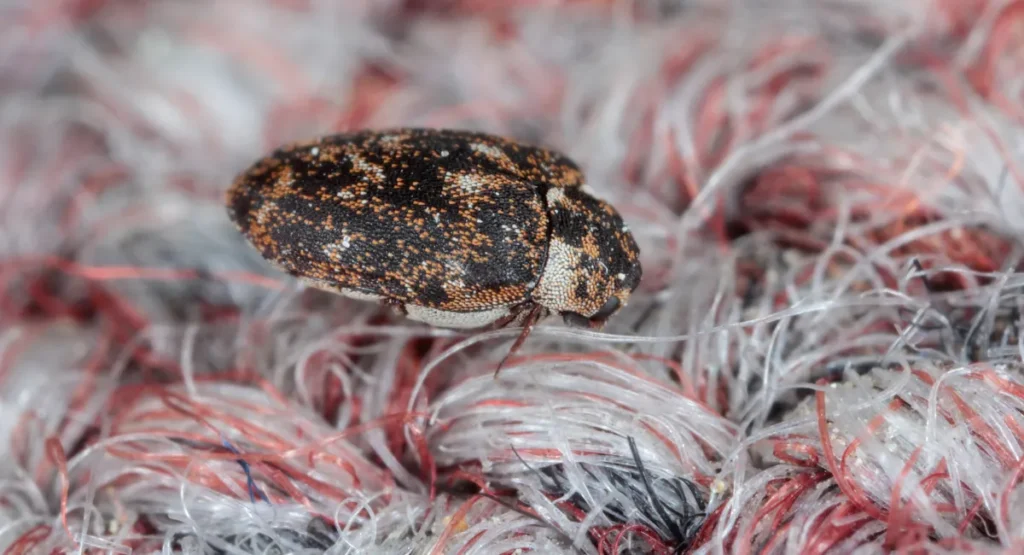
Signs of Carpet Beetles
Look for small holes in wool, silk, fur, leather, or feather-filled items. You may also find fuzzy larvae, shed skins, or tiny beetles around rugs, closets, vents, stored clothing, and upholstered furniture.
Signs of Bed Bugs
Watch for live bugs, pale shed skins, tiny dark spotting, or rusty stains on bedding and mattresses. Repeated itchy bites after sleeping may also signal bed bug activity, although bites alone can’t confirm an infestation.
Prevention Tips
- Both pests can return if there are sufficient hiding places, food sources, or entry points. Once inside, they can be difficult to eradicate without professional treatment. The following tips can help to prevent an infestation in the first place. Vacuum rugs, baseboards, closets, upholstered furniture, and storage areas regularly. Dispose of vacuum contents outside right away.
- Wash and dry linens, clothing, and fabrics. High dryer heat can help address bed bugs on washable items.
- Inspect secondhand furniture, mattresses, luggage, and donated textiles before bringing them indoors.
- Store wool, silk, leather, seasonal clothing, and other vulnerable items in clean, sealed containers.
- Schedule professional inspections if you spot damage, bites, or recurring signs of pests.
Frequently Asked Questions
Where Do Carpet Beetles and Bed Bugs Nest, and How Do Their Habitats Differ?
Carpet beetle larvae hide in natural fibers and debris, including closets, rugs, vents, and storage areas. Bed bugs hide near people: around beds, furniture, and cracks near sleeping spaces.
What Attracts Carpet Beetles and Bed Bugs
Carpet beetles are drawn to animal-based fibers, lint, pet hair, dead insects, and stored foods. Bed bugs usually arrive by hitchhiking on luggage, furniture, linens, or personal belongings.
How Can I Spot the Signs of an Infestation?
Carpet beetles leave fabric damage, shed larval skins, and fuzzy larvae. Bed bugs may leave dark spots, shed skins, bloodstains, and bite marks near mattresses, furniture, or other resting areas.
Which Pest Causes More Damage?
Carpet beetles can damage fabrics, textiles, and stored belongings. Bed bugs do not damage structures or fabrics, but bites, sleeplessness, guest concerns, and reputational risk can be disruptive.
How Can I Manage and Prevent Carpet Beetles and Bed Bugs?
Start with accurate identification, thorough cleaning, reducing clutter, and regular monitoring. Expert, local technicians can build an IPM plan that targets the pest’s hiding places and reduces conditions that support future activity.
What DIY Prevention Tips Can Homeowners Use?
Vacuum frequently, inspect secondhand items, store natural-fiber goods in sealed containers, and reduce clutter near beds and closets. If you find signs of bed bugs, avoid moving items between rooms, as this can spread the infestation.
Carpet Beetle Control
Our expert, local technicians identify the source of carpet beetle activity and inspect the areas where larvae feed and hide. We help build a targeted control plan that protects vulnerable belongings and supports long-term prevention.
Bed Bug Control
Our highly-trained experts will inspect sleeping areas, furniture, and nearby hiding places to confirm bed bug activity. We provide discreet treatment and monitoring, to help restore comfort and confidence in your home or facility.