
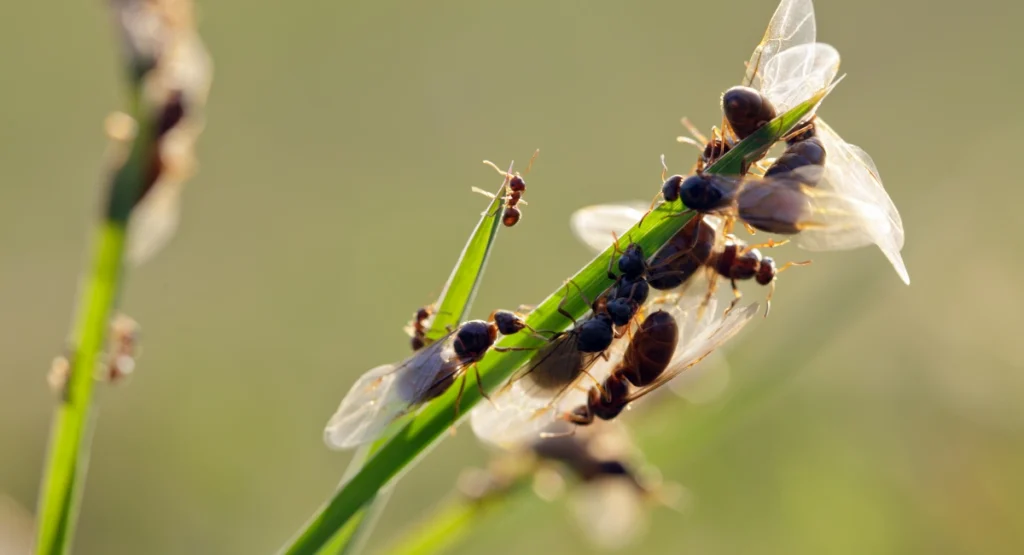
Quick Comparison: Flying Ants vs Termites
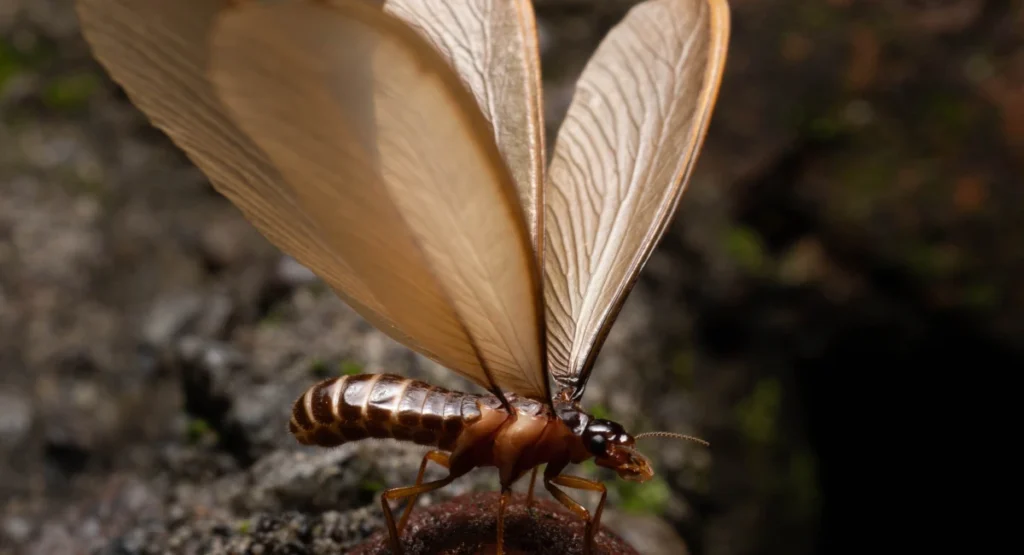
- Waist: Flying ants have a pinched, hourglass-shaped waist. Termites have a straight, uniform body with no defined waist.
- Antennae: Ant antennae are bent or “elbowed.” Termite antennae are straight and beaded.
- Wings: A flying ant’s front wings are longer than its back wings. A termite’s four wings are all equal in length and often shed in piles.
- Color: Flying ants are typically dark brown to black. Termites are usually pale, translucent, or light tan.
- Threat level: Flying ants are just annoying. Termites can cause serious, costly structural damage to your home.
The Difference Between Flying Ants and Termites
At a glance, flying ants and termites look nearly identical. Both also swarm in warm, humid weather and sprout wings, but there are also key differences that help tell them apart.
Flying Ants
Termites
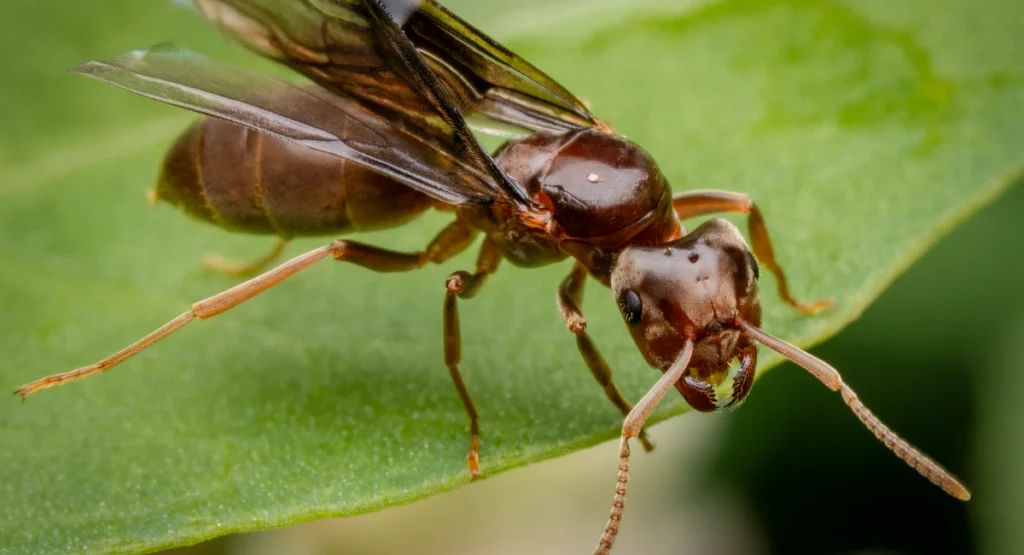
Flying ants are the winged, reproductive members of an ant colony, emerging in swarms after rain to mate and start new colonies.
Termites are wood-destroying insects that can also fly and live in large colonies. Sometimes known as ‘white ants’, they are closely related to cockroaches.
Appearance:
Flying Ant Appearance:
Dark body, pinched waist, elbowed antennae, front wings larger than back.
Appearance:
Termite Appearance:
Pale, straight, waistless body, straight antennae, four equal wings.
Habitat:
Flying Ant Habitat:
Nest in soil, wood, mulch, and foundations.
Habitat:
Termite Habitat:
Live in soil or wood, thriving in Florida's warmth.
Behavior:
Flying Ant Behavior:
Swarm, shed wings, and forage for food.
Behavior:
Termite Behavior:
Feed on cellulose, build mud tubes, and shed wings.
Risks:
Flying Ant Risks:
Mostly a nuisance; carpenter ants may damage damp wood.
Risks:
Termite Risks:
Highly destructive, causing costly structural damage.
Worried About Pests? We Are One Call Away.
Book your free inspection to get expert, local advice.
Signs of an Infestation
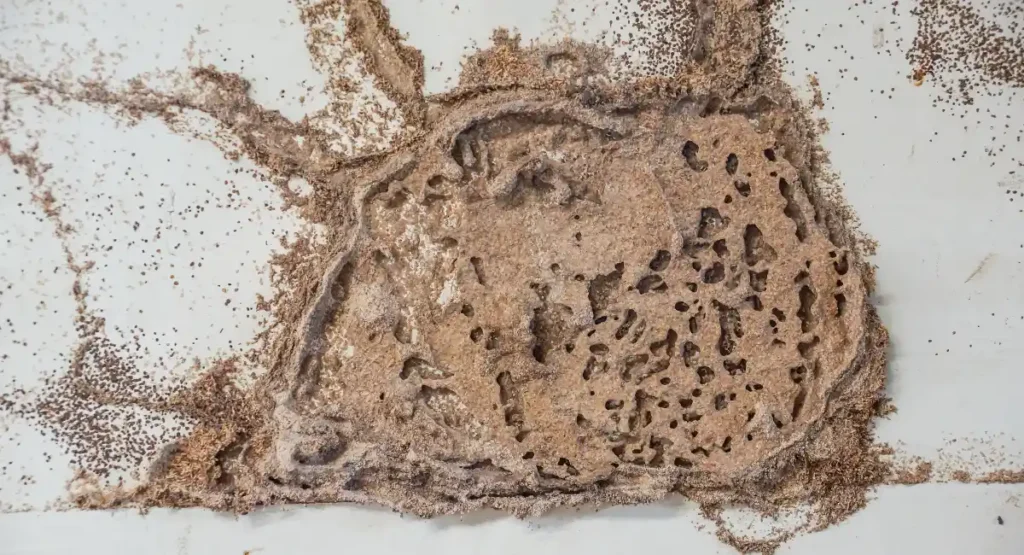
The warning signs can help determine whether you’re dealing with a temporary flying ant swarm or a more complex termite colony that is gradually hollowing out your walls, beams, and floors.
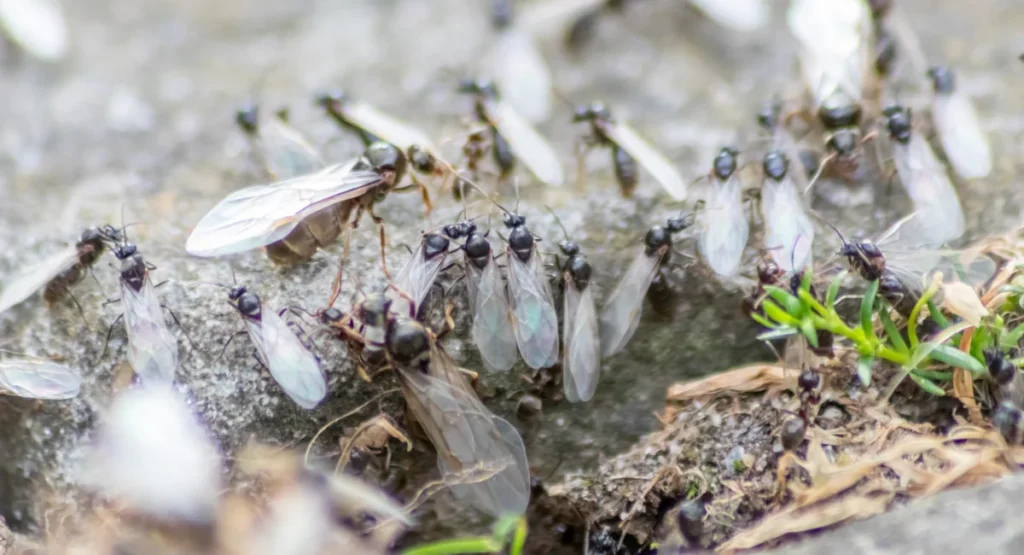
Signs of Flying Ants
Discarded wings of unequal size and trails of ants foraging around kitchens, pantries, or entry points are obvious signs. With carpenter ants, you may also spot piles of coarse wood shavings pushed out of their nesting galleries.
Signs of Termites
Mud tubes running along your foundation or walls, wood that sounds hollow when tapped, and tiny pinholes in drywall. Other red flags include buckling paint, sagging or squeaky floors, small piles of pellet-like droppings (frass), and shed wings that are all equal in size.
Prevention Tips
If you have either flying ants or termites on your property, there’s a good chance you’ll be seeing them year after year without treatment or precautions. Flying ants may only keep their wings for a few days or up to a month, but the nest lives on, while termite colonies can remain in a fixed location for their entire life. These tips can help break the cycle:
- Eliminate excess moisture by fixing leaks, clearing gutters, and improving drainage around your foundation.
- Keep firewood, mulch, and wood debris well away from your exterior walls, and maintain a gap between soil and any wooden structures.
- Seal cracks around windows, doors, and utility lines, and trim back vegetation touching the house.
- Store food in sealed containers and keep kitchens clean to avoid attracting foraging ants.
- Schedule regular professional inspections. Early detection is the most reliable defense against a full-blown infestation.
Frequently Asked Questions
Where Do Flying Ants and Termites Nest, and How Do Their Habitats Differ?
Flying ants nest in soil, rotting wood, mulch, and wall voids, often moving indoors for food. Termites differ by type: subterranean termites nest in soil and reach wood via mud tubes, while drywood termites live inside the wood itself. Florida’s heat and humidity suit both.
What Attracts Flying Ants and Termites to My Home?
Flying ants are drawn to sugary and greasy foods, usually making a beeline for kitchens and pantries. Termites feed exclusively on cellulose found in wood, paper, and cardboard. Moisture attracts both, so leaks, damp wood, and poor drainage are common invitations into your property.
How Can I Spot the Signs of an Infestation?
For flying ants, look for indoor swarms near lights, unequal-sized shed wings, and foraging trails. Termites leave mud tubes, hollow-sounding wood, drywall pinholes, pellet-like droppings (frass), and piles of equal-sized wings. A sudden indoor swarm signals an active colony nearby.
Which Pest Causes More Damage?
Termites are far more destructive. They feed continuously on structural wood, often causing thousands of dollars in damage before being noticed. Flying ants are mainly just irritating, and although carpenter ants can tunnel through damp wood, they don’t consume it. Termites almost always demand more urgent action, so it’s worth contacting professional termite exterminators at the first sign of activity.
How Can I Manage and Prevent Flying Ants and Termites?
Professional inspection and treatment are the most reliable ways to eliminate infestations and protect your home. Technicians identify the species, locate the source, and apply targeted treatments. Regular inspections catch problems early, before minor issues turn into costly major damage.
What DIY Prevention Tips Can Homeowners Use?
Fix leaks and improve drainage to reduce moisture. Keep firewood, mulch, and wood debris away from your home, and maintain a gap between soil and wood. Seal cracks around windows and doors, trim vegetation touching the house, and store food in sealed containers.
Flying Ant Control
Our professional ant control tracks colonies back to their nests for complete elimination and monitors ongoing activity to prevent populations from regrouping.
Termite Control
Protect your property from costly structural damage with our expert inspections and targeted solutions that effectively control termite colonies and flying swarms.