
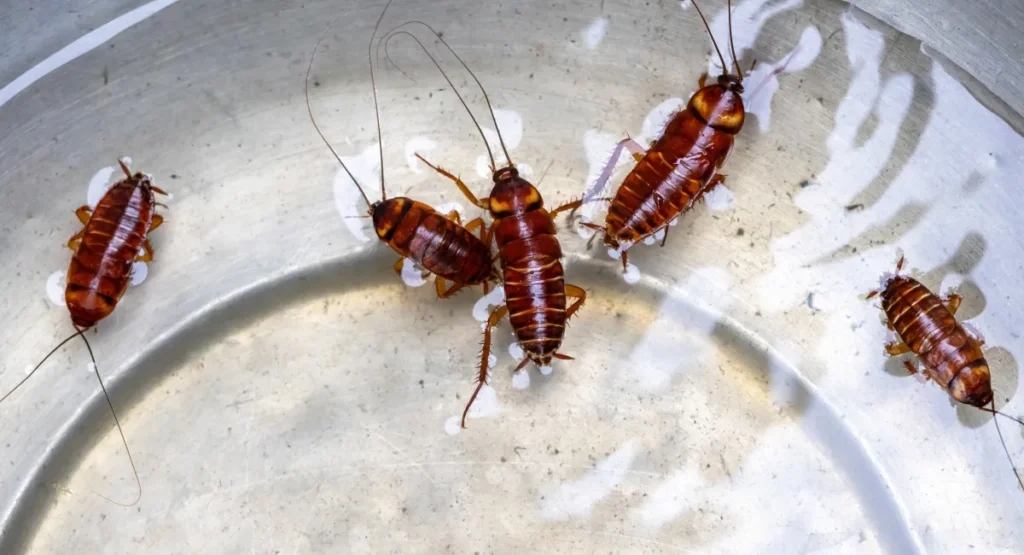
Quick Comparison: German Cockroaches vs. American Cockroaches
- Size: German cockroaches are small, usually about ½ inch long. American cockroaches are much larger, up to two inches.
- Color: German roaches are tan/light brown with two dark stripes behind the head. American roaches are reddish-brown with a pale yellow edge behind the head.
- Location: German cockroaches cluster near food, water, and warmth. American cockroaches enter from drains, sewers, crawl spaces, and outdoor harborage.
- Behavior: German cockroaches reproduce rapidly, staying close to kitchens. American cockroaches travel farther and can fly
- Risk: Both contaminate food -contact areas and damage sanitation standards. German cockroaches reproduce more rapidly.
The Difference Between German Cockroaches and American Cockroaches
At a glance, both cockroaches may look like unwelcome brown insects scuttling across a floor. Their size, markings, hiding spots, and movement patterns reveal important differences between them.
German Cockroaches
American Cockroaches
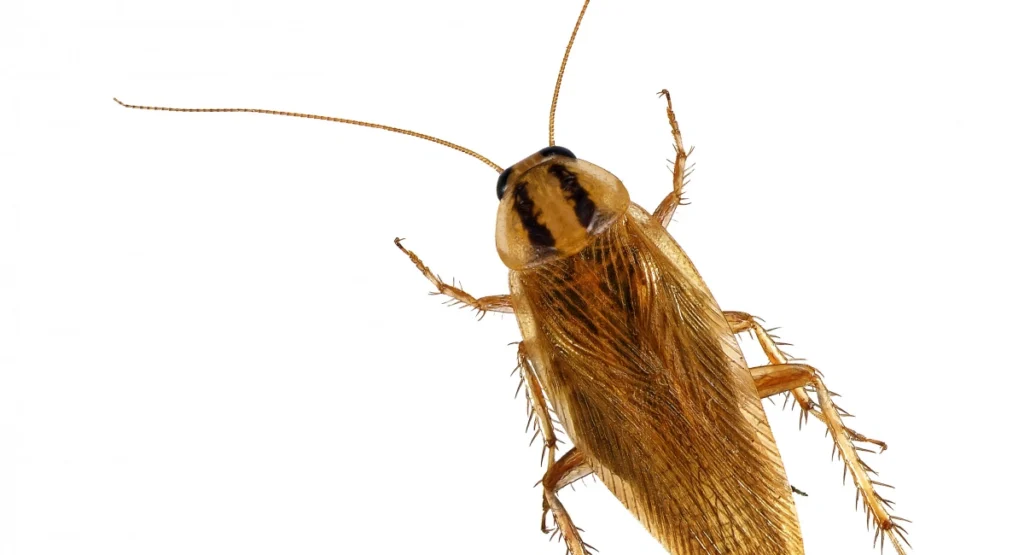
German cockroaches are small indoor cockroaches that multiply rapidly around reliable food, water, and heat sources. German cockroaches are small indoor cockroaches that multiply rapidly around reliable food, water, and heat sources. .
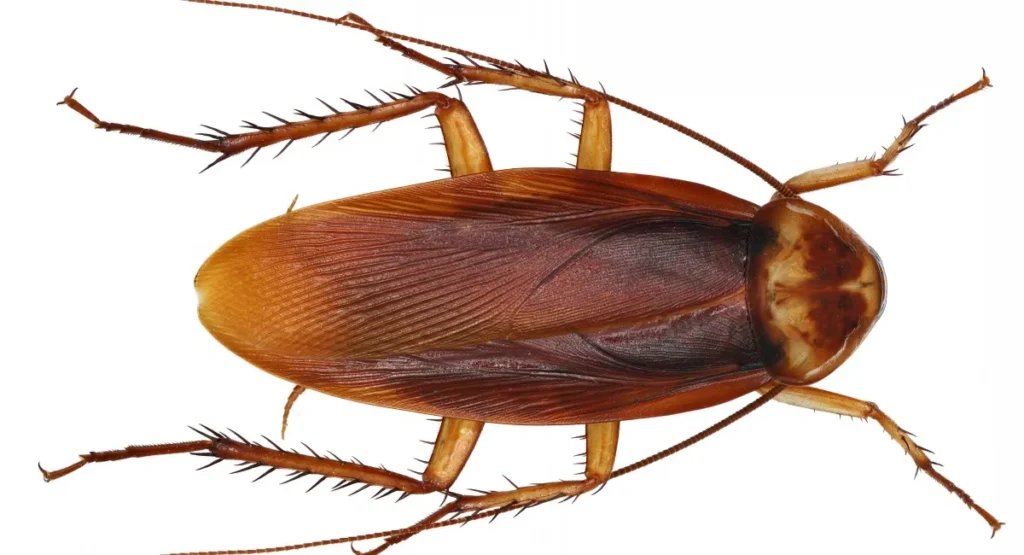
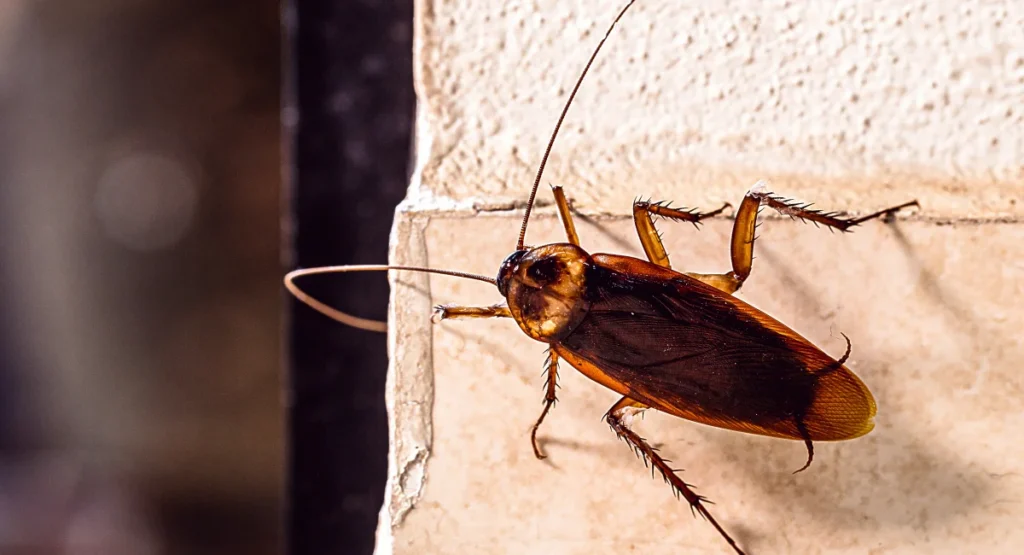
American cockroaches are larger cockroaches that often move between outdoor moisture sources and indoor spaces.
Appearance:
German Cockroach Appearance:
Tan to light brown, with two dark parallel stripes behind the head.
Appearance:
American Cockroach Appearance:
Reddish-brown, with a pale yellow border around the area behind the head.
Habitat:
German Cockroach Habitat:
Kitchens, bathrooms, appliance voids, cabinets, and break rooms.
Habitat:
American Cockroach Habitat:
Drains, sewers, utility rooms, crawl spaces, basements, and exterior landscaping.
Behavior:
German Cockroach Behavior:
Fast-moving, mostly active at night, and usually found near moisture.
Behavior:
American Cockroach Behavior:
Active at night, can cover long distances, and sometimes fly or glide.
Risks:
German Cockroach Risks:
Can spread contamination and allergens through food areas, equipment, and surfaces.
Risks:
American Cockroach Risks:
Can carry contaminants from unsanitary areas into kitchens, storage rooms, and customer spaces.
Worried about pests? We are one call away.
Book your free inspection to get expert, local advice.
Signs of an Infestation
Look for roaches, plus droppings, egg cases, odors, and activity around water sources.
Finding these signs help you identify whether cockroaches are living indoors or entering from exterior sources. Early action matters because cockroaches can stay hidden in spaces no wider than a small crack.
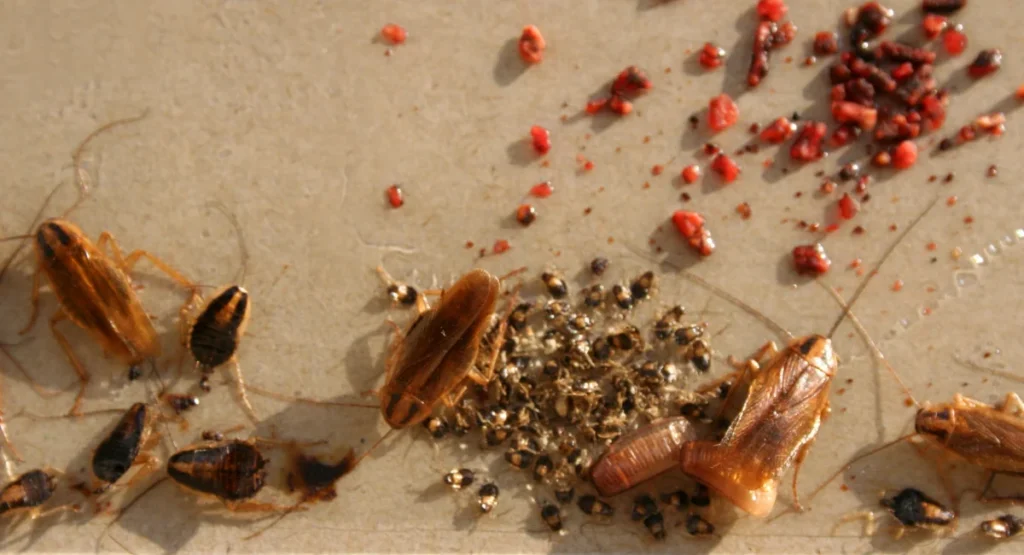
Signs of German Cockroaches
Look for small, dark, pepper-like droppings in cabinet corners, drawers, and near appliances. You may also find brown egg cases, shed skins, or a musty odor where activity is heavy. As they’re nocturnal, if you see them in the daytime, it’s a sign of a larger hidden population.
Signs of American Cockroaches
Look for large roaches near floor drains, plumbing penetrations, utility rooms, and crawl spaces. If you see reddish-brown egg cases, droppings, and smell a strong musty odor, then you have signs of ongoing cockroach activity. Sudden sightings after heavy rain can suggest exterior entry points.
Prevention Tips
Cockroaches need food, water, and shelter. Remove those and your property is far less inviting.
Florida’s heat and humidity make moisture control especially important. A strong prevention plan also protects food safety, customer confidence, and your peace of mind.
- Fix plumbing leaks, clear slow drains, and reduce condensation around refrigeration units and sinks.
- Store food in sealed containers; clean crumbs promptly; and empty indoor trash regularly.
- Seal gaps around doors, windows, utility lines, pipes, and floor drains.
- Reduce cardboard clutter, as it provides roaches with hidden shelter and egg-laying areas.
- Use routine inspections and monitoring devices to spot activity before it becomes widespread.
Frequently Asked Questions
Where Do German Cockroaches and American Cockroaches Nest, and How Do Their Habitats Differ?
German cockroaches usually nest close to indoor food, water, and warmth. American cockroaches often hide in drains, sewers, crawl spaces, and utility areas before entering occupied spaces.
What Attracts German Cockroaches and American Cockroaches to My Home?
Both species are attracted to food residue, moisture, clutter, and warm hiding spaces. German cockroaches favor kitchens and appliances, while American cockroaches are often drawn indoors through damp drains or exterior openings.
How Can I Spot the Signs of an Infestation?
Check for live cockroaches, droppings, egg cases, shed skins, and a persistent musty odor. Inspect under sinks, behind appliances, near drains, and inside cabinets after dark.
Which Pest Causes More Damage?
German cockroaches often create a faster indoor infestation as they reproduce quickly. American cockroaches may cause greater alarm as they’re larger. But both can threaten sanitation and food safety.
How Can I Manage and Prevent German Cockroaches and American Cockroaches?
Start with IPM measures, including sanitation, moisture control, exclusion, and monitoring. Professional treatment can identify hidden harborage areas and target the species affecting your property.
What DIY Prevention Tips Can Homeowners Use?
Keep your kitchen clean, repair leaks, close gaps around pipes, and avoid leaving pet food out overnight. Reduce clutter and use door sweeps to limit entry from garages, patios, and utility areas.
German Cockroach Control
We find where they hide near food, heat, and moisture. Our professional IPM plan uses species-specific treatments to reduce active populations and our monitoring and exclusion services help protect your property from rapid rodent reinfestation.
American Cockroach Control
We address exterior entry points, drain-related activity, and damp structural spaces. Our highly-trained professionals help identify where these large roaches are entering and resting. We then provided targeted treatment and help prevent them from coming back.