
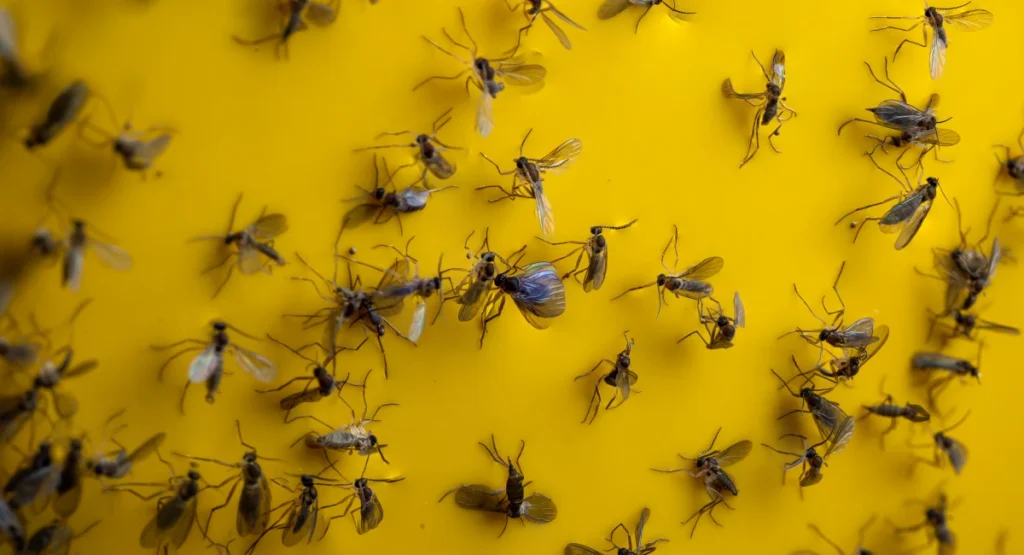
Quick Comparison: Gnats vs. Fruit Flies
- Fruit flies are tan or brown with distinctive red eyes; gnats are typically dark gray or black and slender.
- Fruit flies are drawn to fermenting food and overripe produce; gnats are attracted to moist soil and organic matter.
- Gnats are most often found near houseplants or damp areas; fruit flies cluster in kitchens and around food prep surfaces.
- Fruit flies reproduce rapidly in fruit bowls and trash cans; gnats breed in wet potting soil and drainage areas.
- Both are a year-round nuisance in Florida’s warm, humid climate, though populations can spike after heavy rain.
- Fungus gnats can damage plant roots when larvae are present; fruit flies are mainly a hygiene and contamination concern.
The Difference Between Gnats and Fruit Flies
Fruit flies and gnats are both small, irritating, and hard to ignore, but they come from different places and need different solutions. Here’s what sets them apart so you can tackle the right problem.
Gnats
Fruit Flies
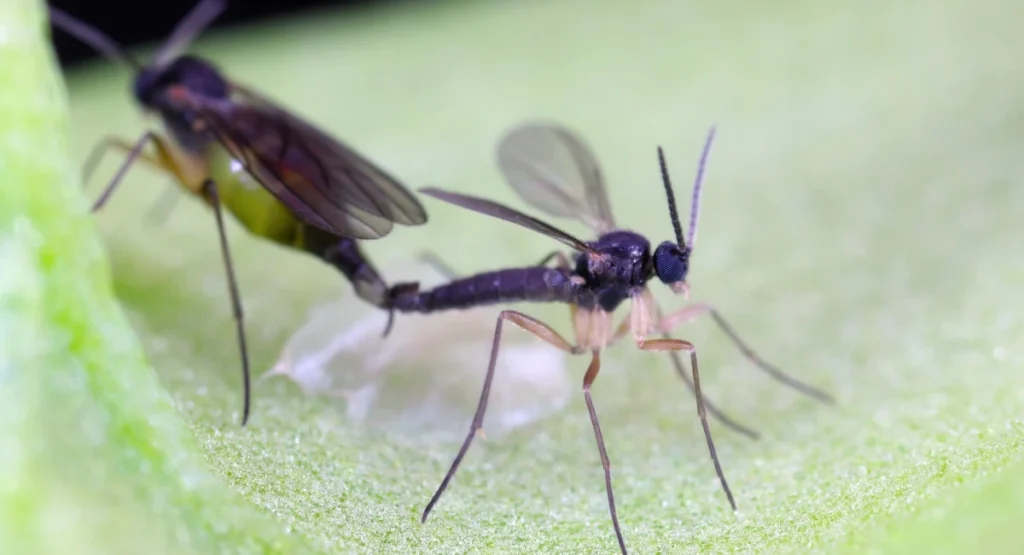
This term covers several small fly species that thrive in moisture, and can be surprisingly hard to shake off.
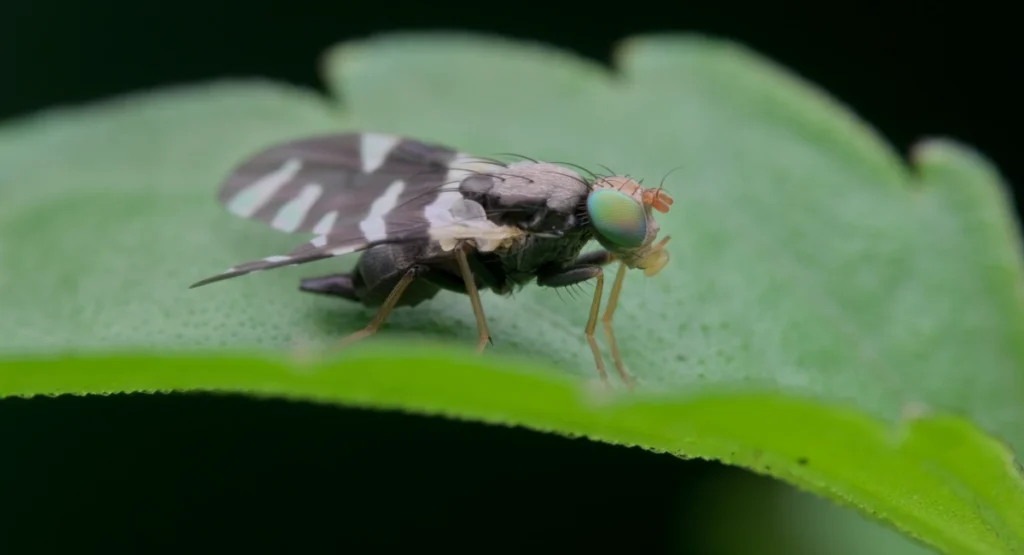
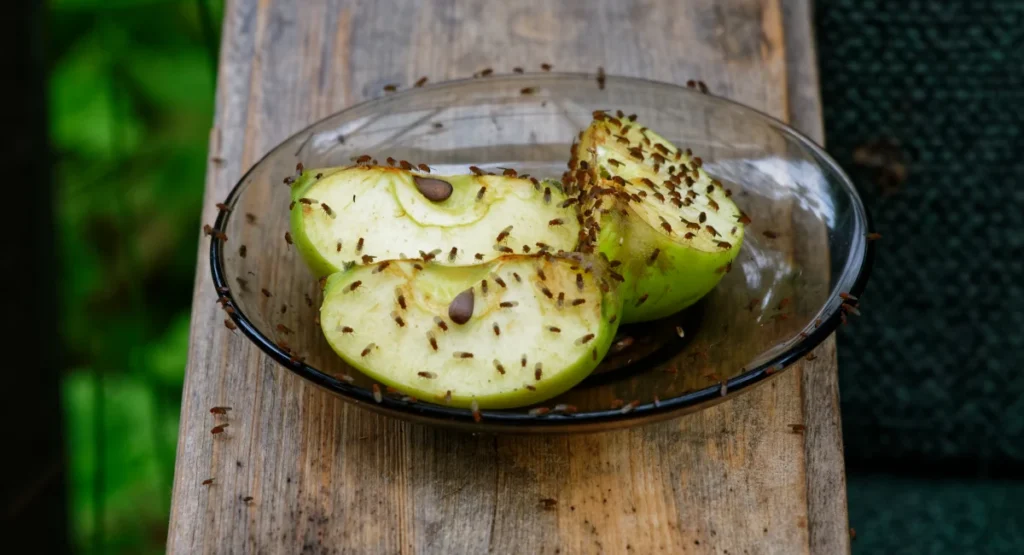
A small, fast-reproducing fly that zeroes in on fermenting food and can take over a kitchen quickly.
Appearance:
Gnat Appearance:
Slender and dark gray or black, with long legs and wings that give them a mosquito-like look.
Appearance:
Fruit Fly Appearance:
Small, rounded, tan or brown with bright red eyes and a pale underside.
Habitat:
Gnat Habitat:
Damp potting soil, clogged drains, wet mulch, compost, and other moist organic environments.
Habitat:
Fruit Fly Habitat:
Kitchens, trash cans, recycling bins, drains, and anywhere overripe or fermenting food is present.
Behavior:
Gnat Behavior:
Swarm in large numbers, fly erratically, and breed in wet conditions both indoors and outside.
Behavior:
Fruit Fly Behavior:
Hover around food sources in groups, breed rapidly, and lay eggs on the surface of rotting produce.
Risks:
Gnat Risks:
Fungus gnat larvae feed on plant roots and can cause significant damage to houseplants and seedlings.
Risks:
Fruit Fly Risks:
Can contaminate food and food prep surfaces by transferring bacteria from decaying organic matter.
Signs of an Infestation
Both pests multiply fast in Florida’s climate. The earlier you catch them, the easier they are to deal with.
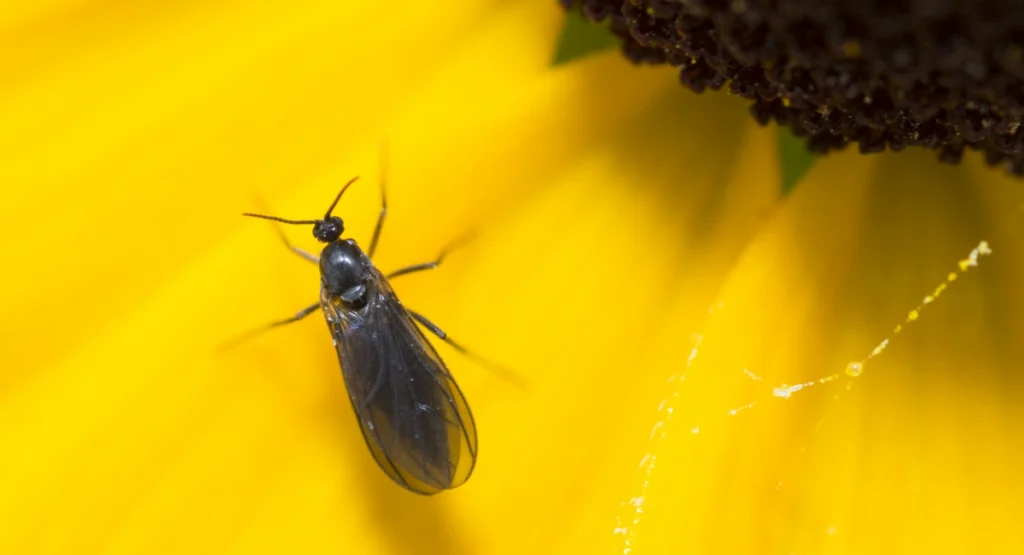
Signs of Gnats
Large swarms near houseplants or in damp indoor areas are a common indicator of fungus gnats. You may notice them flying up from the soil when you water your plants. Outdoors, swarms near mulch, standing water, or garden beds—especially after rain—suggest gnat activity that could move inside.
Signs of Fruit Flies
A cloud of small flies hovering near your fruit bowl, trash can, or kitchen sink is the most obvious sign. You may also notice tiny larvae on the surface of very ripe or rotting produce. A sweet, sour odor near drains or bins can signal a breeding site.
Prevention Tips
Keeping fruit flies and gnats out of your home starts with cutting off the things they need to survive. Store ripe fruit in the fridge and dispose of overripe produce straight away. Empty trash cans regularly and keep lids on bins at all times. Let potting soil dry out between waterings to discourage gnat larvae, and flush drains with hot water to clear any organic buildup. Fix any leaks or damp patches that could give either pest a foothold.
Frequently Asked Questions
How Do You Tell Fruit Flies and Gnats Apart?
Look at the body shape and where they’re hanging out. Fruit flies are rounder with red eyes and tend to stay near food. Gnats are slender, darker, and usually found near plants or damp spots. If they’re swarming your kitchen counter, fruit flies are the more likely culprit.
Why Do I Keep Getting Fruit Flies Even When My Kitchen Is Clean?
Fruit flies can breed in places that are easy to overlook: drains, recycling bins, mop heads, and even a small spill behind an appliance. If you’re still seeing them after cleaning surfaces, check your drains and any hidden moisture sources. One overlooked breeding spot is usually all it takes.
Can Gnats Harm My Plants?
Fungus gnats absolutely can. While adult gnats are mostly a nuisance, their larvae feed on roots and organic matter in soil, which can stunt growth or kill seedlings entirely. If your houseplants are wilting without an obvious cause, gnat larvae in the soil could be the reason.
Are DIY Traps Enough to Get Rid of Fruit Flies and Gnats?
DIY traps like apple cider vinegar bowls or sticky yellow cards can reduce numbers but rarely eliminate the source. Without addressing the breeding site, whether that’s a drain, compost bin, or waterlogged plant pot, the infestation tends to come back. For persistent problems, professional treatment is the most reliable fix.
Fly Control
Tired of fruit flies and gnats taking over your home? Florida Pest can find the source and sort it out. Get in touch today for fast, effective fly control.