
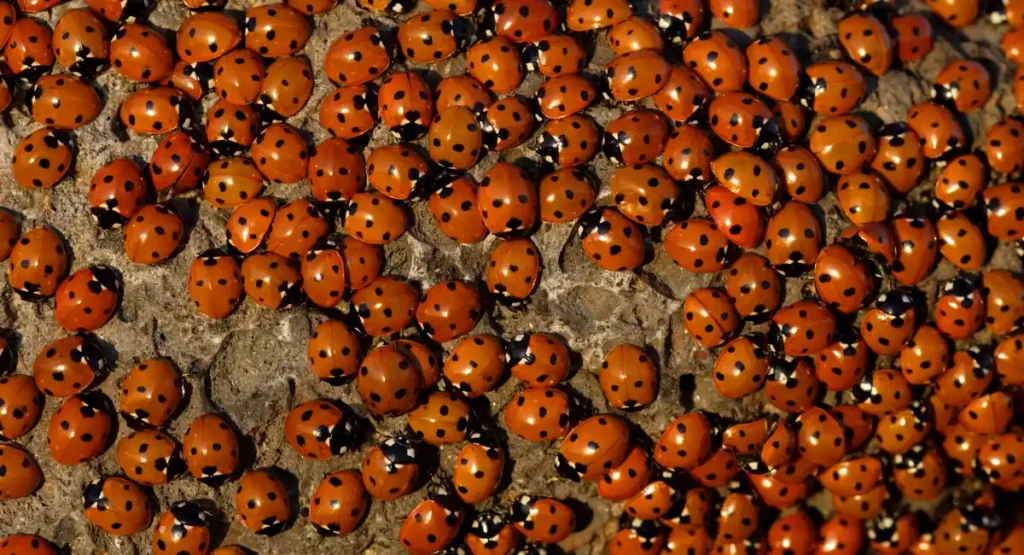
Quick Comparison: Ladybugs vs Asian Beetles
- Color: Native ladybugs are bright red with black spots. Asian beetles range from pale orange to red and have zero or numerous black spots.
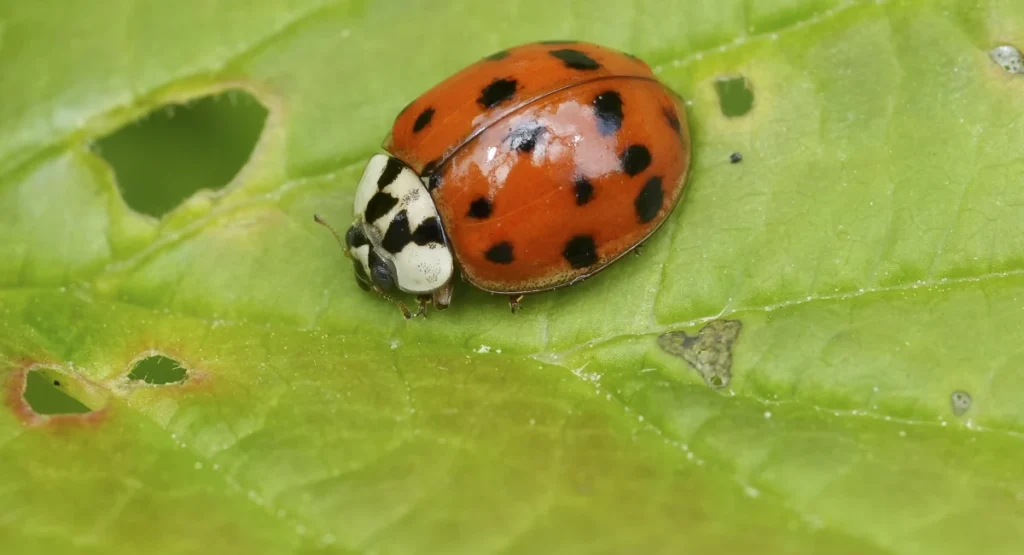
- Marking: Asian beetles usually have a distinctive “M” or “W”-shaped black marking behind their head. Ladybugs don’t.
- Behavior: Ladybugs are harmless and stay outdoors. Asian beetles invade buildings in large numbers, especially in the fall.
- Bite: Ladybugs rarely bite. Asian beetles can nip and may trigger allergies.
- Nuisance level: Ladybugs are welcome garden helpers. Asian beetles are a persistent indoor pest that can cause staining and unpleasant odors.
The Difference Between Ladybugs and Asian Beetles
It’s easy to mix up ladybugs and Asian beetles because they look so similar. Both are small, round, and spotted, and feed on garden pests like aphids. However, a few subtle differences can help determine which one you’re seeing.
Ladybugs
Asian Beetles
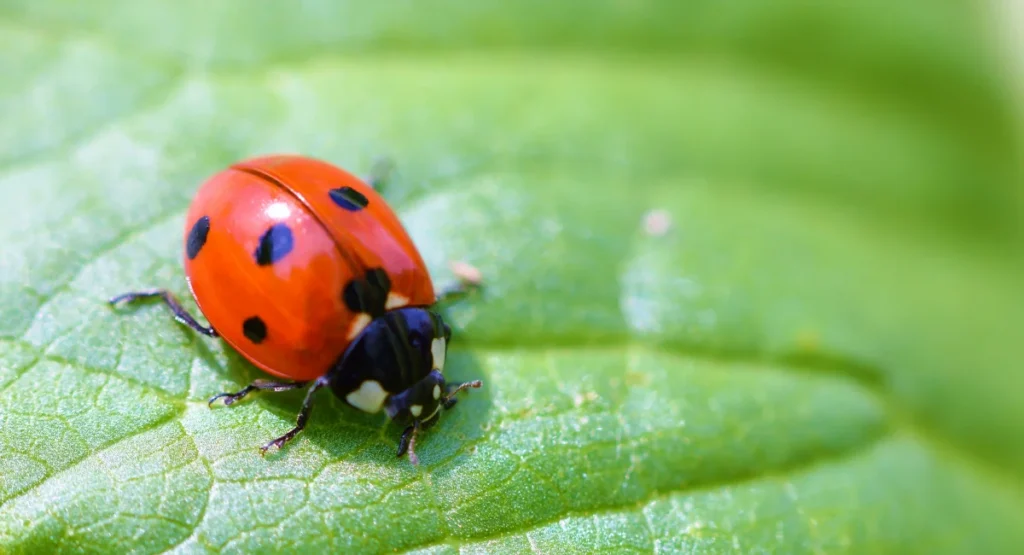
Ladybugs are native beneficial insects, prized by gardeners for eating aphids and other plant-damaging pests.
Asian lady beetles are an invasive lookalike introduced for pest control that has since become a household nuisance.
Appearance:
Ladybug Appearance:
Bright red, domed body with black spots and no "M" marking.
Appearance:
Asian Beetle Appearance:
Orange to red body, variable spots, and a signature
Habitat:
Ladybug Habitat:
Live outdoors in gardens, fields, and on plants.
Habitat:
Asian Beetle Habitat:
Live outdoors but invade homes in large numbers to overwinter.
Behavior:
Ladybug Behavior:
Feed on aphids, rarely enter homes, and don't cluster indoors.
Behavior:
Asian Beetle Behavior:
Cluster on walls and windows, and can bite when disturbed.
Risks:
Ladybug Risks:
Harmless; a welcome sign of a healthy garden.
Risks:
Asian Beetle Risks:
A nuisance pest that can trigger allergies and leave stains and odors.
Worried About Pests? We Are One Call Away.
Book your free inspection to get expert, local advice.Signs of an Infestation
While native ladybugs are pretty harmless, a large gathering of Asian beetles can be alarming, particularly when indoors. Identifying the signs can help prevent an infestation.
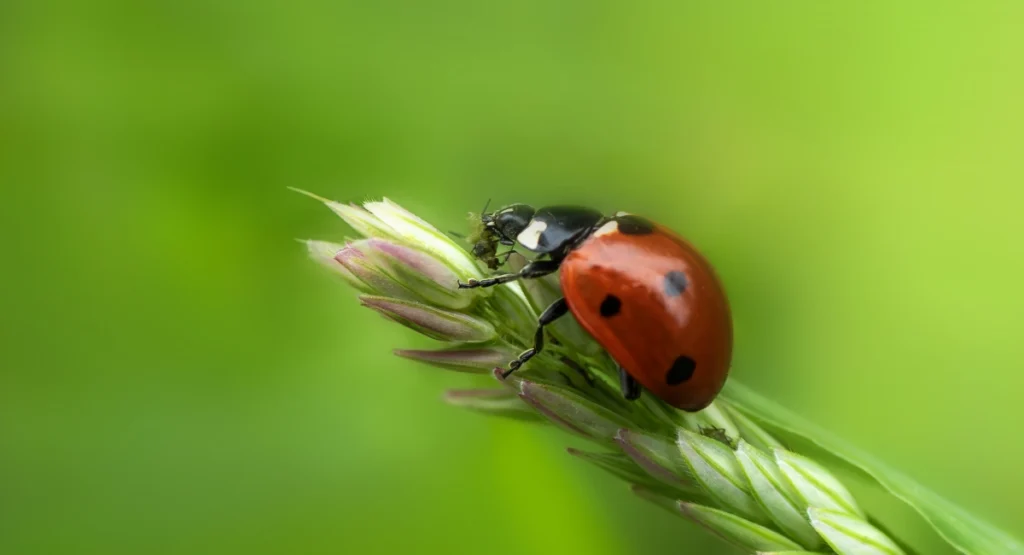
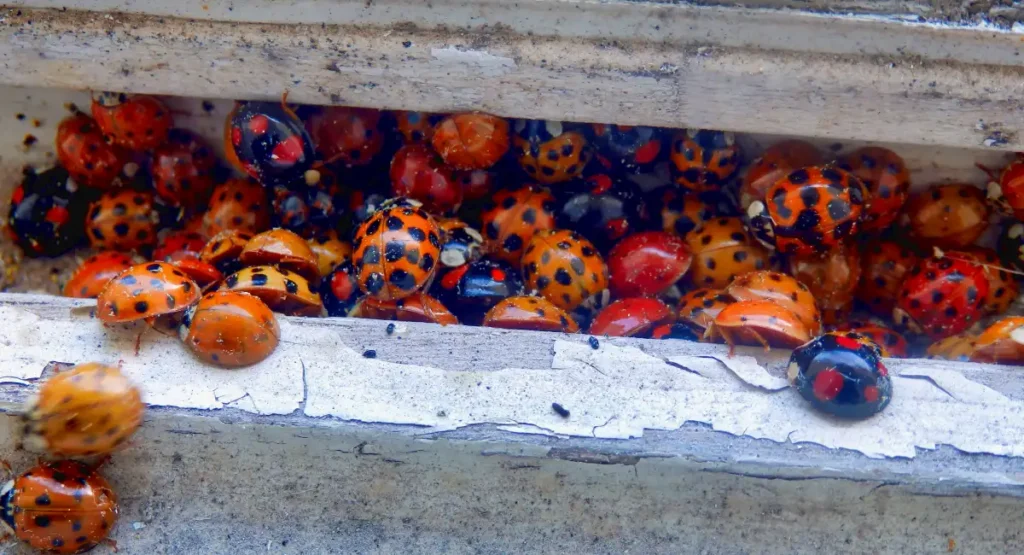
Signs of Ladybugs
Discarded wings of unequal size and trails of ants foraging around kitchens, pantries, or entry points are obvious signs. With carpenter ants, you may also spot piles of coarse wood shavings pushed out of their nesting galleries.
Signs of Asian Beetles
Look for large clusters swarming sunny walls, windows, and attics—especially in the fall. Other red flags include yellow staining on surfaces, a musty odor, and beetles repeatedly entering through cracks and gaps.
Prevention Tips
If you’ve had a problem with Asian beetles in the past, there’s a good chance they’ll be back the next fall as temperatures drop. Ladybugs make an appearance in early spring, but seldom cause problems. These tips can help break the Asian lady beetle invasion cycle:
- Seal cracks around windows, doors, siding, and utility lines to block entry points.
- Install or repair door sweeps, weather stripping, and window screens.
- Keep gutters clear and reduce moisture around your foundation.
- Vacuum up any beetles indoors rather than crushing them, as that spreads stains and odors.
- Schedule professional inspections and exterior treatments before fall to stop beetles from gathering.
Frequently Asked Questions
Where Did Asian Beetles Come From?
Asian lady beetles were intentionally introduced to the US decades ago to control aphids and other crop pests. They did their job well but spread rapidly, and with no natural predators here, they’ve become a widespread seasonal nuisance in homes across the country.
Are Asian Beetles Dangerous to My Pets?
They can be. If a dog or cat eats Asian beetles, they may attach to the mouth or stomach lining, causing irritation, drooling, or ulcers. It’s uncommon but worth watching for. Contact your vet if your pet seems distressed after contact.
Do Asian Beetles Damage My Property or Furniture?
They don’t chew wood or fabric like some pests, so structural damage isn’t a concern. The real problem is the yellow, foul-smelling fluid they release when disturbed, which can stain walls, curtains, carpets, and light-colored surfaces around where they cluster.
How Long Do Asian Beetles Stay Once They're Inside?
Once indoors for the winter, they can remain dormant for several months, tucked into wall voids, attics, and window frames. They often reappear on warm, sunny winter days, then become active again as spring arrives and they head back outside.
How Can I Get Rid of Asian Beetles?
Vacuum clusters rather than crushing them, seal entry points, and repair screens and door sweeps. For persistent problems, a professional beetle exterminator can apply targeted exterior treatments to stop them from gathering and entering before the season peaks.
Should I Kill Ladybugs in My Garden?
No, ladybugs are beneficial and help control aphids and other plant pests naturally. Leave them be in the garden. Only Asian beetles clustering indoors need managing, and even then, removal and prevention are usually enough.
Ladybug Control
Florida Pest Control offers gentle, effective solutions to relocate them and seal gaps that allow entry—keeping your building clear while preserving your garden’s natural balance.
Asian Beetle Control
Our expert beetle exterminators seal access points and remove seasonal clusters before they take over your walls, windows, and attic. Protect your home ahead of fall.