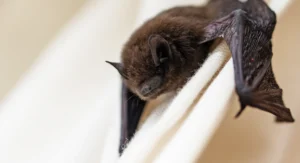
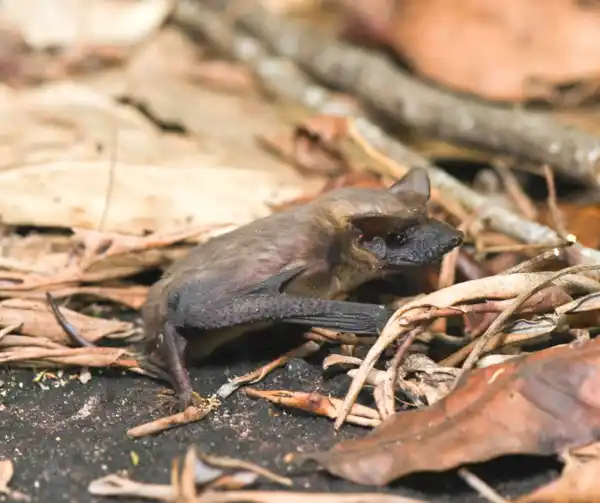
The Mexican free-tailed bat (Tadarida brasiliensis) is a common bat species in Florida. Known for forming massive colonies, these fast-flying bats often roost in caves, attics, wall cavities, and other dark spaces especially near water. With Florida’s warm climate and large insect populations, it’s no surprise these bats are drawn to homes and buildings in wooded or damp areas. Their presence, while natural, can sometimes lead to conflicts with homeowners.
Characteristics
Mexican free-tailed bats are social creatures that thrive in large numbers. They are built for speed, with long, narrow wings that allow for high-altitude and long-distance flight, something not all bat species can do. Their tails extend beyond the tail membrane, helping stabilize their flight and contributes to their fast, darting movement.
Unlike other bat species in the region, they form large colonies and often exit their roosts in groups just after sunset, sweeping into the sky as they search for insects. Their rapid, erratic flight and high-pitched echolocation calls distinguish them from other local wildlife.
Identification
You’ll know you have Mexican free-tailed bats in your attic or eaves if you can spot their long tail, wrinkled lips, and long, narrow wings. Homeowners might hear squeaking, scratching, or rustling in ceilings or walls, especially at night when they are most active. Moreover, a strong, ammonia-like odor could signal roosting nearby. Guano buildup and frequent bat sightings at sunset are also signs of an infestation.
Habitat
Mexican free-tailed bats live in caves, bridges, buildings, and tree cavities. Though they prefer caves, they often move into man-made structures if they find easy access to dark, enclosed areas. In Florida, they gravitate toward locations close to water, where their insect prey is most active.
While some bats hibernate, the Mexican free-tailed bat migrates south in winter. They may slow down during cold spells, but typically do not stay inactive all season. Their roosts can be temporary or long-term, depending on the location and food availability.
Mexican Free-Tailed Bats in Florida
Mexican free-tailed bat colonies in Florida can contain millions of individuals. They are named after their tails, which extend more than a third of the way beyond the tail membranes, and are among the fastest bats in the world. They can reach speeds over 60 miles per hour and fly to an altitude of up to 10,000 feet, making them skilled hunters. Their large ears also help them find prey using echolocation.
Mexican Free-Tailed Bat Behaviors, Threats, or Dangers
They feed after dusk, flying much higher than other species to catch insects. However, the biggest threat to homeowners is their sheer numbers. If they choose to roost inside buildings, they can damage property and be a danger to people nearby. Their guano can cause respiratory issues, and there is also a slight risk of contracting rabies after direct contact.
If you see a Mexican free-tailed bat, you should never approach or attempt to handle one on your own. Always contact your local bat control experts for help or advice on removal.
Are Mexican Free-Tailed Bats Hard to Get Rid of?
Mexican free-tailed bats can be hard to get rid of because there are so many. They can squeeze into small, hidden spaces, making them difficult to remove without the right tools and experience. They are also very persistent, habitual, and will return to the same roost year after year. Proper exclusion requires timing around seasonal behaviors and sealing every possible entry point once the bats are out.
While DIY efforts might work in the short term, we recommend calling a technician who understands bat behavior and local regulations for effective prevention and lasting results.
How Many Mexican Free-Tailed Bats Count As An Infestation?
An infestation can involve dozens to hundreds of bats. Because they prefer to live in large colonies, it’s not unusual for homeowners to discover a significant number have taken up residence. You’ll know an infestation is underway when you notice multiple bats entering and exiting your property, or discover guano accumulation on windowsills or under eaves.
Need help with Mexican Free-Tailed Bats control?
We'll call you! Leave your information below.
Get a FREE quote
Frequently Asked Questions
What Do Mexican Free-Tailed Bats Eat?
Their diet is made up mostly of flying insects such as moths, beetles, and flies. They feed in flight and are most active just after sunset. Each bat can consume thousands of insects every night, which helps manage local pest populations.
Where Are Mexican Free-Tailed Bats Commonly Found?
They are found in caves, attics, bridges, and abandoned buildings. In Florida, Mexican free-tailed bats often choose structures close to water, where flying insects are abundant. They may roost in roof spaces, chimneys, or wall voids.
Are Mexican Free-Tailed Bats Dangerous To Humans?
While they are not aggressive, Mexican free-tailed bats can still pose a risk. Their droppings (guano) can create unpleasant odors and contribute to respiratory issues when disturbed. There’s also a low risk of rabies, which is why you should never attempt to handle one. Always call a professional for assistance.
When Is The Best Time To Remove Bats From A Building?
In Florida, bat removal is regulated to protect bats during their maternity season, typically April through August. The best time for exclusion is early spring or late summer when young bats can fly. A licensed technician will know the right timing and methods to follow.
How Fast Can Mexican Free-Tailed Bats Fly?
Mexican free-tailed bats are among the quickest bats in the world. They’ve been recorded flying at speeds of over 60 miles per hour in level flight, making them exceptional hunters in the night sky.