
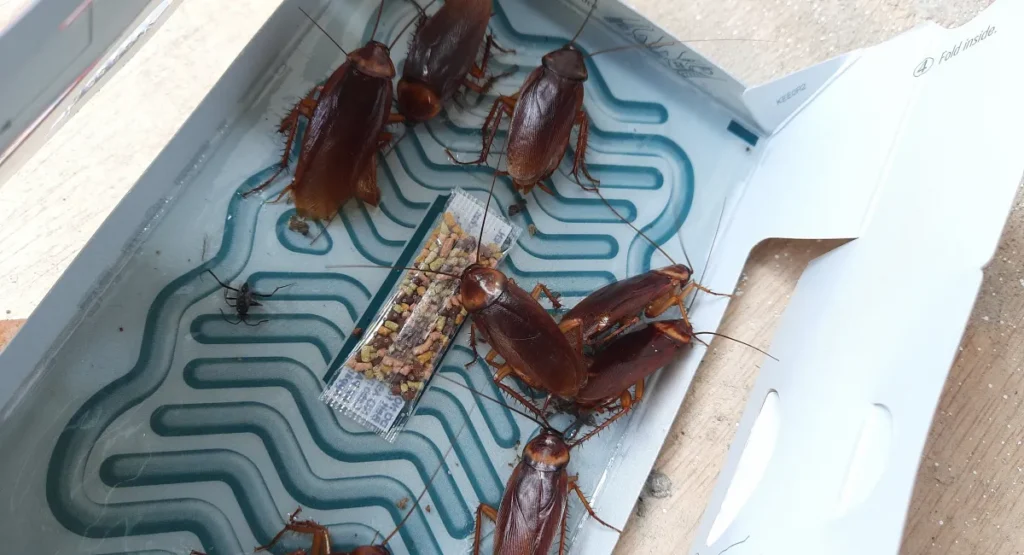
Spotting the odd cockroach, while unpleasant, is fairly common when you live and work in Florida, particularly during the spring and summer months. If it’s near your property and you don’t think there is a larger problem or infestation, it might be tempting to try and nip the issue in the bud and prevent others from gathering without having to resort to professional cockroach control.
We’ve put together a short guide on DIY cockroach removal, including some of the main options for traps and bait, and things you should keep in mind.
Types of Cockroach Traps
Surface Sprays
Surface sprays can be useful as a reaction to cockroaches on contact with surfaces, and you can use them to spray in gaps and cracks, behind appliances, and along base boards.
However, these sprays don’t usually reach the spots where cockroaches are hiding, as they are good at staying out of sight, and you might struggle to reach certain areas. It’s also important to note that there’s a need for caution with cockroach pesticide sprays, as you should not spray these anywhere where food is prepared or eaten, near bedding, soft furnishings, and other regularly used living spaces, or where pets and children are active.
Cockroach Bait and Traps
There are several different types of bait stations and traps available for treating cockroach problems at home.
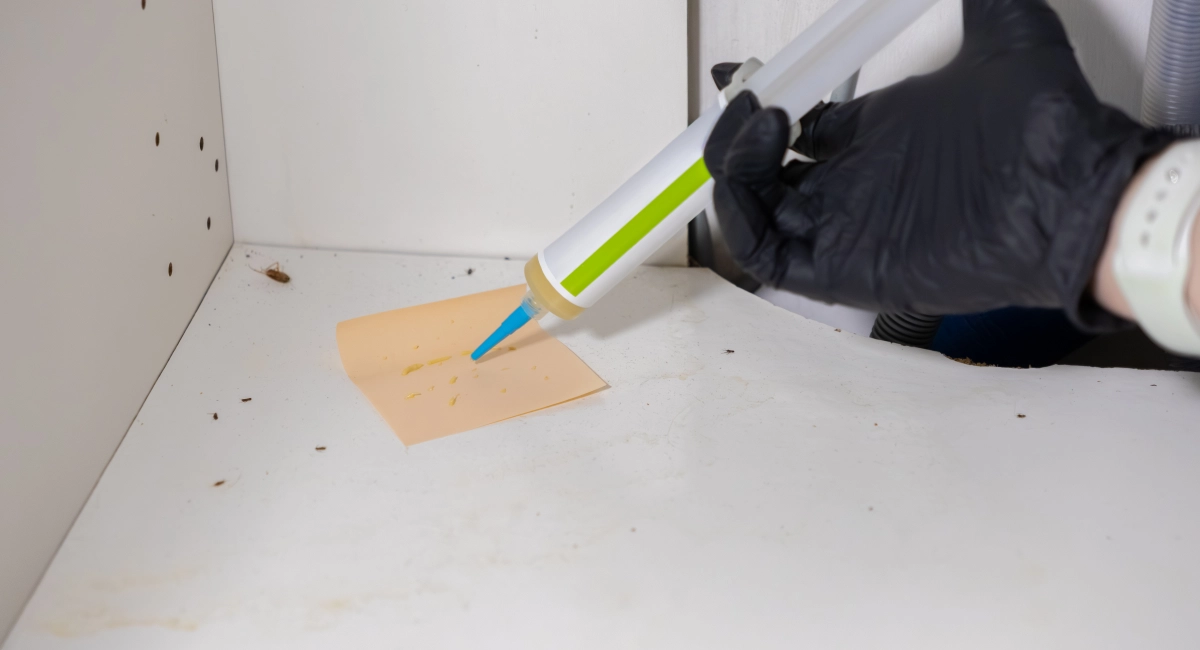
Gel Bait
Cockroach gel is a poisonous paste that can be applied in small spots inside cracks, crevices and other concealed areas. It works by attracting cockroaches with sugars and proteins, so that they ingest the poison. It works slowly enough that they are usually able to return to their harborage, where other cockroaches will ingest the poison from its waste or dead body.
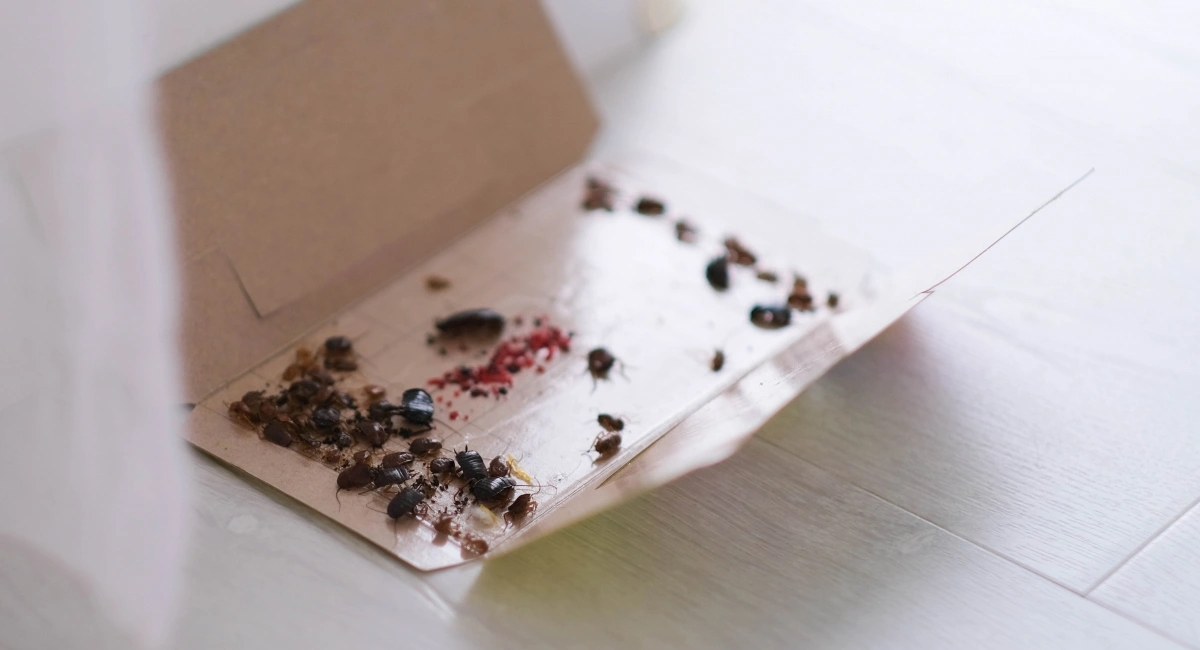
Glue Boards
A glue trap is usually a small cardboard board with an adhesive surface and a food-based attractant to encourage cockroaches to enter and become stuck. These are more appropriate for detecting and monitoring suspected cockroach activity. Glue traps don’t contain a treatment or poison that spreads through cockroach populations, so they won’t be effective for treating an infestation.
Bait Stations
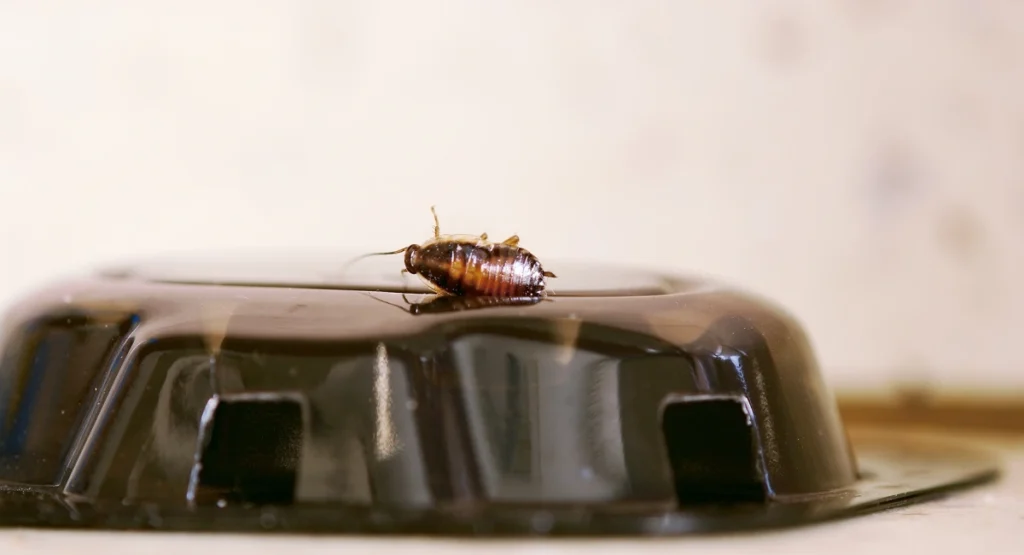
Bait stations are similar to glue boards in that they attract roaches with a sugary or protein-rich food source. However, rather than trapping them to a board, the cockroaches ingest a poison that they then spread to its colony. You can usually buy pre-filled bait stations or refillable ones.
Pesticide Foggers
Foggers, or bug bombs, release an active mist to disperse pesticides into the open air, rather than into cracks and voids. It’s worth noting that this can often push them deeper into hiding rather than fully eliminating infestations, and pesticide fogs may not actually reach the tight spaces that cockroaches tend to hide within.
Things to Keep in Mind For DIY Cockroach Control
DIY cockroach control can be effective for minor cockroach activity, but the overall success depends on treating the source of the problem and combining these treatments with exclusion methods. These types of traps and pesticides won’t stop cockroaches from getting into your home in the first place.
Ideally, you should look to fix cracks or leaks around the home, or sealing off entry points where they may be invading, before placing traps. Before using or placing cockroach treatments, start by cleaning up crumbs, food spills and grease, particularly behind appliances and inside cupboards. Remove any potential food sources by storing food and pet food away in sealed containers, and emptying garbage regularly.
You can use monitoring traps to identify areas of your property with the most activity. Bait products are often more effective than spraying exposed cockroaches, because they can be placed close to hiding places such as beneath sinks, behind fridges and around plumbing.
Using cockroach traps and treatments safely:
- Follow the product label exactly
- Never combine products
- Always keep treatments away from children and pets
- Do not use cockroach sprays on surfaces where food is prepared or eaten
- Don’t spray bedding, linen, and soft furnishings
- Do not spray insecticide around bait—this can discourage cockroaches from feeding
When To Call in Cockroach Exterminators
If you continue seeing cockroaches after using baits or traps at home, it may be a sign that your property is infested. As we’ve mentioned, cockroach traps are usually most effective for identifying problem areas, and some treatments may not reach all cockroach harborages.
Cockroaches also breed incredibly quickly, so what can start as one or two can quickly explode into a full infestation. If you notice cockroaches are still present, or are starting to see young cockroaches, contact Florida Pest Control today.