

Do cockroaches lay eggs? They certainly do. If you’ve spotted a tiny brown capsule in your cupboard, you’re likely looking at an ‘ootheca’—a protective case holding multiple eggs. While it might not mean an infestation yet, it signals active, disease-carrying roaches are nearby. Read on to find out what cockroach eggs look like, where they hide, and how they hatch, along with some prevention tips.
What Do Cockroach Eggs Look Like?
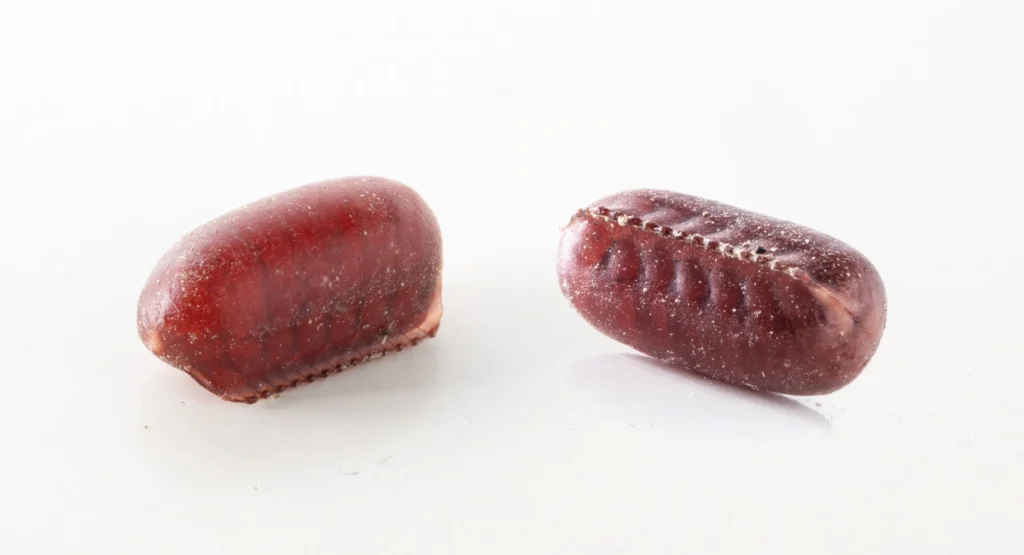
Individual eggs are rarely seen without closely examining or opening an egg case. The egg case is about ⅛ to ½ inch long and looks like a dried bean, a small seed pod, or a brown pill. Most of them are small, firm, and dry-looking, and resemble a kidney bean, capsule, or small purse. Along one edge, the seam is crimped, ridged, or has fine grooves: that is where nymphs break through when they hatch.
Fresh cockroach egg cases may look lighter in color. Older cases can darken. Empty cases may remain after nymphs hatch, so an empty shell still indicates that roaches were present.
- German cockroach egg cases are small, light, and narrow. They are about ¼ inch long, usually light to medium brown, and are carried by a female until close to hatching, so they’re protected and harder to find. You’re likely to find egg cases near food and warmth, so in kitchen cabinets, pantries, under fridges and stoves, along baseboards, and even inside folded linens.
- American cockroach (palmetto bug) egg cases are usually dark brown, almost black, and larger and wider than German cockroach egg cases. They’re often placed in protected, humid areas near food or moisture, such as around drains, utility areas, under sinks, around plumbing penetrations, and behind refrigerators, stoves, dishwashers, and washing machines.
- Brown-banded cockroach egg cases are light reddish-brown and are placed in elevated spaces such as furniture, cabinets, closets, drawer tracks, wall hangings, electronics, and cardboard storage boxes.
How Many Eggs Can a Cockroach Lay in a Day?
For Florida homes and businesses, warm temperatures and humidity create favorable conditions for many roach species, but they generally don’t lay a fixed number of individual eggs each day.
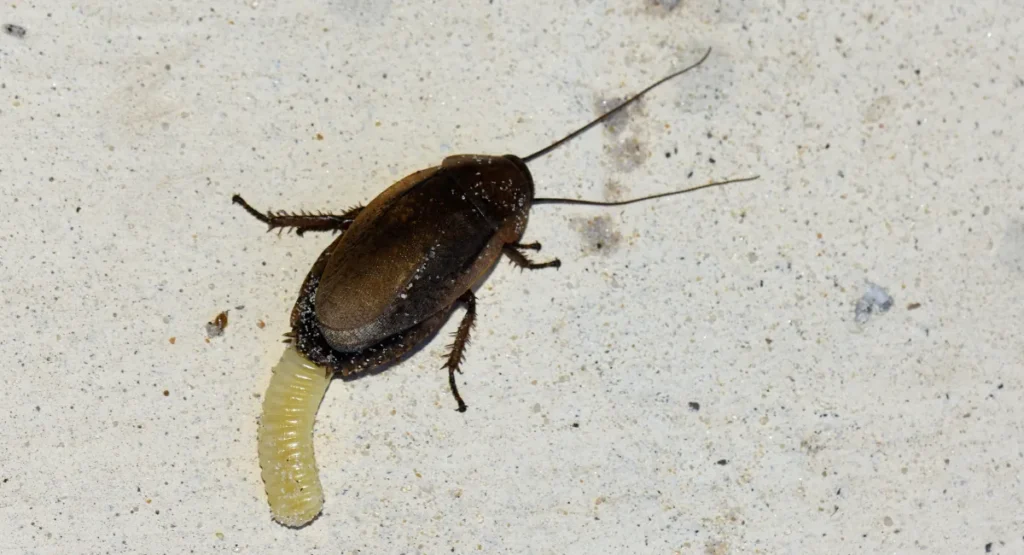
German cockroaches produce about 4–8 oothecae in their lifetime, each containing 30-50 eggs. American cockroaches typically produce 9–14 oothecae in their lifetime, each containing 14-16 eggs, but the oothecae are larger.
How Long Does it Take for Cockroach Eggs to Hatch?
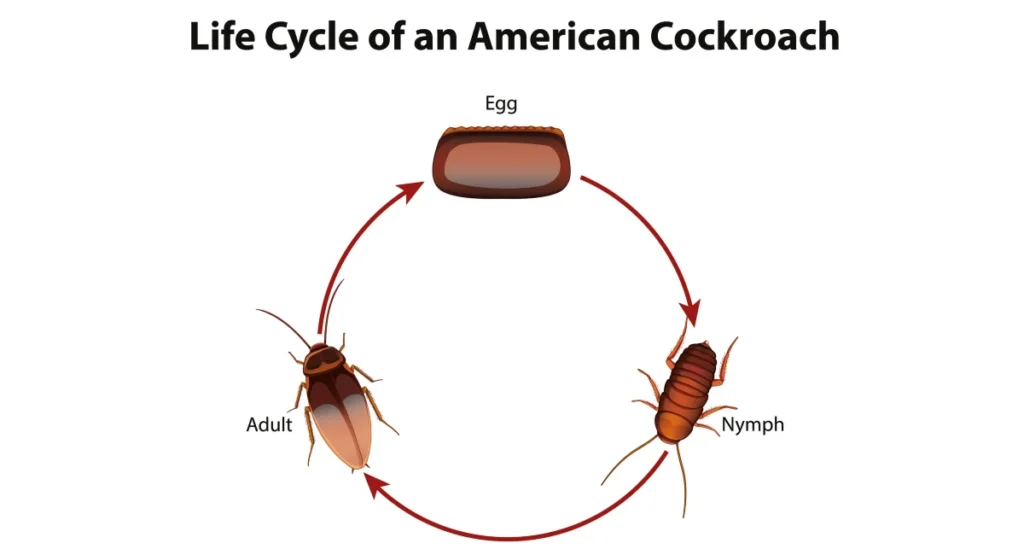
There’s no single answer. The timeline changes with species, temperature, humidity, and environmental conditions. In favorable indoor conditions, some hatch in just weeks, especially as warm, humid areas support faster development. After hatching, young cockroaches are called nymphs. They look like small adults but lack fully developed wings, and shed their skin several times as they grow.
Female German cockroaches lay a new egg case about every six weeks, carrying it in their abdomen until just before the eggs hatch about four weeks later.
American cockroach eggs take longer to hatch. The female doesn’t carry the egg case, but hides it in a secure place. The eggs then hatch about six to eight weeks later.
Why Cockroaches Lay Eggs in Commercial Settings
In commercial settings, cockroaches can seek harborage behind equipment, inside utility channels, under shelving, by loading areas, or inside storage materials. They can arrive in high-traffic properties via deliveries, luggage, shipments, recycling, and shared walls.
Government facilities, schools, daycare centers, lodging properties, and healthcare environments require especially careful monitoring. Roach activity can spread beyond one room when structural gaps connect spaces.
Foodservice, grocery, food processing, and pharmaceutical environments also need rapid action. Egg cases and roach activity can complicate sanitation programs, audits, and pest documentation.
Why Cockroach Eggs Signal Risks for Home- and Business Owners
Cockroaches present severe health, operational, and regulatory hazards that require prompt, targeted intervention:
- By moving through drains and trash, cockroaches contaminate food-contact surfaces with pathogens, causing salmonellosis, E. coli infections, dysentery, and typhoid fever. Furthermore, their droppings, saliva, and shed skins aggravate asthma and allergies, creating major health concerns across homes, schools, daycares, healthcare centers, and lodging properties.
- Because egg cases harbor developing nymphs, treating only visible adults leaves hidden breeding sources intact, allowing recurring populations to multiply and spread into adjoining spaces. Swift, comprehensive pest control is critical to eliminate the underlying source before young roaches infest additional rooms.
- For commercial properties, unresolved infestations disrupt operations, compromise employee welfare, damage customer confidence, and jeopardize inspection readiness. Facilities must meet strict sanitation standards enforced by regulatory bodies such as the FDA, USDA, OSHA, FDACS, and FDOH, alongside Florida licensing rules governed by the FDBPR and FDCF.
How to Remove Cockroach Eggs Safely
As part of a wider control effort, you can remove cockroach eggs with these practical steps:
- Wear disposable gloves. Avoid handling suspected egg cases with your bare hands.
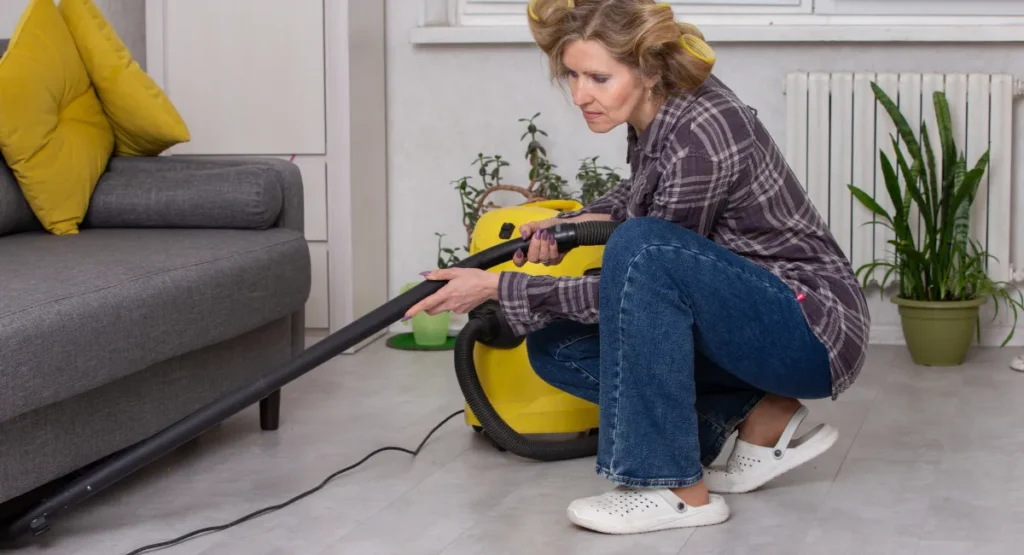
- Vacuum the area carefully. Use a crevice attachment around cracks, equipment edges, cabinet joints, and nearby floor gaps.
- Seal and discard vacuum contents. Place debris in a sealed bag and move it to an outdoor trash container promptly.
- Clean surrounding surfaces. Remove grease, crumbs, spills, and moisture that may help roaches thrive.
- Inspect nearby hiding places. Check under, behind, and inside adjacent fixtures, equipment, and stored materials.
- Reduce clutter. Replace cardboard storage with sealed plastic containers where practical. Roaches will seek out the dark seams of cardboard for shelter.
- Use products carefully. Follow every label direction. Keep pest control products away from children, pets, food, food contact surfaces, and sensitive areas.
Squashing an egg case isn’t a reliable control method, as egg cases can be durable and may leave debris behind. Vacuuming and securely disposing of the contents is more effective.
Why Sprays Alone May Not Stop Eggs
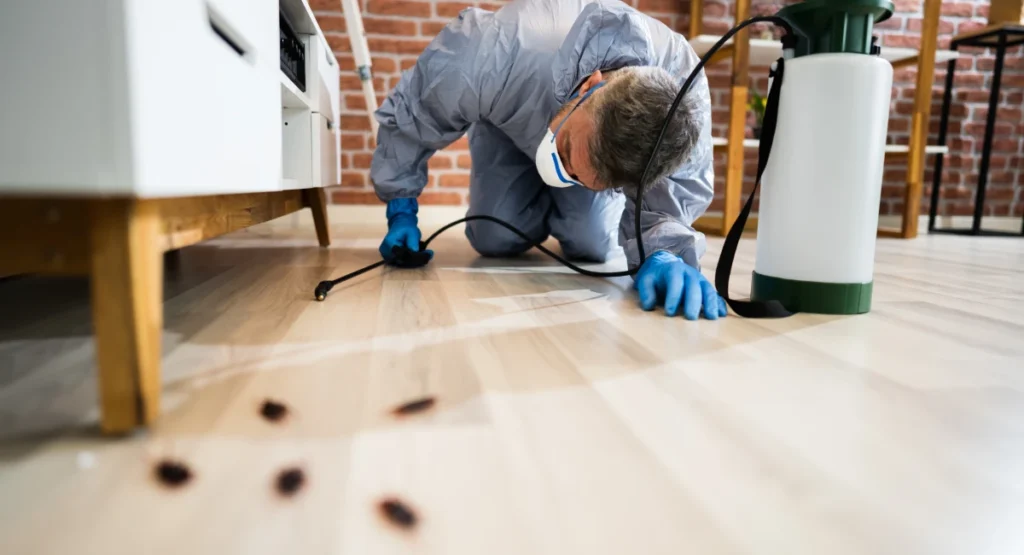
DIY, shop-bought sprays don’t penetrate egg cases, so chances are they’ll fail to break the cycle. They also miss the hidden source and the egg cases in hard-to-reach or inaccessible places. Using foggers to control cockroaches can create another problem. Their mist often reaches open areas better than concealed spaces. So roaches can retreat deeper into cracks instead of being eliminated.
A more effective approach combines sanitation, exclusion, monitoring, and strategically placed treatments. This is the foundation of Integrated Pest Management (IPM).
Cockroach Egg Prevention
IPM is a practical, ongoing strategy to make your property less attractive and less accessible to cockroaches. It identifies causes, reduces attractants, and monitors activity. Targeted treatment and exclusion are applied when necessary, and all work is fully documented for audit purposes.
In shared facilities such as residential buildings, institutions, and hospitality venues, roaches can easily travel through interconnected infrastructure, making early reporting critical for rapid, targeted intervention. Similarly, commercial and industrial properties must closely monitor receiving areas, where incoming shipments and pallets frequently introduce and conceal pests.
When to Contact a Professional
If you’re still seeing cockroaches, despite your best efforts, it may be time to seek professional support.
At Florida Pest Control, our expert cockroach exterminators have extensive experience in your area and can quickly identify species and vulnerabilities in your building. They offer advice and guidance, and can develop targeted control strategies to support your requirements.
Frequently Asked Questions
What Do Cockroach Eggs Look Like?
Roach eggs are laid inside an ‘ootheca’—a hard, dry-looking, oval, bean-shaped or purse-shaped capsule, that’s about ⅛ to about ½ an inch long. They can be light-brown to dark brown or almost black, and they have a crimped, ridged edge that the roach nymphs break through when they hatch.
If I Throw Away the Egg Case, Does That Solve the Roach Problem?
No. Because a female will produce many egg cases, and often they are well hidden. If you throw out the egg case, you also don’t solve the problem of the adult roaches nesting nearby.
If I See Cockroach Eggs, Have I Got an Infestation?
Probably. Because if you see egg cases, or even empty ones, then you’ll have 14-50 nymph cockroaches inside your property, and most people only spot roaches once they’ve grown and are established.
Will My DIY Shop-Bought Sprays Kill Cockroach Eggs?
Probably not. Because the ootheca egg case has a hard shell, it is an excellent defense against predators, dehydration, and chemicals. Eradicating the adults and the egg cases is a better solution. At Florida Pest Control, we use stronger, specialized, professional-grade treatments to eradicate both egg cases and cockroaches.