
Most Florida homeowners fight pests at the back door, spraying baseboards, and setting traps under the sink. But the real battle starts in your yard. If you’re like most people in the Sunshine State, your lawn care habits are quietly rolling out the welcome mat for ants, roaches, and mosquitoes every single spring.
Here’s the thing about spring pest control in Florida: pests never really leave. Unlike cooler states, where winter kills off populations, Florida’s warm climate just hits pause. The moment temperatures settle into the mid-70s (usually by late February), everything surges back. Hard.
And your lawn is ground zero.
The Connection Most Homeowners Miss
To a pest, your property is a resource hub offering three things every insect needs: moisture, shelter, and food. In Florida, your lawn delivers all three, especially if it’s overwatered, soggy, or stressed by the transition between rainy- and dry-season irrigation.
This is the aha moment most people don’t see coming: the way you water, mow, and maintain your turf directly controls how many pests show up at your door this spring. That’s not a metaphor. It’s biology.
Why Florida Lawns Are Pest Magnets
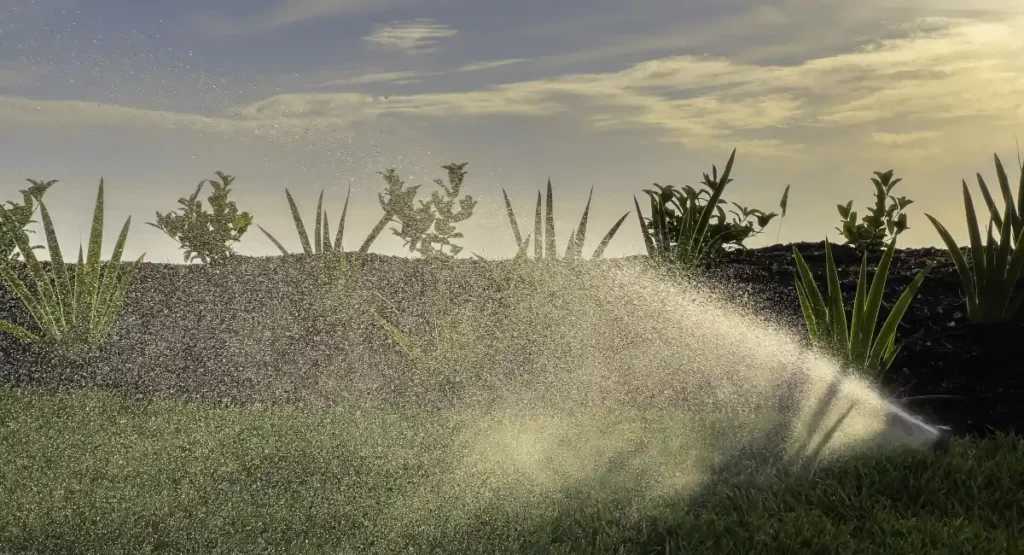
Water is the single biggest driver of Florida lawn pests, and our state already delivers humidity on a silver platter. Add an irrigation system that hasn’t been adjusted since last summer, and you’ve created a pest paradise.
- Mosquitoes need just a bottle cap’s worth of standing water to breed. Clogged gutters, low spots in the yard, and overwatered turf create the pooling that fuels the mosquito prevention challenge Florida homeowners face every spring.
- Roaches, such as the palmetto bugs that Floridians know too well, are drawn to damp soil, leaky hose bibs, and AC condensation lines. They hydrate in your soggy lawn, then move indoors to forage.
- Ants are moisture-sensitive in both directions. Saturated soil drives ant colonies upward into your home. Dry spells send them inside hunting for water. Either way, poor drainage puts you in the crosshairs.
- Termites are Florida’s most expensive moisture-driven pest. Subterranean termites thrive in damp soil and can travel unseen through mud tubes to reach your home’s structure. An overwatered lawn with poor drainage creates exactly the soil conditions they need to establish colonies dangerously close to your foundation.
Once spring rains taper off, most homeowners forget to dial back their sprinklers. However, that overwatered lawn becomes a breeding ground for every pest on this list.
Lawn Issues That Invite Pests
Leaf litter, palm fronds, and thick thatch (the compressed organic layer between grass blades and soil) trap humidity and create a micro-climate where roaches, fleas, and ants thrive. Overgrown vegetation touching your home acts as a physical bridge, allowing ants to march directly from a shrub onto your siding, bypassing any perimeter treatments.
Meanwhile, roaches feed on decaying organic matter in mulch beds, and many Florida ant species farm aphids on ornamental plants for honeydew. A neglected lawn isn’t just messy, it’s a pest buffet.

Florida’s Spring Pest Lineup
Effective spring pest control starts with knowing which ants, roaches, and mosquitoes in Florida are targeting your property.
- Fire ants: Destroy landscaping and deliver painful stings. Disturbing a mound often causes the colony to split and relocate, making DIY treatment a gamble.
- Carpenter ants: Excavate moist, damaged wood for nesting. Seeing large black ants indoors often signals a hidden moisture problem.
- American cockroaches (palmetto bugs): Live outdoors in moist areas but move indoors when conditions change. Reducing lawn moisture is highly effective against them.
- Asian cockroaches: Common across Florida, live in mulch and leaf litter, and swarm porches at night.
- Aedes mosquitoes (carriers of Zika and dengue): Are aggressive daytime biters that can breed in small containers on your property.
- Subterranean termites are most active in Florida’s spring, when warming soil triggers the swarming season. If you see discarded wings near windows or doors, it’s time to act — the colony is already established and feeding.
- Bees and wasps ramp up nest-building in early spring, favoring sheltered spots like eaves, soffits, fence posts, and overgrown vegetation. Paper wasps and yellow jackets are particularly aggressive when disturbed, and dense, unkempt landscaping gives them exactly the harborage they’re looking for.
Your Five-Step Pest Reset
Spring is your narrow window to act before populations explode. Here’s what to prioritize:
- Fix your irrigation, now. This is the single highest-impact change. Stop watering on summer settings. Overwatered lawn pests depend on that excess moisture. Cut it off.
- Dethatch and aerate. Dethatching removes the compressed layer trapping humidity. Aeration lets air and water reach the root zone, reduces surface pooling, and breaks up the damp conditions that soggy lawn bugs depend on.
- Mow at the right height. Tall grass holds dew and shade, keeping humidity high, which is perfect for pests. Moreover, scalping stresses turf and invites weeds that shelter ants and roaches. Florida grasses like St. Augustine and Bermuda each have an optimal height that keeps the canopy tight and pest habitat minimal.
- Clean up and create a buffer. Clear debris, pull vegetation back from your home’s exterior, and create a 12–18 inch dry zone of gravel between your foundation and any mulch or grass. This exposed strip makes it hard for insects to cross undetected.
- Eliminate standing water. Walk your property after a rain. Empty plant saucers weekly. Extend downspouts at least four feet from the foundation. These small actions are the backbone of mosquito prevention in Florida.
When to DIY and When to Call Florida Pest Services
Sealing cracks, managing irrigation, and keeping your yard clean are homeowner territory. But there’s a clear line between prevention and eradication.
Call a professional when:
- Fire ant mounds keep reappearing. Professional non-repellent products are carried back to the queen, destroying the nest at the source.
- Roaches are showing up regularly indoors. That means outdoor populations are large enough to create constant pressure. A professional perimeter treatment combined with lawn pest treatment addresses the root cause.
- Mosquito bites are a daily problem. Targeted larvicide treatments go far beyond citronella candles.
- Your pest problem keeps coming back. If ants return two days after you kill a trail, you’re only hitting foragers. Professionals track the colony to its source, often hidden deep in your lawn, and eliminate it.
- You spot discarded wings or mud tubes. These are telltale signs of a termite colony. DIY treatments can’t reach subterranean nests, and delays increase the risk of serious structural damage. Professional termite inspection and treatment are essential.
- Bees or wasps are nesting on or near your home. Removing an active nest yourself is dangerous, especially with yellow jackets or Africanised bees, both common in Florida. Our technicians safely remove nests and treat harborage areas to prevent their return.
Where Lawn Care Meets Pest Control
In Florida, the line between lawn care and pest control is nonexistent. At Florida Pest Services, we know that an overwatered, overgrown yard acts as a factory for ants, roaches, and mosquitoes, practically inviting them indoors.
Our integrated lawn care and pest control services treat your lawn as the first line of defense, keeping your grass looking good while protecting your home. These services include irrigation assessments, dethatching, targeted perimeter treatments, and drainage solutions.
Don’t wait for populations to explode. Contact Florida Pest Services today to schedule a comprehensive inspection, and let our expertise keep your home protected from the ground up.