
April’s rising humidity doesn’t just make Florida’s commercial kitchens harder to cool; it turns everyday moisture into a breeding ground for mosquitoes. This blog explores where that risk develops, why most food service operations are closer to prevention than they realize, and what targeted adjustments make the biggest difference before peak season arrives.
How Humidity Turns Routine Moisture into a Breeding Issue
Commercial kitchens in Florida manage moisture every day, whether condensation on cold-storage units, drainage from floor cleaning, or runoff from prep areas. What’s less widely recognized is that these same conditions can support mosquito breeding indoors, particularly as April brings a sustained rise in humidity and temperature.
At this point in the season, mosquito development accelerates. Eggs can mature into biting adults in under a week when standing water is present and temperatures remain consistently high. For commercial kitchens, this creates a specific operational risk: routine moisture that has always been present can quickly become a pest driver if it’s allowed to persist.
Why April Is a Turning Point for Mosquito Risk in Food Service
Mosquito pressure in Florida doesn’t begin in peak summer; it builds in spring. April is when that transition becomes operationally significant for food service.
With average humidity in central and south Florida regularly exceeding 75% by mid-April and overnight temperatures holding above 21°C (70°F), conditions for continuous mosquito breeding cycles persist around the clock. Intermittent rainfall adds further ambient moisture, even within enclosed environments. Together, these conditions narrow the margin for error in how standing water is managed across a facility.
Inside a commercial kitchen, the environment begins to mirror outdoor breeding conditions:
- Condensation forms more consistently and takes longer to dry
- Floor drains retain water between cleaning cycles
- Low-airflow areas hold moisture for extended periods
What shifts in April is the speed at which these conditions convert from routine moisture to active breeding sites. For facilities teams, April marks the point at which routine moisture management either continues to perform or begins to pose a risk.

Where Mosquito Breeding Happens in Commercial Kitchens
Every commercial kitchen generates standing water as a byproduct of daily dishwashing, cleaning, and runoff. The question isn’t whether moisture exists; it’s whether it persists long enough to become a breeding site. In Florida’s spring conditions, the answer is often yes.
- Condensation zones are often an overlooked source. Refrigeration units, cold storage, and HVAC systems continuously generate water. If condensate lines are slow or misdirected, or if they drain into areas with poor airflow, water can collect in shallow, undisturbed pools.
- Drainage systems are another common source. Floor drains are designed to handle high volumes of water, but partial blockages, improper grading, or infrequent flushing can leave residual standing water. In spring conditions, that water can remain long enough to support larval development.
- Cleaning and prep runoff adds a third layer. After washdowns, water can settle beneath equipment, along wall edges, or in storage areas. These are often out of direct sight and may not fully dry between shifts.
In each case, the moisture itself is a known operational reality. What’s often missing is the connection between these sources and the pest risk they carry during Florida’s spring conditions.
Reframing Mosquito Prevention as Moisture Control
For most food service operations, the infrastructure for mosquito prevention already exists. It’s embedded in cleaning schedules, maintenance routines, and drainage management. The gap is not capability; it’s prioritization.
When moisture is viewed purely as a sanitation or equipment issue, small accumulations may be considered acceptable between cleaning cycles. However, when facility teams understand that the same condensation check that protects refrigeration efficiency also eliminates a mosquito breeding site, prevention becomes embedded in operations rather than last-minute add-ons.
This reframing matters for three reasons:
- It reduces cost. Operations that wait for visible mosquito activity before acting typically incur higher treatment costs and greater service disruption. Proactive moisture management, which most kitchens are already partially doing, is significantly less expensive than reactive pest intervention.
- It supports compliance. Florida’s Division of Hotels and Restaurants (DHR) conducts routine food safety inspections that assess standing water and evidence of pest activity. A kitchen that can demonstrate integrated moisture and pest management is better positioned during these inspections than one that treats them as separate concerns.
- It protects staff and customer experience. Mosquitoes in a food service environment create immediate perception problems for diners, delivery and service staff, and anyone working in or visiting the facility. In a sector where reputation is closely tied to hygiene standards, even minor mosquito presence can undermine confidence.
For operations looking to align pest management more closely with day-to-day kitchen workflows, commercial restaurant pest control programs can help identify where moisture management and pest prevention overlap most effectively.
High-Impact Areas to Prioritize Before Humidity Peaks
A focused review of specific moisture points can significantly reduce mosquito risk in April, without requiring a full operational overhaul.
- Condensate Management Systems
Check that drip trays are emptied on a defined schedule, and that condensate lines discharge to properly draining outlets, not onto floors or into enclosed spaces. - Floor Drain Performance
Confirm that drains are flowing freely and that no standing water remains between cleaning cycles. Drains that are slow to clear should be serviced before humidity peaks. - Beneath and Behind Fixed Equipment
Areas under dishwashers, ice machines, and beverage stations are common sites for unnoticed water accumulation. Include these in routine cleaning inspections. - Transition Areas
Waste storage areas and outdoor wash-down zones are all points where kitchen-generated moisture meets Florida’s ambient humidity, creating conditions that are highly attractive to mosquitoes.
The Cost of Waiting for Visible Activity
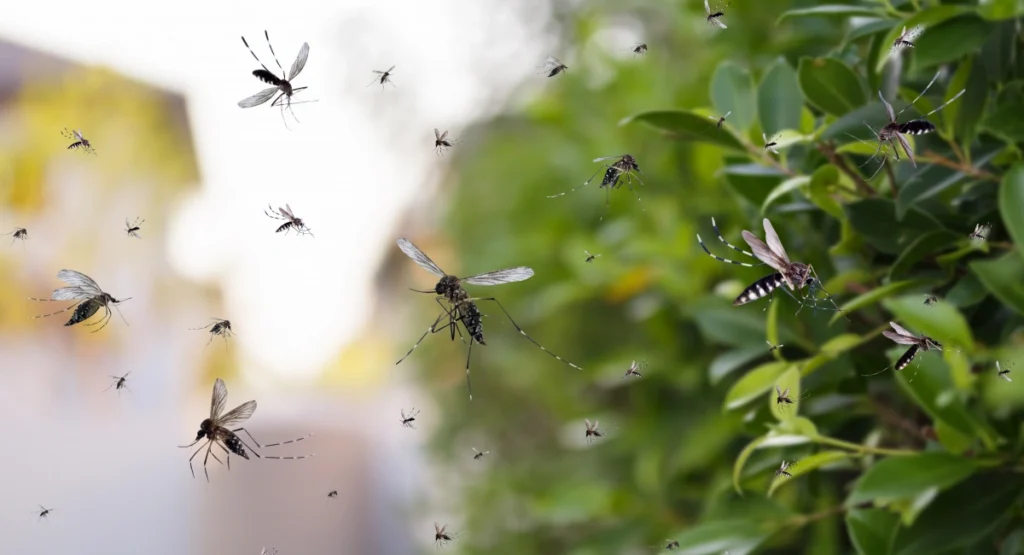
By the time mosquitoes are visible indoors, breeding has typically been underway for several cycles. A single female mosquito can lay 100–200 eggs at a time, and in April’s conditions, successive generations can establish rapidly. An active infestation requires a much more intensive, disruptive treatment regimen that can impact normal service.
Treatment during active service hours can affect kitchen workflow, front-of-house operations, and customer-facing areas simultaneously. For restaurants, canteens, food trucks, and cafes, the disruption extends beyond pest management into scheduling, service continuity, and staff confidence.
This is where the relationship between routine maintenance and pest prevention becomes most tangible. A facilities team that treats condensation management, drain maintenance, and post-cleaning water clearance as pest-relevant activities is effectively running a mosquito prevention program without the additional overhead.
Humidity Management Supports Broader Pest Control Outcomes
The moisture conditions that support mosquito breeding also attract flies, cockroaches, and other pests common in food service environments. Reducing standing water and improving airflow across a facility doesn’t just interrupt mosquito breeding; it creates a more stable, predictable pest profile overall.
In kitchens where moisture and organic residue overlap, around drain covers, beneath prep stations, and in waste handling areas, commercial disinfection and hygiene services can complement moisture management by addressing the sanitation conditions that intensify pest attraction during high-humidity periods.
Taking the Next Step Before the Season Does
April represents a narrow yet important window for Florida foodservice operations. The increased humidity is predictable, the breeding conditions are well understood, and the operational adjustments required are, in most cases, modest extensions of work already being done.
The facilities teams that use this window effectively (auditing moisture sources, tightening drainage and condensation protocols, and connecting routine maintenance to pest prevention outcomes) will manage the season with less disruption and lower cost than those that wait.
If your operation would benefit from a site-specific assessment of moisture-related pest risk, or if you’re looking to align your existing maintenance routines with a structured prevention approach, Florida Pest Control’s commercial mosquito control specialists can help you identify the right priorities for your facility before spring’s peak conditions take hold.
Protect Your Food Service Facility Today!
Check your drains and waste areas now to stop mosquitoes before the spring rush. An April plan protects your guests and ensures service continuity and satisfied guests.