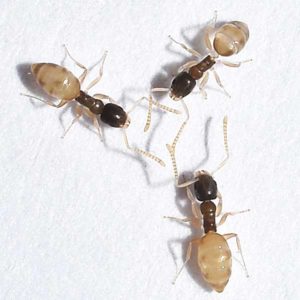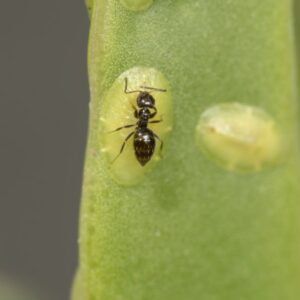
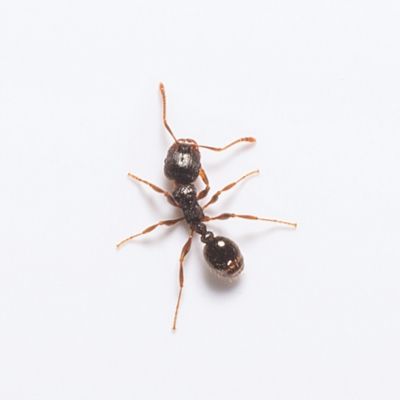
Pavement ants are persistent and constant invaders, in and around pavements, sidewalks, and building foundations in Florida. Also known as the immigrant pavement ant, they are native to Europe and were introduced into North America. They can have as many as 10,000 workers in a single colony, travel considerable distances, and quickly become a nuisance. Whether you manage a commercial property or live in a residential area, a pavement ant infestation can mean food contamination, unsightly debris, and unwanted swarming activity.
Characteristics
Pavement ants (Tetramorium immigrans) are small, dark brown to black ants that measure about 1/8 inch long. They have parallel lines on their head and thorax, and two spines on their back. Despite their size, these ants are aggressive when defending their colony and will fight off other ant species.
One unique pavement ant characteristic is their habit of creating small mounds of displaced soil near sidewalks, driveways, or inside buildings. These mounds are a sign that a nest is nearby. Their colonies can host thousands of workers and multiple queens, making them hard to eliminate without professional help.
Identification
Though small, pavement ants can form large visible trails as they move toward food. When winged swarmers appear, they are often mistaken for other common species, like odorous house ants or even termites. However, unlike termites, pavement ant swarmers have elbowed antennae and a narrow waist. Some other distinct traits to help with identification include:
- 12-segmented antennae with a three-segmented club
- Two-node waist and grooves on the head and thorax
Although they are named pavement ants, they are not limited to outdoor spaces when it comes to invading a property. Pavement ants are known to make a beeline for kitchens, canteens, pantries, and anywhere that food is regularly stored, prepared, or consumed. If you notice ant trails inside, you may be dealing with a growing pavement ant infestation.
Habitat
Their ideal nesting habitat is under concrete slabs, sidewalks, stones, and foundations. They may also build colonies under floors, inside insulation, or behind walls. Nests tend to be within easy reach of nearby food sources, which is one reason they’re often found in kitchens or breakrooms. The best way to prevent colonies from forming is to clean food preparation areas and avoid leaving food around.
In commercial areas pavement ant colonies are often found in high-traffic areas, like parking lots, patios, and commercial sidewalks, making them especially disruptive in retail and food service settings. This can lead to food contamination and health and safety issues that can be picked up during routine inspections and damage reputations.
Pavement Ants in Florida
Although Tetramorium immigrans is not native to Florida, it has adapted well to the region. The warm, humid climate in Florida supports high activity levels, which means indoor nesting can continue year-round if conditions remain stable. Pavement ants are persistent pests that will return without proper protection and prevention strategies.
They feed on grease, meat, sweets, seeds, and the honeydew secreted by aphids. Their ability to survive indoors makes infestations harder to manage, especially in multi-unit buildings or commercial kitchens. With a structured pest control program, businesses can avoid the disruption caused by ant infestations and the negative impact if the situation is not dealt with quickly.
Pavement Ant Behaviors, Threats, or Dangers
They typically forage in long trails, invading properties in search of food, and quickly form new colonies when nests are disturbed. Although they rarely bite or sting humans, they are highly protective of their nests and will aggressively defend them if threatened.
Pavement ants are particularly problematic in food areas, where they contaminate surfaces and spread through walls and floorboards. Their presence can lead to unsightly dirt piles, which affect cleanliness and hygiene. In commercial settings, pavement ant swarms can be especially disruptive, suddenly appearing in offices or retail spaces, causing both physical and reputational damage. For long-term protection, work with an ant control technician who can identify the source of the infestation and apply the proper treatment. Our experts will take remedial steps to discreetly eliminate ant populations and ensure your business remains compliant with industry hygiene standards.
Are Pavement Ants Hard to Get Rid of?
It can be difficult to eliminate pavement ant infestations. Their nests are often hidden under slabs or deep in cracks, making locating the colony challenging. Over-the-counter baits might temporarily reduce ant activity, but they rarely remove the colony entirely.
If you’re wondering how to get rid of pavement ants, the best approach is to call in a technician. A thorough inspection can uncover where ants are nesting and what’s drawing them inside. From there, a targeted treatment plan can be used to reduce the population and prevent the colony from rebuilding. If you suspect a pavement ant infestation, consult a professional ant exterminator.
How Many Pavement Ants Count as an Infestation?
Seeing a few ants in your home or business may not seem like a big deal. But pavement ant infestations often start small. You could be dealing with a colony if you spot foraging trails, winged swarmers, or soil piles indoors. You may think you can tackle a small infestation yourself, but it can quickly get out of control and escalate.
Because their colonies can number in the thousands and expand quickly, it doesn’t take many ants to create a larger issue. Once they establish themselves indoors, their activity often increases, especially if food sources are readily available. We will assess the situation and create a custom solution. Once the problem is under control, our ant exterminators will identify and seal access points and provide tips to try to prevent future infestations.
Frequently Asked Questions
Why Are They Called Pavement Ants?
Pavement ants are so-named because they build nests in or beneath cracks in pavement, sidewalks, and driveways. When you see small mounds of displaced soil, you’ll know they are busy.
Are Pavement Ants Dangerous?
This species is not known to spread disease or cause structural damage, but the ants can contaminate food and create a mess, which can be a health and safety risk.
What Do Pavement Ants Eat?
Pavement ants have a varied diet. They consume meat, grease, sweets, seeds, and dead insects. Outdoors, they are especially attracted to the honeydew produced by aphids and mealybugs.
Do Pavement Ants Cause Structural Damage?
They do not generally chew through wood like carpenter ants, but their habit of nesting under slabs and along foundations can create an ongoing nuisance and make buildings harder to maintain. Damage to pavements and sidewalks can also create a trip hazard, with potentially serious consequences for local municipalities.
When Are Pavement Ants Most Active?
Ant activity increases in spring and summer, especially when winged swarmers emerge to start new colonies. However, pavement ants can remain active year-round in warm climates like Florida, particularly if they nest indoors.