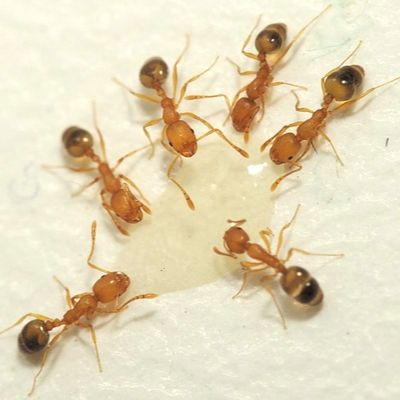
Pharaoh ants (Monomorium pharaonis) have earned a reputation as one of Florida’s most persistent indoor ant species. Originally from Africa, they more than likely arrived in the U.S. through shipping ports and have since adapted to living indoors year-round. Their preference for warm, humid spaces has helped them thrive in homes, and businesses.
What makes them such a problem? These ants can build massive colonies, nest in hidden areas, and spread harmful bacteria. A pharaoh ant infestation can be a serious issue for property owners, especially those managing healthcare or food service buildings. Without prompt action, they can contaminate food, invade sterile spaces, and overrun an entire structure.
Characteristics
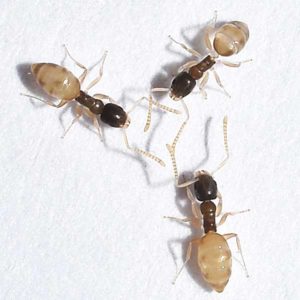
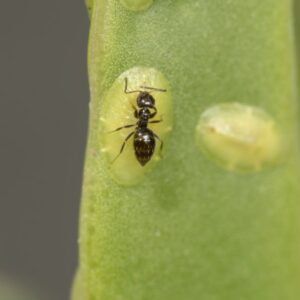
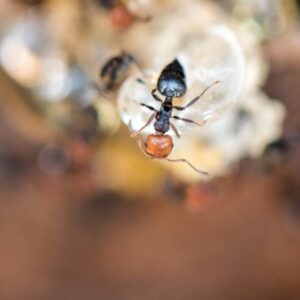
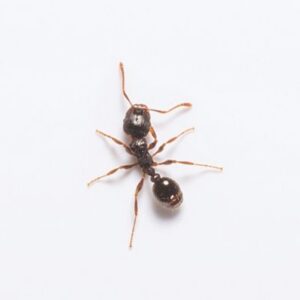
Pharaoh ants are one of the smallest ant species found indoors in Florida, measuring just about 1/16 of an inch. They range in color from pale yellow to reddish, with a darker-colored abdomen. Their small size allows them to move easily through tiny cracks, vents, and utility lines, making them hard to detect. Another standout characteristic of pharaoh ants is their ability to build large, multi-queen colonies. This setup helps them adapt quickly when disturbed, especially in busy indoor spaces.
Identification
Because of their size and color, pharaoh ants can easily go unnoticed until an infestation becomes widespread. Ant trails are the obvious sign of an outbreak and are likely to appear in kitchens, around baseboards, or near water sources.
Watch out for trails of ants moving between food and moisture sources and check along countertops, sinks, and plumbing entry points. If the ants are pale yellow or reddish, with dark tips on their abdomens, they’re probably pharaoh ants.
In large buildings, like hospitals and apartment complexes, nests can be scattered across many locations and are not easy to spot. There are strict regulations around hygiene and sanitation in high-risk buildings housing the sick or elderly. Therefore, signs of ant activity need to be addressed quickly to avoid contamination and the spread of disease.
Habitat
Pharaoh ant nests are almost always found close to a water source. They may nest in shaded areas like gardens, under rocks, or near sprinkler systems. They can also be found in wall voids, behind baseboards, and near plumbing fixtures—anywhere with access to warmth and moisture. Hospitals, commercial kitchens, and hotels provide ideal conditions for pharaoh ants, with steady warmth, frequent foot traffic, and constant access to food and moisture.
This ant species is highly active and constantly forages, especially for food sources rich in sugar and protein. This is why they’re common in kitchens and laundry rooms. Their ability to travel through electrical wiring and plumbing gives them access to nearly every nook and cranny. It is important to be especially vigilant in commercial kitchens and healthcare facilities, where they can disrupt routine activities, which can lead to serious consequences.
Pharaoh Ants in Florida
The warm, humid environment in Florida is perfect for pharaoh ants. They almost always nest indoors because they are well-protected and find it difficult to tolerate cold weather. This leads to problems in homes and commercial buildings. Their size gives them unlimited access in buildings, and their movement between contaminated and sterile areas raises the chance of pathogen spread. Once established, these pests can be hard to remove without professional help.
Furthermore, colonies are aggressive and may push out native species, giving them room to multiply. Even minor disturbances, like cleaning or using store-bought sprays, can cause colonies to splinter and spread. This is highly problematic when cleanliness and DIY pest control are often the go-to solution for property owners when they first notice ants in their buildings.
Pharaoh Ant Behaviors, Threats, or Dangers
Though they don’t bite, pharaoh ants can carry and transmit pathogens to people and pets, such as Salmonella and Streptococcus. As they forage, they contaminate food prep surfaces, utensils, and storage areas. In healthcare, their presence near surgical equipment and sterile areas presents a serious hygiene risk. Their small size means they can move unnoticed through wall voids, vents, and utility lines.
Because standard sprays or baits often cause colony splitting, it is recommended that you contact a professional ant exterminator at the earliest sign of an infestation. Our experts know the importance of discretion when it comes to pest control in high-risk areas. We can work around your schedule to address your specific needs to protect your property and the people within.
Are Pharaoh Ants Hard To Get Rid Of?
Pharaoh ant infestations are among the most difficult to control due to their size, ability to nest in hidden spaces, and colony splitting behavior, which makes them incredibly resilient. Most conventional DIY sprays make the problem worse by triggering budding, where the colony fragments and spreads. Over time, this leads to more nests and more ants. The only effective way to manage them is to work with an experienced pest control technician who understands their behavior and has access to professional-grade solutions tailored to eliminate pharaoh ant nests.
How Many Pharaoh Ants Count As An Infestation?
If you see even a handful of pharaoh ants inside your property, the visible ants are likely to be only a fraction of the infestation problem. Their colonies can be deceptive, reaching into the millions, often with many satellite nests hidden throughout a structure.
A few ants on your countertop could mean a fully established network of nests in wall voids, under floors, or above ceilings. Because they’re constantly foraging, sightings should be treated as signs of a larger issue. For homeowners, this means possible contamination of kitchens and pantries; for commercial facilities, the risk includes compromised sanitation standards and damaged reputations. Our technicians are trained ant exterminators. We tailor our pest control programs to meet your needs and provide protection from these invasive pests.
Frequently Asked Questions
Where Do Pharaoh Ants Typically Nest?
Pharaoh ants build nests in warm, moist locations like wall voids, behind baseboards, under sinks, and near HVAC units. Outdoors, they may nest in shaded gardens or under stones.
Are Pharaoh Ants Dangerous?
Although they don’t sting or bite, pharaoh ants can contaminate food, equipment, and sterile surfaces. If exposed, always contact a healthcare provider.
What Do Pharaoh Ants Eat?
They feed on sweets, grease, proteins, and other insects, dead or alive. Crumbs, spills, and pet food can all attract them indoors.
How Do Pharaoh Ants Spread Throughout a Building?
They move through plumbing lines, vents, and electrical conduits, making it easy for them to spread from room to room.
Where Are Pharaoh Ants Difficult to Control?
They’re most difficult to control in large, temperature-controlled buildings like hospitals, food facilities, and multi-unit housing because they nest in small, hidden areas. This can make them hard to find and manage.