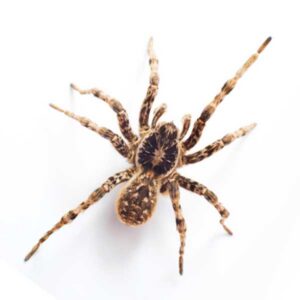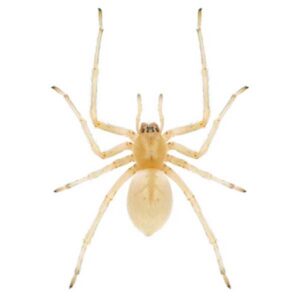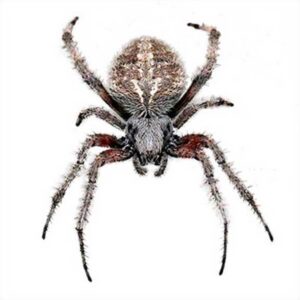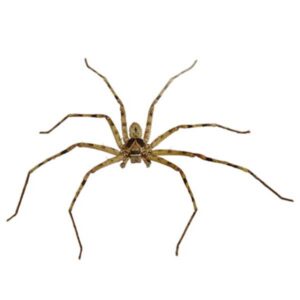
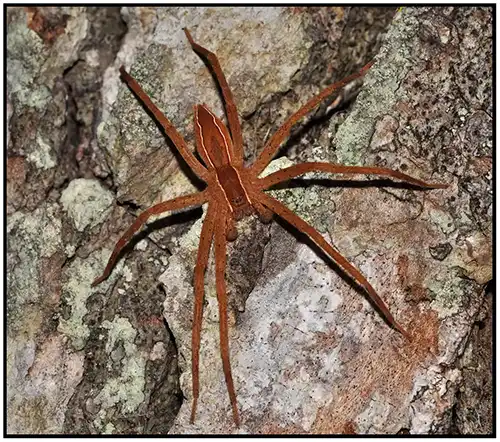
Nursery Web Spiders are often spotted across Florida, especially around homes, gardens, and grassy areas. Though their size and speed can be alarming at first glance, they are mostly harmless to people and play an important role in controlling insect populations. Knowing how to recognize and understand them can help you stay informed and protect your home.
Nursery Web Spiders in Florida
Nursery web spiders thrive in Florida’s warm and humid climate, along with its lush vegetation. They are part of the natural landscape and help control flying insect populations. You may encounter them on shrubs, outdoor furniture, or walls near porch lights, all places where insects gather.If you often find small spiders in Florida around your property, some may be juvenile nursery web spiders or other harmless species. These young spiders disperse soon after hatching and generally pose no danger. When they wander indoors, it’s usually accidental. Keeping windows and doors sealed, trimming vegetation near the home, and reducing outdoor lighting at night can help limit encounters.
Nursery Web Spider vs Wolf Spider
Because of their size and similar coloring, nursery web spiders are often mistaken for wolf spiders. Both are active hunters that rely on speed and vision instead of webs to catch prey, but several differences help tell them apart.
Nursery web spiders are generally slimmer and lighter in color, with long, delicate legs and a dark stripe running along the top of the body. Wolf spiders, on the other hand, have a stockier build and tend to be darker brown or gray with more robust legs.
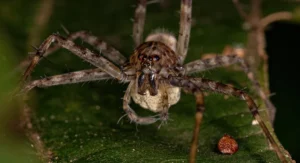
The way they care for their eggs also sets them apart. Female wolf spiders carry their egg sacs attached to the end of their abdomen. In contrast, female nursery web spiders hold the sac in their jaws until the spiderlings are ready to hatch. When that time comes, the nursery web spider attaches the sac to vegetation and spins a protective silk “nursery” around it, guarding the young until they disperse.
Their preferred environments also differ slightly. Nursery web spiders are often found among plants, tall grass, and shrubs, while wolf spiders stay closer to the ground in soil, under rocks, or within leaf litter.
Both spiders are known to wander into homes, but this is accidentally as they are not known to build webs indoors or pose a threat to humans and pets.
Despite their differences, each plays a valuable role in controlling insect populations in Florida’s natural environment.
Nursery Web Spider Behaviors, Threats, or Dangers
The Nursery web spider is an active hunter that relies on speed and sight rather than webs to catch its prey. It feeds on various insects, including flies, mosquitoes, and moths, helping control pest populations in gardens and natural spaces. These spiders are most active at night and often rest during the day on leaves, grass, or low shrubs where their brown coloring helps them blend in with their surroundings.
One of the most distinctive behaviors of this species is its parenting. Female nursery-web spiders carry their egg sacs in their jaws until the spiderlings are nearly ready to hatch. When that time comes, the female attaches the sac to vegetation. She spins a silk “nursery” around it, staying nearby to guard her young until they emerge. This level of care is uncommon among spiders and gives the species its name.
Despite their size and fast movements, nursery web spiders are not dangerous to people. They are shy and non-aggressive, choosing to flee rather than bite when disturbed. Bites are rare and usually occur only if the spider is handled or trapped against the skin. The bite is mild, often compared to a bee sting, and irritation usually fades quickly. Anyone who experiences a stronger reaction should contact a healthcare professional.
While the nursery web spider does not pose a threat to humans or pets, its presence indoors can be unsettling. These spiders may accidentally wander into homes while searching for prey or shelter, especially during warmer months. Keeping vegetation trimmed near the home, reducing outdoor lighting at night, and sealing small openings can help prevent these occasional visits.
If spiders become a frequent concern, a professional inspection from Florida Pest Control can help identify the source and provide practical, science-based solutions to protect your home long-term.
Pest Control Inspections You Can Trust
While nursery web spiders are not dangerous, spotting one inside can still be unsettling. If spiders are becoming a frequent issue, professional help can protect your home long-term.
At Florida Pest Control, our technicians know how to identify and manage all kinds of spider activity.
We can inspect your property to find entry points, remove existing spiders, and help reduce conditions that attract them, giving you lasting peace of mind.
To learn more or schedule an inspection, contact Florida Pest Control today.
Frequently Asked Questions
What Is The Lifespan Of A Nursery Web Spider?
The nursery web spider’s lifespan is about one year. They mature through spring and summer, reproduce in early fall, and most adults do not survive the winter.
Are Nursery Web Spiders Poisonous?
Nursery web spiders are not considered dangerous or medically significant. Their venom helps them subdue prey but poses no serious risk to people.
How Do You Get Rid Of Nursery Web Spiders?
If you find a nursery web spider in house settings, carefully relocate it outdoors. Regular cleaning, sealing cracks, and reducing clutter can help prevent future sightings. Professional pest management offers the most effective long-term solution for larger or recurring spider activity.