
Quick Overview
- Auditors want evidence that rodent stations and insect traps are working, reachable, and correctly placed before they accept a clean log.
- Hurricane repairs, holiday production peaks, and overflow storage can change how pests get in and move around. Rodent stations and stored-product pest traps should be moved to match.
- Sensor uptime, lure replacements, and physical inspections all help show that a reading of “zero” was actually measured.
- A strong pest-prevention audit trail demonstrates to procurement that low pest activity stems from a system that detects problems early.
Low or zero pest activity at a food processing or pharmaceutical manufacturing site is a good result. But to third-party auditors, a clean log is only as strong as the data behind it.
Auditors won’t take a clean record at face value. They will check the details, such as whether rodent stations and insect traps were working, reachable, and in the right places, to confirm that compliance is actually being met.
A Zero Entry Isn’t Always Proof
Florida’s heat and humidity make food and pharma sites a constant target for pests. University of Florida IFAS research shows that roof rats and Norway rats are prolific year-round breeders, and both enter warehouses to find food and shelter. Warm conditions also help stored-product insects, such as Indian meal moths and drugstore beetles, develop faster. So when an auditor sees month after month of zero entries, they’ll want to know how you got that result.
A zero entry means a device detected nothing and doesn’t prove there were no pests at all. A rodent trap blocked by pallets, a sensor with a dead battery, or an insect trap with an expired pheromone lure will all report zero.
Both industries are governed by strict standards. FDA rules for food plants (21 CFR 117.35) require pests to be kept out of every area of the facility, while cGMP rules for drug manufacturing (21 CFR 211.56) require written pest control procedures. Moreover, auditors want proof that the facility pest program works in practice, not just on paper.
A strong commercial IPM (Integrated Pest Management) audit trail gives them that proof by answering three questions:
- Device uptime: Were all rodent stations and insect traps working, serviced, and checked on schedule?
- Accessibility: Could each station be reached and inspected?
- Placement review: Do station locations still align with how the facility operates today?
If a station can’t be inspected, log it as an exception, not as another zero. That one habit makes clean data much easier to trust.

When Site Maps No Longer Match the Floor
Most monitoring plans start with a site map, but facilities change, especially in storm-prone Florida, so the map needs regular updates. Hurricane season runs through November 30 and often leaves behind repairs, replaced doors, and temporary staging areas. Holiday production peaks also fill warehouses and overflow storage. Each of these can change the routes pests use to enter and move through buildings.
As a result, a perimeter plan drawn up in spring at distribution hubs along the I-4 corridor and near ports such as Jacksonville and Tampa may not reflect the site by late fall.
Verifying zero pest activity means checking that monitoring still fits the floor. Rodent station placement should be reviewed and adjusted after any major change, not just once a year.
Insect monitoring needs the same attention. Facilities that handle grains, spices, dry pharmaceutical ingredients, or packaging materials need stored-product pest monitoring that follows stock as it moves. Pheromone traps work best near the products they protect, so when ingredients are moved to overflow storage, the traps should move with them.
In pharmaceutical plants, schedule these reviews around access controls and cleanroom requirements so monitoring never puts hygiene at risk.
Monitoring Data Needs Validation Too
Connected devices help facilities track rodent activity between service visits. For example, systems such as PestConnect rodent monitoring timestamp every alert, giving you a timestamped record of both activity and inactivity to show an auditor.
But a record is only useful if the devices are working. To validate digital rodent monitoring and insect trap data, confirm that:
- Sensors stayed online, batteries worked, and signal drops were logged
Pheromone lures and glue boards were replaced on schedule - Damaged or dusty traps were noted
- Insect counts were compared month to month to spot gradual increases before they affect product
If a sensor went offline for a week, that week should not count as zero activity.
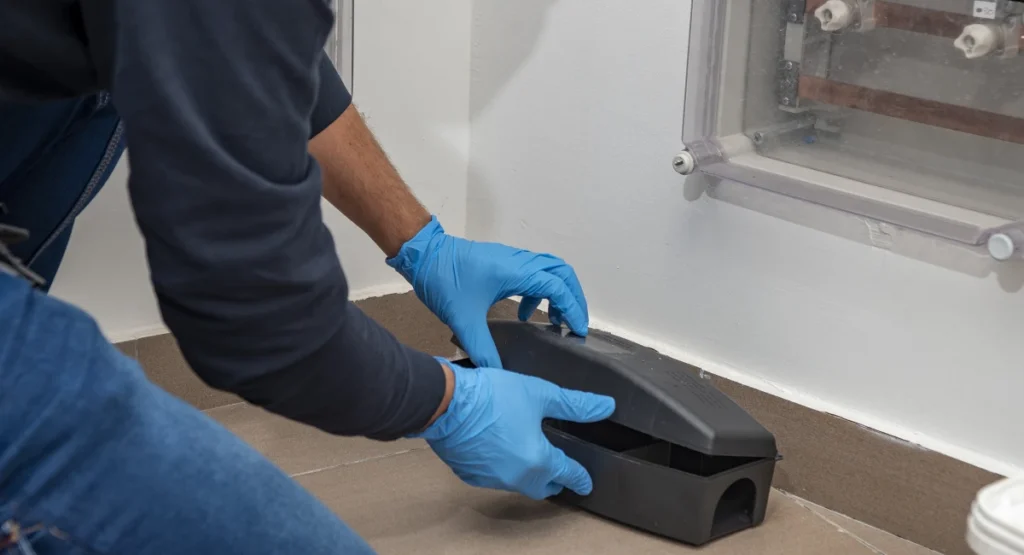
Physical inspections are still important, because a sensor can show normal readings even if the trap is moved or blocked. Strong pest control records combine digital data, physical checks, and clear follow-up. This combination is what commercial pest monitoring audit compliance depends on.
Showing Procurement What Zero Is Worth
When pest activity is low at budget time, you may have a hard time persuading procurement to allocate sufficient funds to maintain your clean record. Maintaining compliance takes ongoing effort, and facility managers must show that zero pest activity is the return on investment (ROI) the company is paying for.
That case is only as strong as the data behind it. The clean logs you take to procurement are the same records a third-party auditor will test. If those records can’t show how “zero” was measured, they are hard to defend in either room.
The strongest approach is to talk about what the program checked, not just what it caught. That means showing:
- Verified coverage: every station working, reachable, and correctly placed
- Exception reporting: data gaps logged rather than hidden
- Corrective action tracking: issues assigned, fixed, and recorded
- Risk-based placement: monitoring moved as operations changed
This approach keeps expectations realistic. A clean log alone does not prove pests were stopped. However, verified records show your business invested in a system that finds issues early. That readiness is what zero is really worth, built on sound integrated pest management practices.
A Low-Activity Period Is the Right Time to Review
Year-end is when many budgets are set, and many audits are scheduled. It is also when a program with little reported pest activity is easiest to examine without pressure.
Before your next audit or budget review, pull your last quarter of monitoring logs and check two things: confirm that any blocked traps or offline sensors were logged as exceptions rather than zeros, and walk your floor to verify that your site map still matches where stock and doors sit today.
Florida Pest Control has supported businesses across the state since 1949. Our certified professionals work with food processors and pharmaceutical manufacturers to keep rodent and insect monitoring data accurate and audit-ready. If you’d like a second look at whether your clean logs would hold up to scrutiny, our team is happy to help and discuss our commercial support.
By: Nicola Gordon-Seymour
November 25th, 2026