
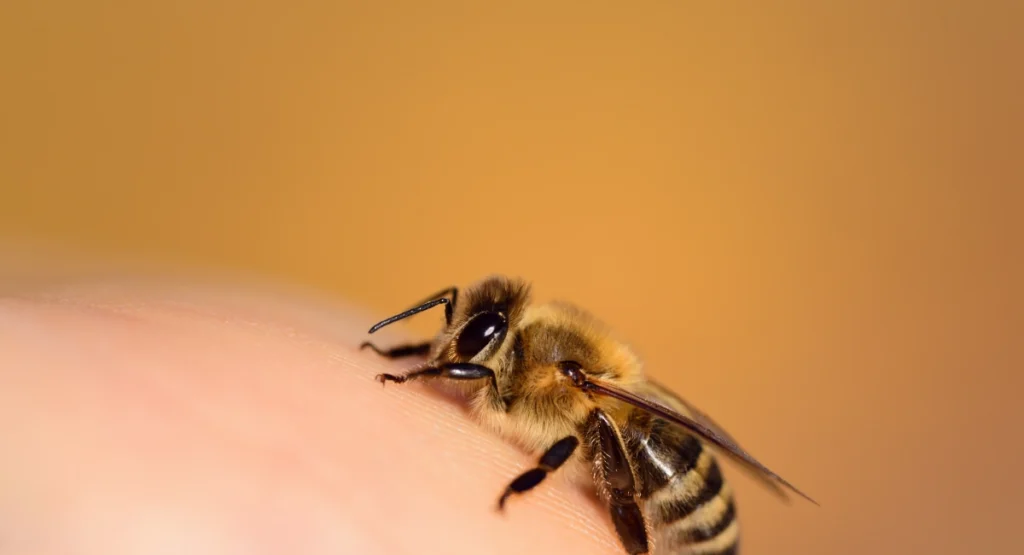
Quick Facts About Bee & Wasp Stings
- Bees leave their barbed stinger behind and can only sting once, while wasps retain their stinger and can sting repeatedly.
- Bee stings inject roughly 50 micrograms of venom, whereas wasp stings inject two to 15 micrograms per sting in rapid succession.
- Bee and wasp venom differ, but both can cause redness, swelling, soreness, and itchiness due to histamine release.
- Both types of stings can trigger allergic reactions, including severe anaphylaxis with symptoms like difficulty breathing and throat swelling.
- Identifying whether bees or wasps are present helps determine sting risk and guides proper nest removal.
Jump to:
Bee Sting vs. Wasp Sting: Which is Worse?
Bee stings and wasp stings can feel almost the same, as both can feel like sharp, immediate pain, quickly followed by a skin reaction. But the potential for repeated stings, and the quantity of venom delivered are quite different.
For the average person, neither type of sting is intrinsically worse for your health, as both usually result in a localized red swollen bump that fades within a few days. However, the danger increases significantly if you have an allergy to the specific proteins in the venom, or if you encounter and disrupt a wasp nest.
There are three main differences between bee and wasp stings:
1.
Stinger
When a bee stings, it ejects its stinger into your body, sometimes leaving behind its venom sac, rendering it unable to sting again. The bee will then die after stinging. Wasp stingers remain intact, so they can sting you many times in a row.
2.
Volume
Bees sting just once, but inject all of their venom into their victim. This usually totals 50 micrograms of venom. Wasps only inject 2-15 micrograms of venom per sting, but they can issue many stings in a short amount of time.
3.
Venom
Wasps and bees have different allergens in their venom. Despite this, their stings both result in the release of histamine in our bodies, which causes a breakout of hive-like patterns on the skin.
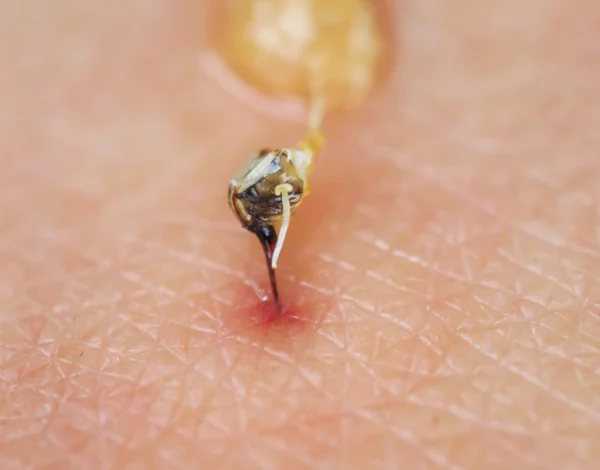
What Does a Bee Sting Look Like on Skin?
The main physical sign of a bee sting is the presence of a stinger left in your skin. This may look like the image on the left, where it sticks out of your skin with a venom sac attached, or it could look more like a splinter.
Bee stings often result in swelling and redness, but the area may appear more “ragged” if the stinger was pulled out.
What Does a Wasp Sting Look Like on Skin?
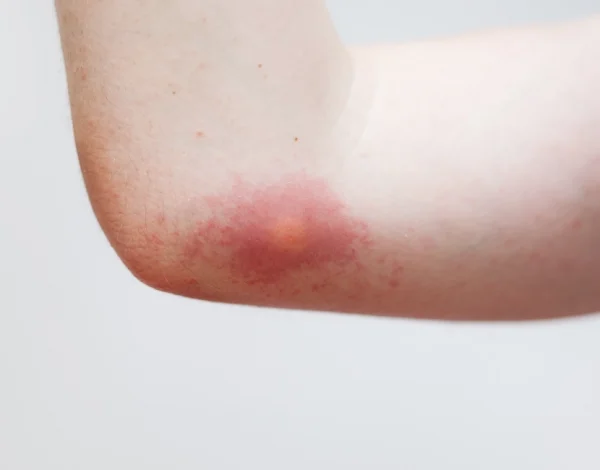
Wasp stings often present as a prominent red mark with a tiny puncture wound in the middle, which may quickly develop a small white pustule (wheal) around the entry point.
The surrounding area usually becomes red, itchy, and warm to the touch. Because wasps can attack multiple times, you might find several of these marks clustered together.
Do Bee and Wasp Stings Cause Allergic Reactions?
It is possible to develop an allergic reaction to both wasp and bee stings. You might be allergic to one but not the other, to both kinds of stings, or to neither.
Bee and wasp stings usually only result in mild symptoms, like:
- Pain and soreness
- Swelling
- Itchiness and redness
- Site of the sting is warm to the touch
Unfortunately, severe allergic reactions are more common than many people expect. Thousands of people visit the emergency room annually for complications resulting from anaphylaxis, the most dangerous reaction that results from bee and wasp stings.
The most serious symptoms of anaphylaxis are:
- Difficulty breathing
- Swelling of the throat and tongue
- Vomiting
- Fainting
- Pain and itchiness all over the body
How to Treat Bee and Wasp Stings Safely
The first priority is to check the site for a stinger and remove it as quickly as possible. Avoid using tweezers, as this can actually pump more venom into your system, worsening the red, swollen bump.
Once you have removed the stinger—if there was one present—you can follow these steps to clean and treat the area:
- Wash the area thoroughly with soap and water to reduce the risk of infection
- Apply a cold compress for 15-20 minutes to reduce swelling and slow venom spread
- Keep the affected limb elevated to reduce any throbbing sensations
A local pharmacist can recommend over-the-counter treatments, such as antihistamine creams or tablets, to reduce the itchiness and swelling. If the pain is significant, simple painkillers can help.
Keep a close eye on the site for a few hours. Regardless of which insect is responsible, if you experience dizziness, nausea, swelling of the throat, or notice the redness spreading rapidly, you should seek emergency medical help immediately.
Wasp and Bee Control in Florida
Bee and wasp stings should be taken very seriously. It is possible to have an allergic reaction to a sting, even if you haven’t in the past.
If you can’t tell which kind of stinging insect is in your Florida yard, contact your local pest control company to arrange an inspection. Our experts at Florida Pest Control can identify any type of bee or wasp on your property, locate the nest, and remove it safely and promptly. Contact us today for a free estimate on nest removal services.