
Spotting any kind of roach in the home is alarming, before even thinking about which species it might be. Most humans have an intrinsic fear of the insect, which is believed to go as far back as the Ancient Egyptians. But it’s also quite surprising for a Florida woods cockroach to be in your home, as they are almost exclusively outdoor pests.
Let’s take a closer look at the characteristics and behavior of the wood roach, as well as why you might find them indoors.
Jump to:
Wood or Woods Cockroach?
The correct name for this roach is the Florida Woods Cockroach, but it is also frequently referred to as a Florida wood roach, wood roach, Florida roach, palmetto bugs, and even a stinking cockroach or stinkroach—we’ll get to those two later.
What Is a Wood Roach?
So, what is a wood roach? They’re roaches that generally live outdoors in damp areas. They are often found around and feeding on decaying wood, hence their name. They can also be found harboring within leaf litter, palmetto trees, logs, tree stumps, and loose bark.
Florida’s climate and abundance of waterscapes provide perfect outdoor conditions for most types of cockroaches, and the Florida woods roach is no exception.
What Does a Wood Roach Look Like?
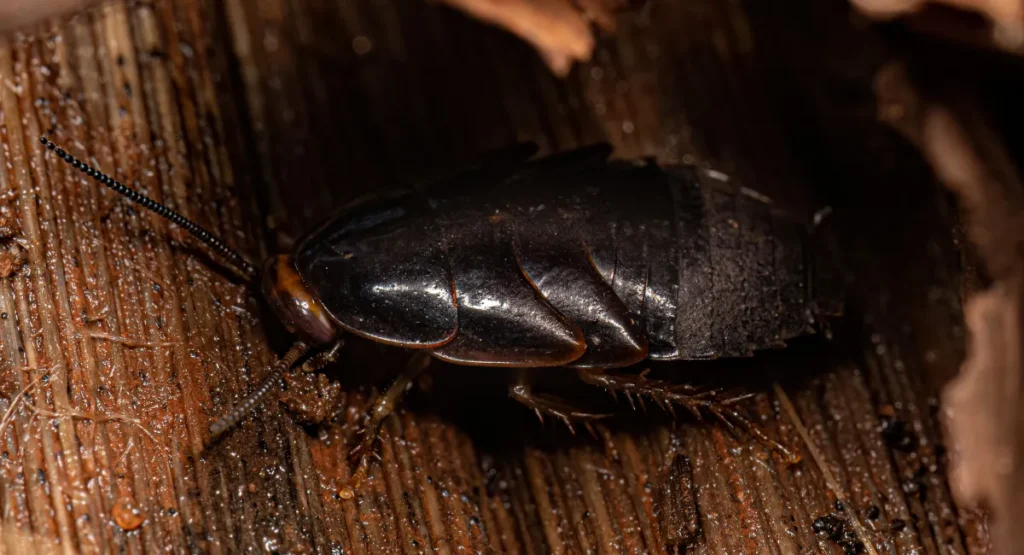
Florida wood roaches are sometimes confused with American cockroaches, which are also known as palmetto bugs. They also tend to be much smaller and more squat, as they are almost as wide as they are long.
The Florida wood roach has a distinct ‘segmented’ appearance across its dark brown colored thorax. A wood roach does have wings, but can’t fly—whereas American cockroaches can fly, albeit more like gliding.
As well as not being able to fly, wood roaches don’t tend to scuttle like many other roaches. They actually move very slowly, which can be helpful when identifying them.
Finding a Wood Roach in the House
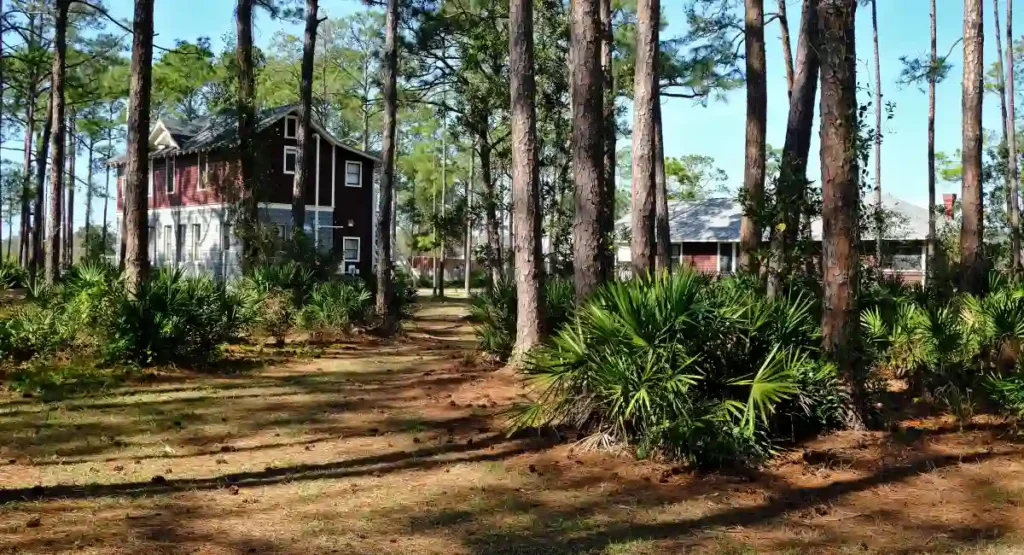
Although they aren’t usually known as indoor pests, wood roaches may enter a building in search of shelter and water or be attracted by exterior lighting. It’s also possible that they are brought into a home accidentally with firewood, potted plants, or other outdoor materials. This is especially likely if you have log piles or gardening supplies near a main entry or the building’s foundation.
Avoid wood roaches accidentally entering your home by:
- Checking items before bringing them indoors
- Raking and discarding fallen leaves
- Clearing up outdoor clutter and garden waste
- Moving pots and gardening supplies further from entry points
- Checking for and covering unsealed openings where roaches could enter
Florida wood roaches don’t tend to survive for long indoors, and they don’t carry much risk in terms of spreading bacteria compared to many other cockroaches. They also don’t bite or sting.
What they can do, though, is release a foul, defensive spray when they feel threatened, which is where nicknames like stinkroach or stinking cockroach come from. Not only is it pungent, the spray can leave an oily residue and stain surfaces and furnishings, and potentially cause irritation if a person comes into contact with it.
When To Call in Cockroach Exterminators
In many cases, seeing a single wood cockroach indoors does not necessarily mean there is an established indoor infestation. Still, repeated sightings should not be ignored, particularly in properties with gaps around doors, windows, utility lines, or foundations. Additionally, you’ll likely want to avoid approaching and removing them by yourself, in case a startled roach directs its defensive spray toward you.
If you do attempt to remove a wood cockroach in your house, ensure you protect yourself by wearing protective clothing and covering your face and skin. For any stains or residue, try using a soap or cleanser that cuts through grease.
We can help you identify, safely remove, and prevent Florida wood cockroaches around your home. Contact our team to discuss our professional cockroach control services.