
Quick Facts About Fire Ants in Florida
- Fire ants deliver painful stings, can attack in large numbers, and may cause dangerous allergic reactions.
- Florida’s warm, humid climate supports fire ant populations, which often build outdoor mounds in lawns, parks, fields, and along concrete edges.
- Fire ants are dull red, 1/8–¼ inches long, with two bumps between the abdomen and thorax; their mounds can reach up to 18 inches high and have no opening at the top.
- Disturbed fire ant mounds trigger a coordinated attack, with ants emerging together and stinging repeatedly.
- Queen fire ants can lay up to 800 eggs per day, producing colonies of 100,000–500,000 ants with extensive underground tunnels.
Jump to:
What Fire Ants Look Like
Where Fire Ants Live In Florida
How Dangerous Fire Ants Are
Fire Ant Mound And Colony Behavior
Professional Fire Ant Control Services
Fire ants are a serious threat throughout Florida, known for their painful stings and aggressive colony behavior. These reddish ants thrive in the state’s warm, humid climate and often build large mounds in yards, parks, and other open areas. Because their colonies can contain hundreds of thousands of ants, and they attack in groups when disturbed, recognizing fire ant activity early is essential for safety. Florida Pest Control provides expert identification and safe removal to help protect your family and property from these dangerous pests.
Are There Fire Ants in Florida?
Yes, there are fire ants in Florida. Fire ants’ range stretches across most of the southeastern United States.
Are Fire Ants Dangerous?
These small, yet powerful, insects bite and sting approximately 14 million people each year. For most people, fire ant bites are not a big deal. They will hurt but you are unlikely to need medical attention. However, for those hypersensitive to bug stings, the venom from these ants can be life-threatening. Additionally, getting large numbers of bites can be highly dangerous to people. If you’re ever attacked by fire ants and start feeling tightness in your chest, difficulty breathing, or onset of an allergic reaction, seek immediate medical care.
What Do Fire Ants Look Like?
Fire ants measure from 1/8 – ¼ inch and are a dull red color. Fire ants are most known for their stinger, which in accordance with their aggressive nature, can lead to bad encounters. Fire ants are best recognized by two bumps that they have between the abdomen and thorax.
The easiest way to identify fire ants is through their mounds. These mounds range in size—some are small bumps, others can be up to 18 inches high. If you run into a fire ant mound, it won’t feature an opening on the top like other ant mounds. A mound that is about 7 inches high can house over 200,000 ants, which is precisely why these ants pose such a huge threat.
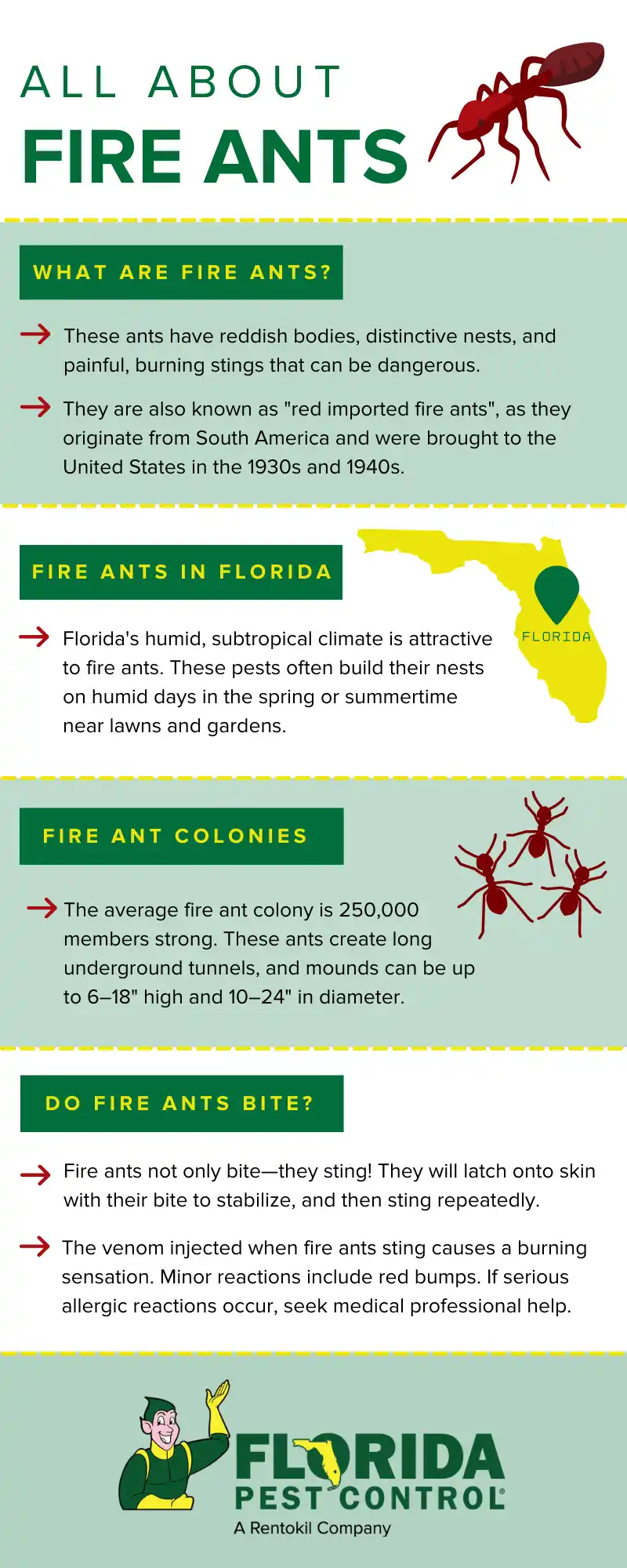
5 Facts About Fire Ants
Fire ants differ from your typical house ant in a number of ways. The most important things to know about these potentially dangerous pests include:
- If a fire ant mound is disturbed, they will attack as one unit. When disturbed, the ants will begin spilling out ready to attack—and each ant will sting repeatedly.
- To begin a fire ant colony, queen fire ants mate with males, killing the male in the process, and fly to the site at which she’ll begin the new colony. The queen will lay up to 800 eggs per day, growing the colony to an average size of 100,000 to 500,000 ants.
- Fire ants don’t bite—they sting! Their stings can result in a burning sensation, hence their name. The sting site may swell and itch. A small pustule sometimes develops where the stinger enters the skin.
- If fire ants get on you, it’s important to quickly and repeatedly brush them off your skin. The ants can latch on tight, meaning shaking won’t repel them. If you develop symptoms from fire ants, it’s important to seek medical attention.
- Fire ants typically nest outdoors in open areas. Parks and fields are usually primary targets, but yards can be as well. The mounds are often found lining your grass and concrete, and they typically form on humid days.
Fire Ant Control in Florida
Trying to get rid of a fire ant mound yourself is dangerous. Their colonies extend far under the ground and feature multiple queens. If you have noticed a fire ant mound grow in your yard, the safest and most effective solution is contacting your local ant control experts to get rid of them.