
The subtropical Florida climate doesn’t offer the hard winter reset that commercial food facilities in northern states rely on to suppress pest populations. Instead, pest activity builds incrementally through the cooler months and accelerates sharply as temperatures push past the mid-70s in late February and March. This places particular demands on food processing pest management programs, where the margin between audit-ready and non-compliant narrows quickly as spring conditions take hold.
Structural exclusion (or the practice of physically sealing a facility against pest entry) is the frontline defense during this period. Buildings that only fix gaps after pests get in end up with double the work. They spend the whole season chasing their tail to fix audit failures that never should have happened. Understanding which Florida-specific risks are intensifying and why early spring is the optimal time to act can make the difference between a clean audit and a corrective action report.
Why March Is the Turning Point for Audit Readiness
Pest activity builds incrementally through the cooler months and accelerates sharply as temperatures climb past the mid-70s in late February and March. For food facility managers operating under HACCP or GFSI-benchmarked audit standards, this acceleration demands a structural response, not just an increase in service frequency.
Three major risks hit at once in March, making it the most important month for exclusion planning:
Subterranean Termite Swarm Season
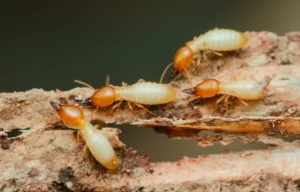
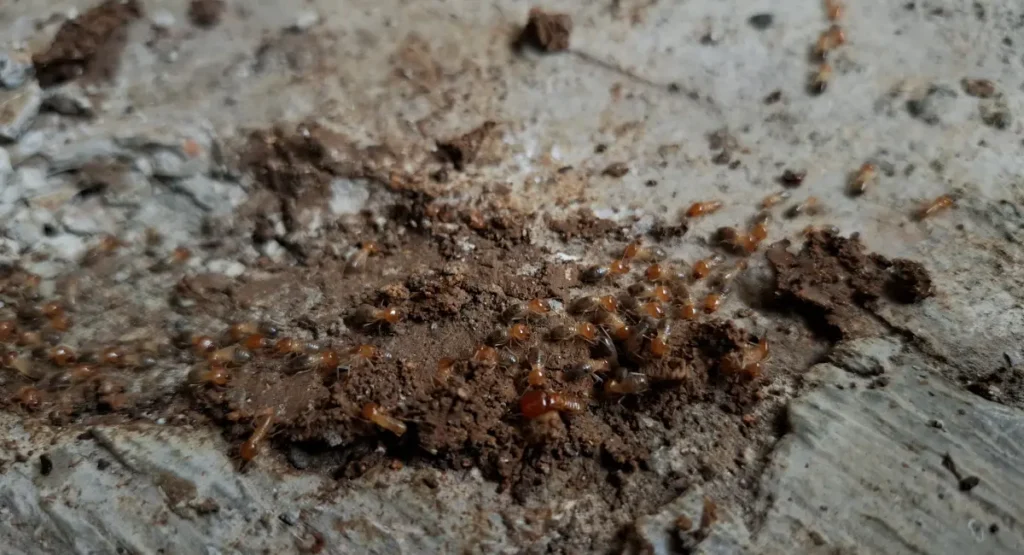
Florida is home to some of the most aggressive subterranean termite species in the United States, including Formosan and Asian subterranean termites. Swarm season typically peaks between March and May, with reproductive alates emerging in large numbers after warm, humid evenings — often following heavy rainfall.
For food processing facilities, the risk isn’t limited to structural timber. Termites can compromise wall cavities, expansion joints, and even insulation, creating hidden pathways that other pests can exploit. Swarmer activity near loading docks, exterior lighting, or drainage infrastructure should be treated as an early warning, not a cosmetic issue. Facilities with slab-on-grade construction require particular attention at plumbing penetrations and along foundation edges, where moisture can accumulate.
Roof Rat Intrusion Through Elevated Entry Points
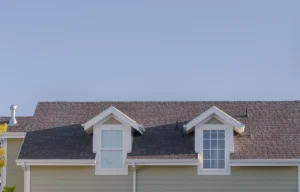
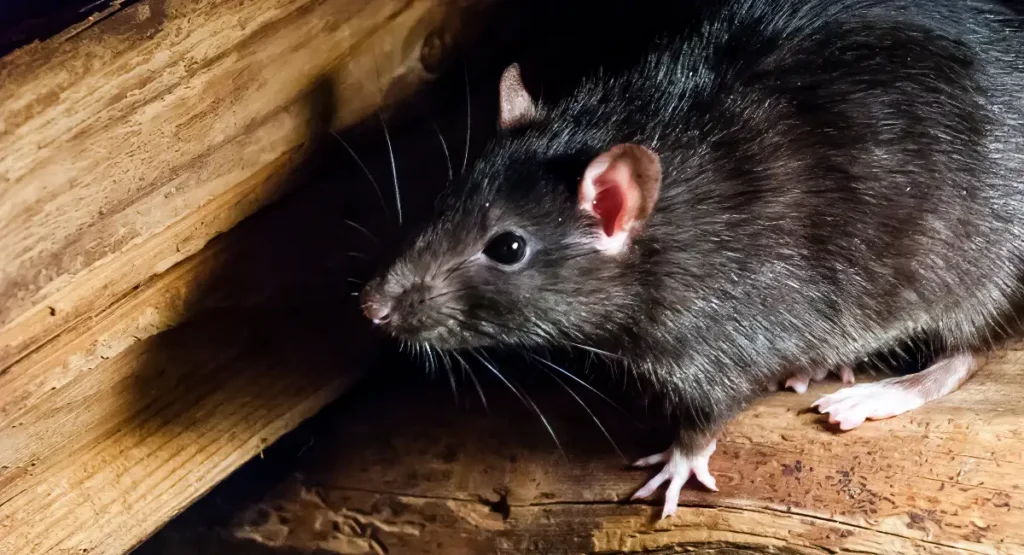
Roof rats (Rattus rattus) are a constant challenge in Florida’s food sector. Unlike Norway rats, which tend to burrow at ground level, roof rats exploit elevated entry points, such as damaged soffit panels, unsealed utility penetrations, deteriorating roof flashing, and gaps around HVAC ductwork. As spring vegetation grows, overhanging branches and climbing plants provide direct access to rooflines.
In a food processing environment, a single roof rat breach can trigger audit non-conformances, contamination risk across production and storage zones, and significant remediation costs. Facilities that handle stored product ingredients are especially vulnerable, as rodent activity in overhead spaces can go undetected until contamination evidence appears on production floors.
Moisture-Driven Pest Escalation
Florida’s spring rain season introduces sustained humidity that many facility envelopes struggle to manage. Condensation around cold-storage transitions, pooling near drainage systems, and moisture intrusion through ageing seals all create conditions that attract cockroaches, drain flies, and fungus-feeding insects.
These pests signal environmental conditions that auditors interpret as systemic gaps in facility management. Identifying and resolving moisture intrusion points is as much an exclusion priority as sealing a gap in a dock door.
Structural Exclusion as a Compliance Strategy
In regulated food environments, exclusion is a documented, auditable component of an integrated pest management program. Third-party audit standards, including those under GFSI-benchmarked schemes such as SQF, BRC, and FSSC 22000, evaluate the physical integrity of a facility’s pest barriers as part of their scoring criteria.
Exclusion work in a food facility typically addresses several categories of vulnerability:
- Perimeter integrity — expansion joints, wall-to-floor junctions, dock leveller gaps, and utility conduit penetrations
- Roofline and upper structure — soffit panels, ridge vents, HVAC curbing, and pipe boots
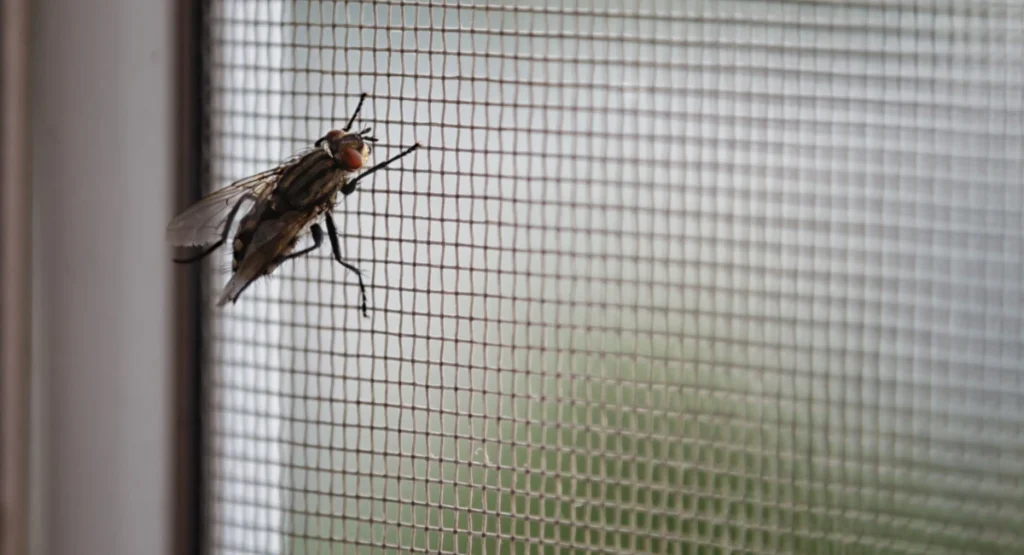
- Door and opening management — dock seals, personnel door sweeps, air curtain functionality, and screen condition
- Below-grade exposure — foundation cracks, drainage access points, and sub-slab conduit entries where subterranean termites and moisture converge
When these elements are assessed and addressed systematically, the facility’s pest management documentation reflects a proactive posture that auditors recognize. When they’re neglected, even a well-run interior monitoring program can be undermined by exterior breaches that introduce new pest populations between service visits.
Using Production Downtime as a Strategic Window
Many Florida food processors experience planned production pauses or seasonal line changeovers during the late winter and early spring period. These windows, whether driven by product cycles, maintenance schedules, or regulatory shutdowns, represent an underutilized opportunity for comprehensive exclusion work.
During active production, access to critical areas such as rooflines above processing zones, cold-storage transition points, and high-hygiene areas is often restricted. Facilities that align exclusion program with planned downtime gain several advantages.
Work can be completed more thoroughly when production equipment is offline. Remediation materials, such as sealants, mesh barriers, and mechanical exclusion devices, can be applied and cured without time constraints. The resulting documentation is available ahead of upcoming audit cycles, demonstrating that the facility addressed seasonal risk before it materialized.
What a Pre-Season Exclusion Assessment Should Cover
A structured exclusion assessment, ahead of Florida’s spring escalation, should consider and respond to how Florida’s climate interacts with facility infrastructure.
- Termite exposure mapping. This includes evaluating soil-to-structure contact points, inspecting expansion joints and control joints for evidence of mud tubes, and reviewing the condition of any existing termite management systems.
- Roof and upper-structure survey. A targeted inspection of roofline vulnerabilities should assess soffit condition, flashing integrity, HVAC platform seals, and any evidence of rodent gnawing or nesting material. For facilities with flat or low-slope roofs, standing water and debris accumulation near drainage points can accelerate deterioration of exclusion barriers.
- Moisture and drainage review. Identifying areas where water intrusion or condensation creates pest-conducive conditions is essential. This includes cold-storage doorways, wash-down areas with inadequate drainage, and exterior grading that directs water toward the building envelope rather than away from it.
- Documentation alignment. The assessment should produce records that integrate with the facility’s existing pest management documentation — site maps, exclusion work orders, photographic evidence of completed repairs, and updated risk assessments that reflect current conditions rather than historical baselines.

Building Exclusion Into Your IPM Framework
Structural exclusion is most effective when it is an integrated part of a facility’s pest management program rather than a standalone project. For food processing facilities findings should feed directly into corrective action workflows, trend analysis, and service frequency decisions.
Florida Pest Control works with food and beverage processors to embed exclusion into broader commercial pest management programs. This includes coordinating structural assessments with routine service visits, aligning exclusion priorities with audit timelines, and ensuring that rodent and wildlife exclusion measures are designed for the specific pressures that Florida’s climate places on commercial food environments.
The Cost of Waiting
Delaying exclusion work past the early spring window carries compounding risk. For food facility managers weighing the timing of structural investment, March marks the point at which proactive action delivers the greatest return in audit confidence, operational continuity, and the long-term integrity of the facility’s pest defense.
If your facility hasn’t conducted a structural exclusion assessment ahead of this spring’s escalation, now is the time to start that conversation with your pest management partner. Schedule a visit with Florida Pest Control today.