
Cellar Spiders in Florida
Cellar spiders are fragile, long-legged arachnids sometimes mistaken for daddy longlegs. Unlike true harvestmen, cellar spiders build webs and behave like other house spiders. They are frequently seen in basements, garages, and cellars, which is how they earned their common name.
These spiders hang upside down in their irregular webs, waiting for prey to stumble in. They are opportunistic hunters, feeding on flies, bees, wasps, and other spiders if food is scarce. Interestingly, they are natural enemies of larger house spiders and may help limit spider populations overall.
While cellar spiders are harmless, they produce large amounts of webbing. Unlike other spiders that recycle their silk, cellar spiders continue to add to their webs, leading to dense layers of silk in corners or ceilings. The buildup of cellar spider webs in school halls, municipal offices, retail spaces, and hotel lobbies can make a building appear neglected and leave a bad impression. Even though these spiders rarely interact with people, their webs are immediately visible to staff, visitors, or guests. This makes removing spiders less about safety and more about appearance and reputation.
How to Identify a Cellar Spider
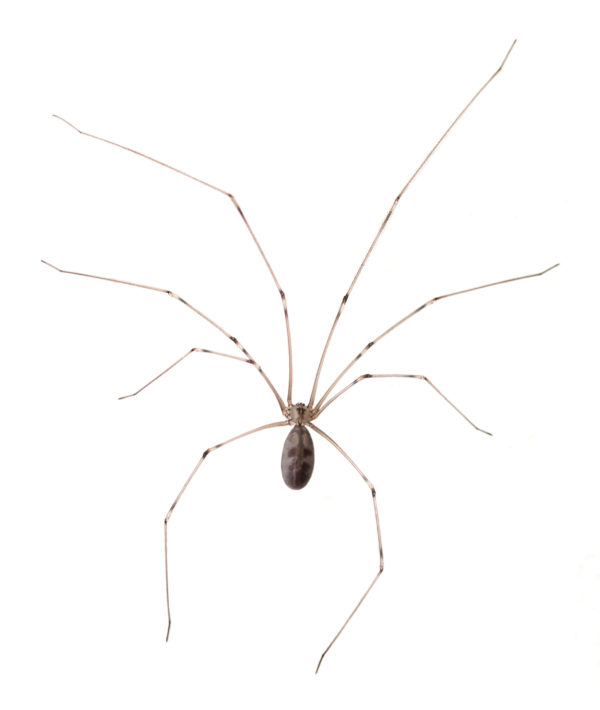
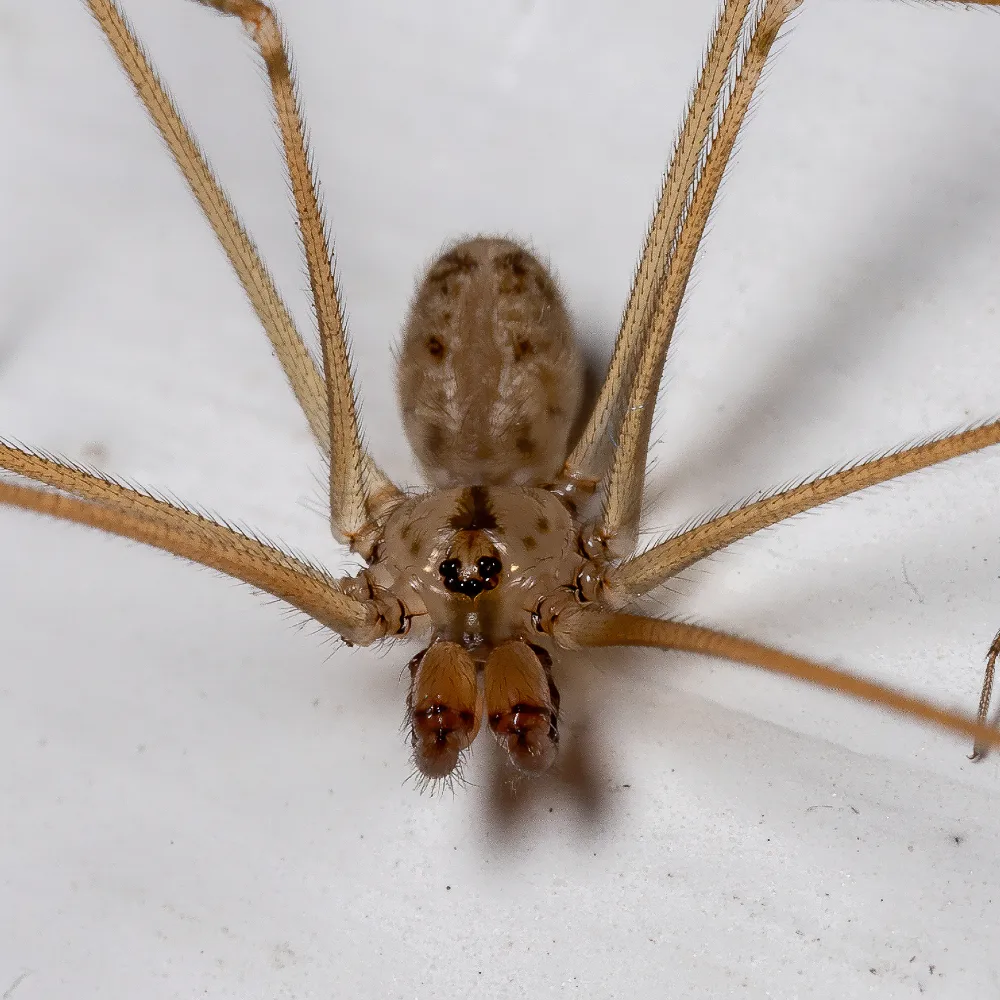
Adults have small, oval-shaped bodies, only about ¼ inch long, with legs that can stretch several times their body length. Their color ranges from pale yellow to light brown or gray, making them blend easily into shaded corners.
Unlike neat orb-shaped webs, cellar spiders create irregular, tangled structures and hang belly-up in the center of their web, a posture that helps distinguish them from other house spiders. When threatened, they shake their webs rapidly, making their bodies blur in motion; this is defensive behavior designed to confuse predators.
Cellar spiders favor damp, low-traffic areas such as crawlspaces, staircases, and storage closets. They are also commonly seen near ceiling lights or ventilation corners where insects are active. To confirm the species, contact a professional pest control expert for precise cellar spider identification and to ensure you receive the right treatment.
Cellar Spider Characteristics
Like all spiders, cellar spiders have eight legs, two body segments, and fangs. Although technically venomous, their venom is extremely mild and not harmful to humans. Cellar spiders rarely, if ever, attempt to bite and retreat quickly if disturbed.
Since they feed on insects, small flies, and other spiders, including larger species, they provide some natural pest control. However, their continuous web-building habits perhaps outweigh any benefit. Cellar spiders will layer new silk over old webs, creating extensive buildup in corners, staircases, and ceilings. While their harmless nature means they don’t threaten health, their appearance can damage the image of a commercial property or business. As a consequence, getting rid of spiders is a professional necessity.
Cellar Spider Habitat
The cellar spider habitat is attracted to damp, shaded, and quiet places where insects provide a steady food source. In natural settings, they are often found in caves, rock crevices, and other sheltered formations. Inside buildings, they make a beeline for dark corners and remain still for long periods.
Webs frequently appear in maintenance areas, mailrooms, and storage spaces. Entryway corners, ceiling eaves, and beams are also popular locations. These offer protection and a ready supply of insects. Even outdoor seating and wrought iron railings can become nesting sites if left unattended.
Regular inspections and treatment help reduce infestations and prevent webs from creating a neglected appearance in heavily used areas.
Are Cellar Spiders Dangerous?
The answer to this common question is no. While they are venomous and have fangs, their venom is exceptionally mild and poses no risk to humans. They are not known to bite and are considered nuisance pests rather than health threats.
The real concern is aesthetic. Their webs build up in staircases, storage closets, and ceiling corners, creating an untidy appearance. This is why facilities and building managers should take steps to remove spiders and their webs, despite their harmless, mild nature.
Routine cleaning can help, but webs will reappear as long as the spiders remain. Professional spider pest control solutions help reduce infestations, manage long-term risk, and protect the reputation of businesses, public buildings, and commercial facilities.
Cellar Spider Behaviors, Threats, or Dangers
Cellar spiders are non-aggressive and avoid human interaction. Their defensive behaviors are limited to shaking their webs or retreating deeper into corners when disturbed. The main issue is their webbing. Cellar spiders continually add layers to their webbing, which leads to heavy accumulation of silk and dust in staircases, entryways, and ceilings. This is not a good look for hotels and apartment buildings.
Their webs can also be tricky to remove and will quickly reappear if the spiders remain active. Therefore, the ‘threat’ of cellar spiders is reputational rather than medical. Guests, students, or customers who notice webs may assume the building is poorly maintained. For businesses and institutions, this perception can affect trust and satisfaction. Professional spider pest control solutions address infestations at source and provide long-term prevention to keep dining areas, halls, and corridors clean and welcoming.
Frequently Asked Questions
Where Are Cellar Spiders Most Commonly Found Indoors?
Cellar spiders prefer damp, quiet zones, like crawlspaces, garages, storage closets, and staircases, where air is still and insects are active. They also build webs in ceiling corners, near light fixtures, or tucked into entryway corners. Because these areas are harder to clean regularly, webbing can quickly accumulate and become visible to staff, visitors, or guests.
How Long Do Cellar Spiders Live?
On average, cellar spiders live for about two years, although their lifespan can vary depending on food supply and shelter. In their lifetime, one spider can create a significant buildup of webbing, making infestations more obvious as they grow older.
Do Cellar Spiders Bite Humans?
Cellar spiders have small fangs and are venomous, but pose no risk to humans. They are not known to bite people, and no documented medical concerns have been linked to them.