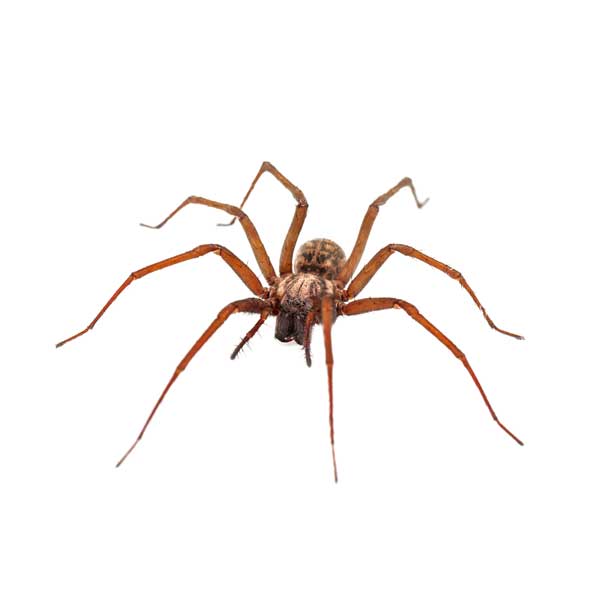
As its name states, the common house spider is one of the most commonly found spiders in Florida homes. While many may fear these small, web-building spiders, most Florida house spiders are actually harmless, and play a helpful role in reducing populations of other pests. Still, their sudden appearance in corners, garages, or storage spaces can create unease, especially when webs accumulate quickly.
Understanding more about common house spiders, knowing the difference between them and more harmful species, where they prefer to live, and what kind of risks they actually present is the first step toward effective management. Whether addressed through routine cleaning or expert intervention, professional spider management helps ensure Florida homes and businesses remain welcoming and professional environments year-round.
Common House Spiders in Florida
Florida’s warm, humid climate provides ideal conditions for a wide variety of arachnids, so it’s no surprise that common house spiders are frequently encountered indoors. Unlike other species like the brown recluse or black widow, common house spiders are non-aggressive and rarely bite.
Homeowners often confuse the brown house spider with more dangerous species, but more often than not, they are dealing with simple cobweb spiders that are harmless. As Florida’s ecosystem is so diverse, other common spiders in Florida homes, such as cellar spiders, sac spiders, and crevice spiders, also share similar characteristics in appearance and behaviour. If you are unsure which spider you may be dealing with, take a look at our spider identification page.
These spiders thrive in undisturbed spaces such as basements, garages, closets, attics, and wall corners in residential settings. In commercial environments, they often appear in storage areas, warehouses, and facilities with limited foot traffic.
How to Identify a Common House Spider
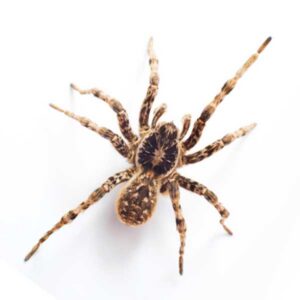
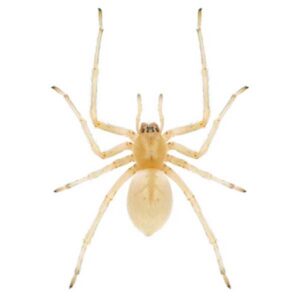
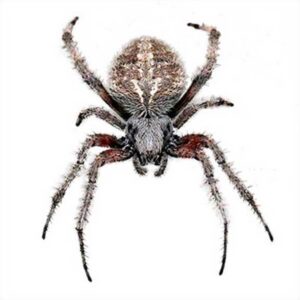
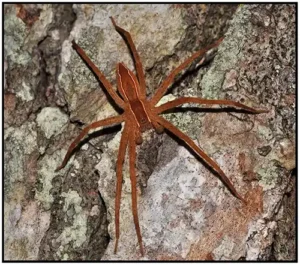
Identifying the common house spider requires a close look at the spider and its web. The Florida house spider, also known as the common house spider, is a member of the cobweb spider family. Adults usually measure an inch in body length. Their coloration ranges from greyish-brown to dirty tan with faint striping or mottling along the body. Females are typically larger than males and are the main web builders.
Their webs are an equally important identifying factor. Unlike orb-weavers that produce symmetrical, wheel-shaped webs, house spiders create irregular, tangled structures in corners and crevices. These webs often appear dusty and unkempt, so residents usually notice the web before spotting the spider itself.
Another clue comes from their behavior. When disturbed, house spiders often retreat deeper into the web rather than running across open floors or walls. Egg sacs, which appear as small, papery spheres suspended within the web, also signify an active population.
Common House Spider Habitat
Common house spiders like living in quiet, undisturbed areas where moisture and food are available. Indoors, they prefer less-trafficked areas where their webs are unlikely to be disturbed. Basements, closets, and the upper corners of rooms are frequent hiding places. Outdoors, they can be found near eaves, sheds, and beneath decks or porches, where flying insects provide a steady food supply.
In northern areas, cold weather slows down activity. But in Florida, mild winters keep many spider species active all year. This means that common house spiders in Florida can establish webs inside homes at any time of the year. They also like the Florida environment, because high humidity helps insects thrive. This means spiders can count on a readily available diet of flies, mosquitoes, and small moths.
In commercial environments, spiders are drawn to places like warehouses, stockrooms, and delivery areas. This is especially true for businesses in food service or storage, which also tend to attract other types of insects that spiders eat.
Common House Spider Behaviors, Threats, or Dangers
The behavior of Florida house spiders is tied to their reliance on webs for survival. They are passive hunters, relying on insects to become trapped in their sticky strands rather than actively stalking prey. This makes their choice of web location critical. Areas with consistent insect activity will naturally support larger populations.
Their egg-laying behavior also contributes to quick population growth. Female spiders can produce multiple egg sacs, each containing dozens or even hundreds of eggs. When left unchecked, this leads to an increase in both webs and visible spider activity.
From a threat perspective, common spiders in Florida homes present more of a cleanliness issue than a health hazard. Webs accumulate dust and dead insects, giving corners and ceilings an unkempt appearance. For commercial settings, particularly those dealing with food safety control, spider activity may trigger concerns from inspectors or clients.
In rare cases, overpopulation can bring in other pests. Mites or scavenger insects may come to feed on spider remains or old webs. While this is not typical, it illustrates how a lack of control can create a cycle of unwanted pest activity.
If you have a house spider problem, contact Florida Pest Control. We’re ready to help!
Are House Spiders Dangerous?
Fortunately, most common house spiders in Florida pose little to no medical danger. The brown house spider differs from venomous spiders like the brown recluse and black widow. Most bites occur only when a spider feels trapped or threatened, such as being pressed against the skin. Symptoms are usually mild and limited to minor redness or irritation and don’t usually require medical attention.
The biggest issue with house spiders is not danger, but nuisance. Web buildup in living spaces or workplaces creates an impression of poor sanitation. For homeowners, this leads to frustration, while for businesses, especially those in hospitality or food industries, visible webs can damage reputations.
Common House Spider Control Frequently Asked Questions
Do Common House Spiders Bite Humans?
Yes, house spiders can bite, but it is uncommon. Their venom is not considered dangerous, and most bites cause only mild irritation. Symptoms may include slight redness, swelling, or itching at the bite site, and if you experience anything more severe, you should contact a healthcare professional.
Where Are Common House Spiders Most Likely To Build Webs?
In Florida, webs are commonly built in upper room corners, basements, garages, attics, and outdoor structures like sheds or porches.
How Do You Tell The Difference Between A House Spider And Other Spiders?
House spiders are typically small and yellowish-brown and build messy webs in corners. Dangerous species like widow spiders have distinct markings and different web structures.