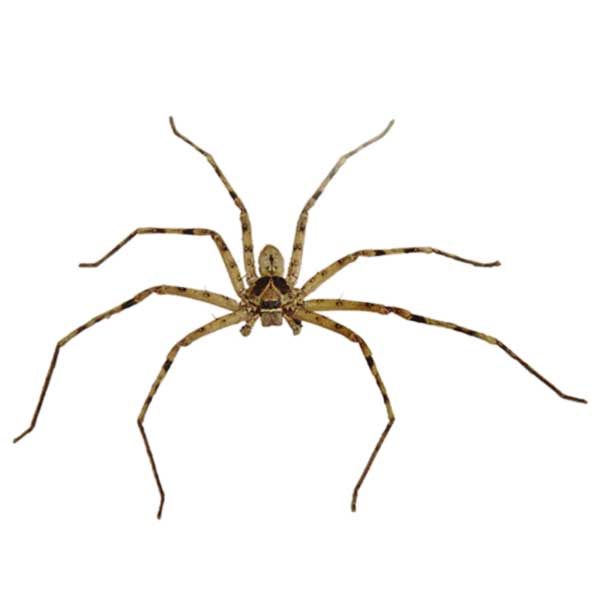
Not many people want to spot the broad and long Huntsman spider in their home or business, but they are encountered in Florida and are the largest spiders found here. The sight of a Huntsman does cause alarm, but the species found in Florida is generally harmless to humans.
Knowing how to identify a huntsman spider in Florida is important for residents and businesses seeking accurate information about arachnids in the state.
At Florida Pest Control, we offer services to reduce the presence of Huntsman spiders in Florida. Our technicians provide inspections, treatments, and long-term prevention strategies tailored to homes, and businesses where customer confidence is critical. Whether you encounter huntsman spiders in Florida homes or businesses, professional support ensures peace of mind.
Huntsman Spiders in Florida
Huntsman spiders often need warm environments to thrive, so they are mostly found in tropical and subtropical regions, including Florida, which has a perfect climate for them. Huntsman spiders are well established throughout Florida, especially in the southern and central regions. While not as common as smaller house spiders, their size makes encounters more memorable. Their flattened bodies allow them to slip through cracks and beneath bark or stones, making them highly adaptable.
The presence of a huntsman spider in a Florida home is not necessarily an indication of infestation. They are solitary hunters that wander in search of food rather than building permanent webs. However, their sudden appearance on walls, ceilings, or inside vehicles can be startling.
How to Identify a Huntsman Spider
Huntsman are often confused with wolf spiders due to their large leg span, but they differ in several ways.
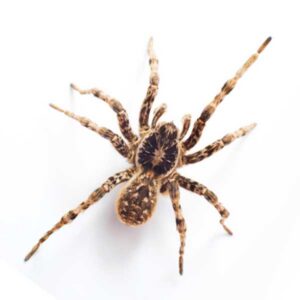
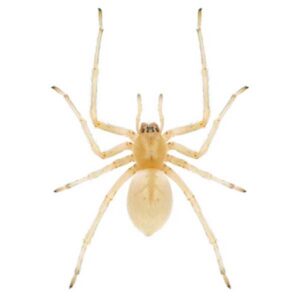
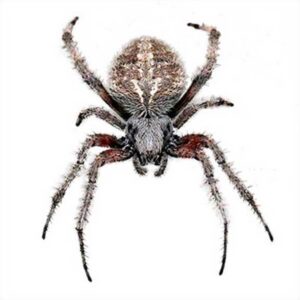
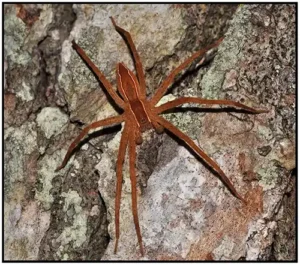
Their legs extend sideways in a crab-like fashion, giving them an appearance similar to giant crab spiders. Adults typically have a leg span ranging from 4 to 6 inches, although some individuals can reach 8 inches or more, making them one of the largest spiders found in the United States. Their bodies are relatively small compared to their legs, usually measuring less than an inch in length.
Huntsman spiders’ coloration helps them blend seamlessly into tree bark, leaf litter, and shaded corners indoors. Unlike web-building spiders, they have long, agile legs adapted for speed and climbing.
In Florida, huntsman spiders are sometimes confused with brown recluses because of their coloration, but there are distinct differences. A huntsman spider is much larger, lacks the violin-shaped marking of recluse spiders, and prefers open hunting to secluded hiding. This distinction is important because brown recluse bites can be medically significant, while huntsman spiders rarely pose a threat.
Huntsman Spider Habitat
Huntsman spiders’ habitat is highly versatile, which explains their wide distribution across Florida. Outdoors, they favor tropical environments such as forests, palm groves, and gardens, where they hide beneath loose bark, rocks, or foliage. Their flattened bodies make them ideal for slipping into cracks and crevices, a trait that also allows them to enter homes and structures.
Indoors, huntsman spiders in Florida often take refuge in attics, sheds, garages, or behind furniture. They are nocturnal hunters who spend daylight hours in hiding and become active after dark. Their ability to climb walls and ceilings adds to the surprise when they suddenly appear inside living spaces.
Vehicles are another common place to encounter huntsman spiders. They can quickly climb into cars parked near plants. This can lead to sudden and surprising appearances while driving.
Are Huntsman Spiders Poisonous?
Huntsman spiders are not poisonous in the way people typically fear. Although they do have venom, as do most spiders, it is used to immobilize prey and is not considered medically significant to humans. A huntsman spider bite may cause mild pain, redness, or swelling, but severe reactions are rare. In most cases, huntsman spiders prefer to flee rather than bite, relying on their speed and agility for defense.
While they may look threatening because of their size, they are far less dangerous than spiders like the black widow or brown recluse.
Huntsman Spider Behaviors, Threats, or Dangers
Huntsman spiders have behaviors that make them unique compared to other arachnids. They don’t spin webs to catch their prey; they actively run and hunt insects, cockroaches, and other small creatures. They have impressive speed, making them great hunters. This speed is helpful to humans too, as the spider keeps insect populations in check.
Despite their benefits, their size and rapid movements often trigger alarm when spotted indoors. Their speed, sometimes reaching a pace that allows them to cover several feet in a second, is frightening to watch. This ability is why they are often perceived as aggressive, though they are simply fleeing for cover.
They are not social spiders, but females may guard their egg sacs until the spiderlings hatch. During this time, they may be more defensive if disturbed. Egg sacs are often hidden in secure areas such as crevices or behind furniture, occasionally bringing them into contact with homeowners.
Though they can benefit the ecosystem, when it comes to business, a huntsman spider is not the best look in the eyes of the customers. Spotting a large huntsman spider on a wall in a restaurant or store can make customers uneasy, even though it is not a real threat. That’s why many businesses turn to spider pest control services to keep unwanted encounters at bay.
Huntsman Spider Frequently Asked Questions
How Big Do Huntsman Spiders Get?
Huntsman spiders typically have a leg span of 4 to 6 inches, though some may reach 8 inches or more. Their bodies remain relatively small compared to their long legs.
What Do Huntsman Spiders Eat?
They feed on insects, cockroaches, and other small prey and play an important role in natural pest control.
How Fast Can A Huntsman Spider Move?
Huntsman spiders are some of the fastest spiders. They can move several feet per second. This speed helps them catch prey and escape danger.