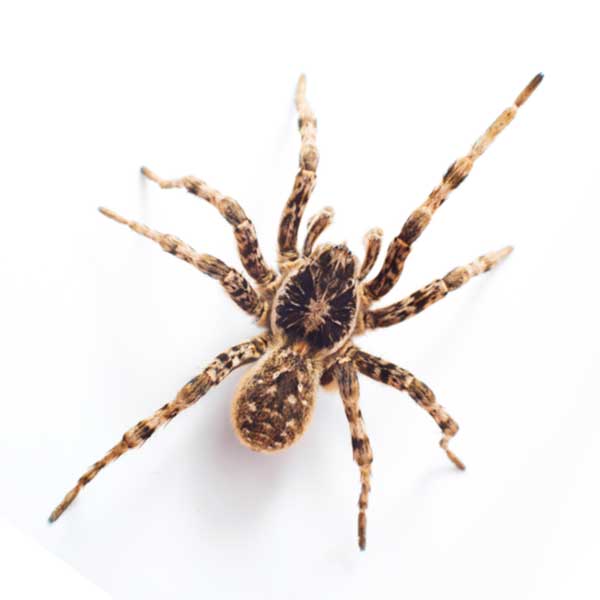

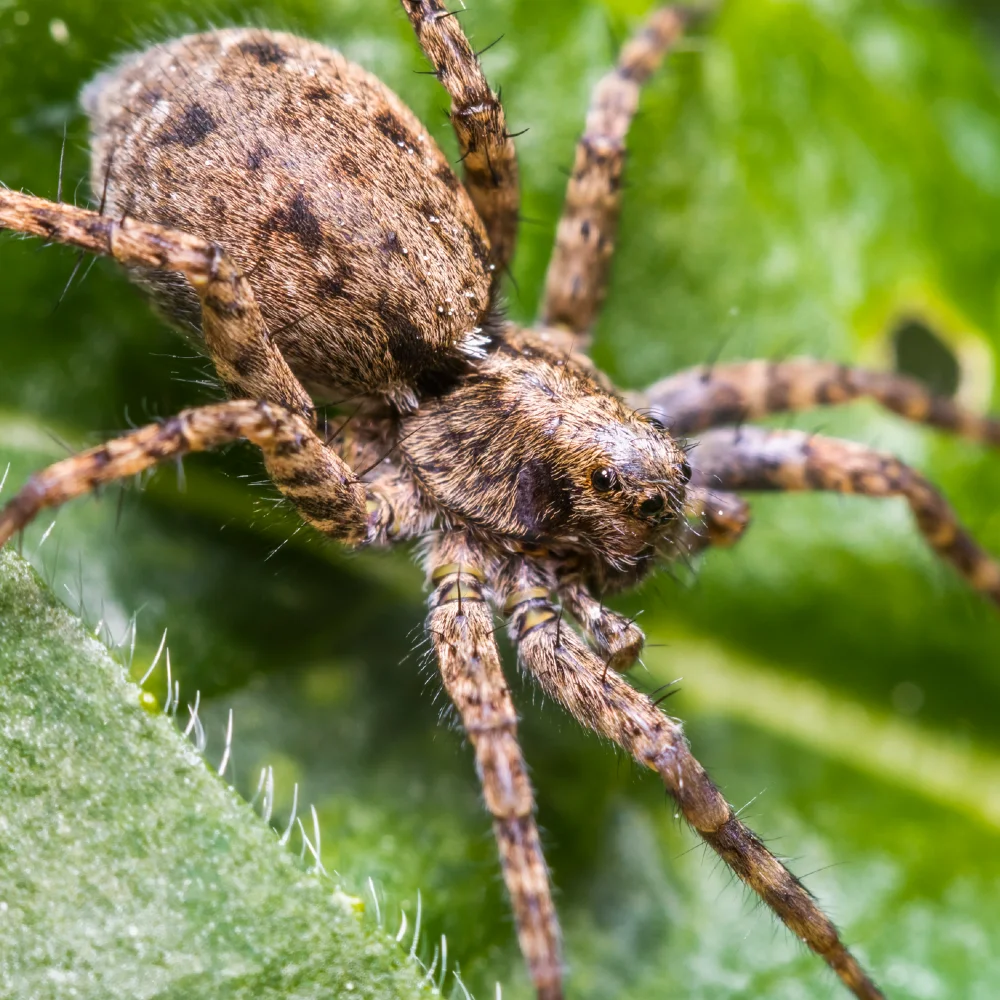
Wolf Spiders in Florida
Florida hosts several types of wolf spiders, including the well-known Carolina wolf spider (Hogna carolinensis), the Rabid wolf spider (Rabidosa rabida), the Dotted wolf spider (Rabidosa punctulata), and the endemic, Oyola wolf spider (Hogna Oyola).
Wolf spiders in Florida have excellent eyesight that detects people before they’re seen, allowing them to flee when approached. Many of them are nocturnal, using a special eye structure to improve night vision. If you shine a flashlight at ground level, you may see their green eyes shine from 10–30 feet away, depending on the spider’s size.
Though they can appear alarming due to their size their appearance can frighten homeowners when they wander inside. If you see them often, you may want to explore spider extermination services to prevent population spread.
Wolf Spider Habitat
Florida wolf spiders are active hunters that patrol the ground for insects, small spiders, and similar prey. They do not use webs to capture prey and hunt in the open, both day and night, often living by the thousands in leaf litter and grassy areas. Some wolf spiders build small silk-tubular burrows with turrets, using debris to conceal the entrance, while others will defend a territory or roam freely. These spiders are often found in high numbers and are key predators in the ecosystems they live in.
Their natural habitats are under rocks, stones, logs, and leaf litter in open fields, coastal forests, near riverbanks, or scrubby areas with dense vegetation. During colder months, they move indoors toto garages, basements, and around the edges of windows and doors. With thousands living in natural spaces, wolf spiders in Florida are a common sight in both residential and rural areas.
Wolf Spider Behaviors, Threats, or Dangers
Female wolf spiders can lay hundreds of eggs and carry their young on their backs for several weeks or months until the spiderlings are ready to go off on their own. The spiderlings then go through multiple molts, with some species reaching maturity and reproducing in about three years. Male wolf spiders often die after a year, while females can live for several years and reproduce multiple times.
The risk of being bitten by a wolf spider in Florida is low. While they may appear aggressive when chasing down prey, they usually avoid people. Bites are uncommon and typically happen only when the spider is handled or feels threatened. Wolf spiders are also known to jump, which can catch people off guard, but this is part of their hunting behavior, and not necessarily an aggressive action.
If bitten, most healthy adults will only experience minor swelling or pain like a bee sting. However, some individuals, like children, older adults, or those with medical conditions, are at higher risk of an adverse reaction. If a bite occurs, clean the area and contact a healthcare professional for guidance.
For homes or businesses that frequently see wolf spiders, consider residential or commercial spider control to help keep your property protected.
Frequently Asked Questions
Will a Wolf Spider Bite?
A wolf spider in Florida may bite if threatened, but this isn’t common. These spiders would rather run than fight. Most bites happen when a spider is trapped in clothing or handled. While a wolf spider may look intimidating, the risk of a serious bite is very low. If bitten, reach out to a healthcare professional. If you’re seeing frequent activity, our spider extermination services can help.
Is a Wolf Spider Deadly?
No, it is not deadly. These spiders may look scary, but their venom isn’t potent enough to harm healthy adults. That said, some people may be more sensitive to bites from Florida wolf spiders, especially children or those with weakened immune systems. If you’re unsure what kind of spider you’ve seen, check out the most venomous spiders in Florida to compare.
Does a Wolf Spider Jump?
Yes, wolf spiders can jump short distances, often when they’re hunting or trying to escape. While it’s not known for long leaps like some other species, this behavior helps it move fast and catch prey. Seeing a Florida wolf spider jump might be surprising, but it doesn’t mean it’s trying to bite. Their jump is part of their survival, not a threat.