
What Does Termite Damage Look Like?
Silent destroyers are the notoriety that termites have earned. They work quietly behind walls, beneath flooring, and in other hidden areas, making their presence hard to notice until real damage is done. And what the termite damage looks like varies depending on how long they have been present, what type of wood they’ve attacked, and which species are involved.
Spotting termite damage early can be challenging, as it is often mistaken for water damage and general wear and tear. Some common signs include hollow-sounding wood, bubbling or uneven paint, warped floors, or doors and windows that suddenly become hard to open or close. If you see any of these, it may be time to bring in a professional for a closer look.
Termites rarely disappear without proper treatment. While DIY solutions might offer short-term relief, professional treatment will help fully address the issue.
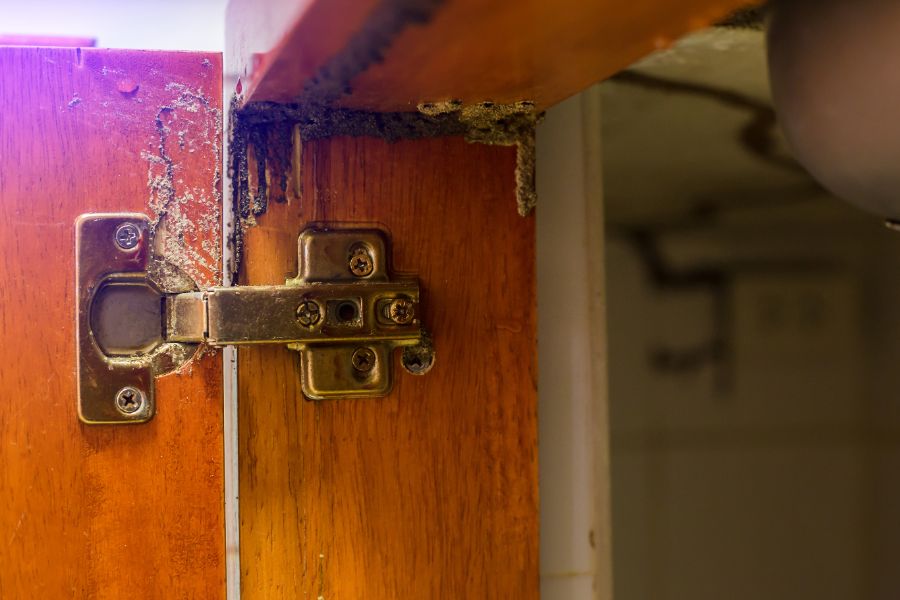
Identify Termites In Your Home
Identifying termites in your home can be tricky because they avoid light and open spaces. Most people discover termites after they’ve already caused visible damage. Discarded wings near entry points or baseboards can be an early sign, as termites often shed wings after swarming. Mud tubes along walls or in crawl spaces are another clue, usually created by subterranean termites as they travel from soil to wood.
Seeing the insects themselves is rare, but not impossible. Subterranean termites are pale, soft-bodied, and often seen only when wood is visibly damaged. Drywood termites live entirely within the wood and don’t need contact with soil, so they can go unnoticed for long periods.
Termite Wood Damage
Termites chew through wood to get to the cellulose, found in wood and other plant materials, which they eat. This process results in the wood becoming brittle and hollow.
The damage itself may not be visible on the surface. Termites often consume the inside of the wood first, leaving a thin outer layer intact. This can cause paint to bubble or wood to appear blistered. Sometimes, a thin knife or screwdriver might pierce wood more easily than expected, revealing hollow tunnels beneath the surface.
Advanced damage may leave wood crumbling, weakened, or sagging. Wooden support structures like beams and floor joists are especially vulnerable, and if not treated quickly, can lead to serious structural issues.
Do You Have a Termite Problem? We Can Help.
Click the button below to leave your information & we'll be in touch in an hour or less.
Get a FREE quote
Common Places of Termite Damage In My House?
Once termites find a way inside, they spread quickly and feed on various materials. Understanding where termites cause the most problems can help you stay alert to early signs of an infestation.
Walls
Wall damage may first appear as faint lines or blistered paint. Over time, termites can hollow out the wood behind drywall, making the surface soft or uneven. You may also notice mud tubes or small holes along the baseboards or behind furniture.
Ceilings
Termites that reach ceiling structures may cause sagging, discolored patches, or bubbling paint. These signs often resemble water damage. If the problem has gone unnoticed, parts of the ceiling may eventually weaken or collapse.
Windows
Termites can damage the wood around window frames, making them difficult to open or close. You might see cracking or warping around the edges, or find the window sticks unexpectedly. These issues are often blamed on moisture or swelling, but termites are sometimes the real cause.
Slabs
In homes with slab foundations, subterranean termites may enter through expansion joints or cracks. The damage often begins beneath the surface, making it difficult to detect early. Signs of slab damage include tiles lifting, cracks appearing, or floor portions becoming uneven.
Drywall
Termite activity behind drywall can lead to bubbling or peeling paint, faint pinholes where termites have broken through the surface, and drywall that sounds hollow when tapped or feels unusually soft in certain spots.
Flooring
Wood flooring may buckle, sag, or become spongy as termites damage the subfloor. Sometimes tiles or laminate flooring may appear loose or uneven, even if the termites have not fed directly on those materials. The issue often lies beneath, where wooden supports have been weakened.
Tiling
While termites do not eat tile, damage can still appear in tiled areas if they have reached the wooden subfloor or framework underneath. Tiles may begin to lift or crack. Grout lines may also become uneven or develop gaps as the wood beneath shifts or deteriorates.
Foam Insulation
Foam insulation in walls or attics may also be affected. Termites do not feed on foam but may tunnel through it to reach wood, disrupting insulation materials along the way. This can lead to hidden travel routes through the structure.
How to Spot Termite Damage
Knowing what termite damage looks like is only the first step of the challenge. The next step is finding the damage before it ruins your bank account. This is why it’s important to have termite inspections, especially in high-risk areas like Florida, before you see the signs. Termite damage is often confused with issues caused by moisture or age, so don’t take the chance and protect your property with prevention methods.
To spot termite damage, listen for changes in how floors or walls sound when tapped. Pay attention to areas that start to look swollen, cracked, or discolored for no apparent reason. If you’re having trouble opening doors or windows that used to slide easily, termites could be to blame. Keep an eye out for mud tubes along exterior walls, or for piles of what look like tiny wood shavings, which may actually be termite droppings.
If you’ve recently noticed any of these changes, it’s time to have your property assessed. Our technicians are trained to inspect the full property, including crawl spaces, attics, and wall voids, to locate termites and build a treatment plan that fits your situation.
Regular inspections, especially in high-risk areas like Florida, can help keep termites from causing long-term damage to your home. Contact us today for friendly advice and professional help.