
Quick Facts About Bee & Wasp Stings
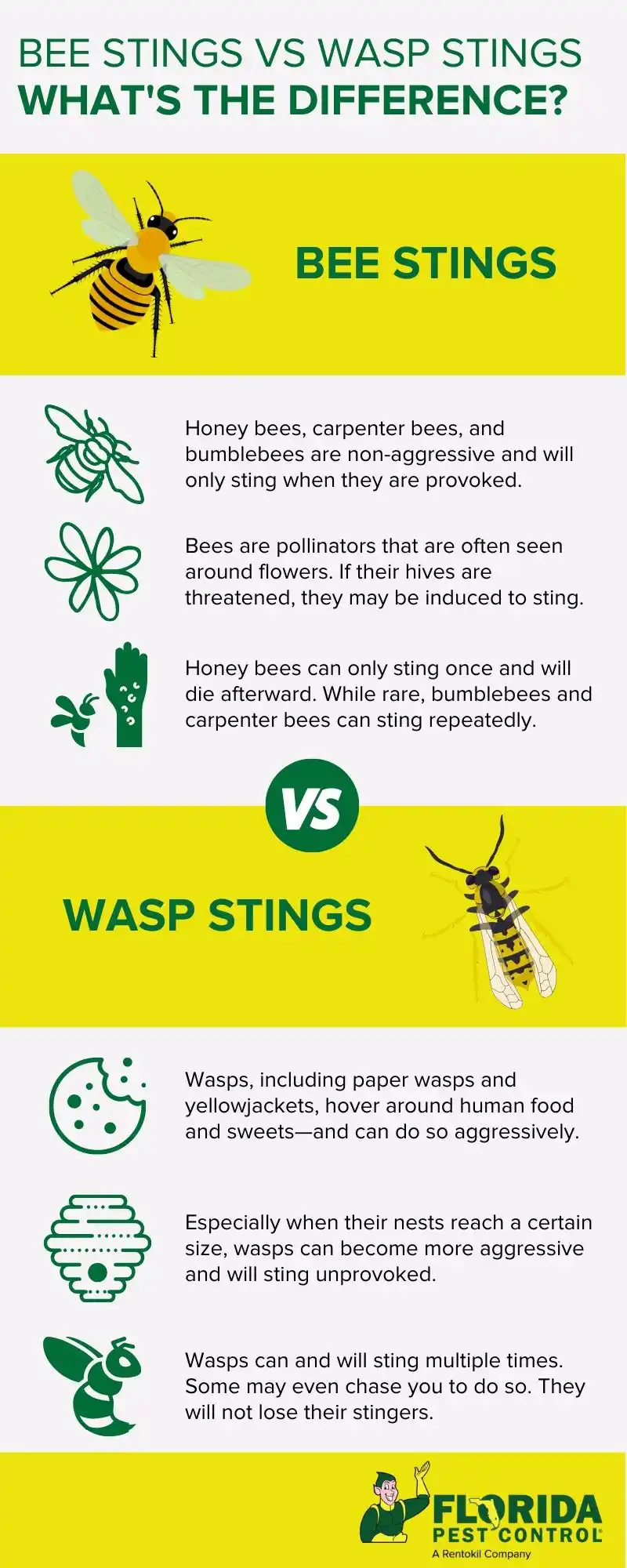
- Bees leave their barbed stinger behind and can only sting once, while wasps retain their stinger and can sting repeatedly.
- Bee stings inject roughly 50 micrograms of venom, whereas wasp stings inject two to 15 micrograms per sting in rapid succession.
- Bee and wasp venom differ, but both can cause redness, swelling, soreness, and itchiness due to histamine release.
- Both types of stings can trigger allergic reactions, including severe anaphylaxis with symptoms like difficulty breathing and throat swelling.
- Identifying whether bees or wasps are present helps determine sting risk and guides proper nest removal.
Jump to:
Bee Vs. Wasp Sting Differences
Symptoms Of Stings
Allergic Reactions And Anaphylaxis
Professional Nest Removal Services
Not sure whether you were stung by a bee or a wasp? While the pain may initially feel similar, the way these insects sting (and the risks that follow) are pretty different. Knowing the key differences can help you recognize symptoms, avoid additional stings, and respond safely. If you’re unsure which stinging insect is active on your Florida property, Florida Pest Control can identify the species, locate their nest, and remove it safely.
Wasp vs Bee Stings in Florida
Bee stings and wasp stings can feel almost the same in some cases, but the processes of their stings are quite different. There are three main differences between bee and wasp stings:
- Stinger: When a bee stings you, it ejects its stinger into your body, rendering it unable to sting again. On the flipside, wasps’ stingers remain intact. They can sting you many times in a row.
- Volume: Bees sting just once, but inject all of their venom into their victim. This usually totals 50 micrograms of venom. Wasps only inject 2-15 micrograms of venom per sting, but they can issue many stings in a short amount of time.
- Venom: Wasps and bees have different allergens in their venom. Despite this, though, their stings both result in the release of histamine in our bodies, which causes a breakout of hive-like patterns on the skin.
 Do Bee and Wasp Stings Cause Allergic Reactions?
 Do Bee and Wasp Stings Cause Allergic Reactions?
It is possible to develop an allergic reaction to both wasp and bee stings. You might be allergic to one and not the other, both kinds of stings, or neither. Bee and wasp stings usually only result in mild symptoms, like:
- Pain and soreness
- Swelling
- Itchiness and redness
Unfortunately, severe allergic reactions occur more commonly than many people expect. Thousands of people visit the emergency room annually for complications resulting from anaphylaxis, the most dangerous reaction that results from bee and wasp stings. The most serious symptoms of anaphylaxis are:
- Difficulty breathing
- Swelling of the throat and tongue
- Vomiting
- Fainting
- Pain and itchiness all over the body
Wasp and Bee Control in Florida
Bee and wasp stings should be taken very seriously. It is possible to experience an allergic reaction to a sting without experiencing severe symptoms in the past. If you can’t tell which kind of stinging insect is inhabiting your yard in Florida, ask your local pest control company. Our experts at Florida Pest Control can identify any type of bee or wasp on your property, locate their nest, and remove it safely and promptly. Contact us today for a free estimate on nest removal services!