
Large campuses can be difficult to protect against rodent activity due to their size and complexity. Universities, government complexes, healthcare systems, manufacturing sites, and distribution centers may include dozens of buildings. Loading docks, service corridors, waste areas, and hidden voids can all provide rodents with routes to move through the site unseen.
September falls during Florida’s storm season, when heavy rain and local flooding can force rats and mice out of their usual hiding spots and toward warm, dry, food-rich communal buildings. This can increase pressure around entry points and operational areas. This is where continuous commercial rodent control—rather than scheduled checks alone—becomes central to managing seasonal and year-round rodent activity.
The Blind Spot Between Scheduled Visits
Most rodent control programs follow a set schedule. A technician checks bait stations and traps, records any findings, and returns at the next planned visit. This remains an important part of pest management. However, across a large campus, rodent activity can begin and grow between those visits.
Rodents can multiply quickly. A pair nesting near a loading dock, waste area, or service entrance may create a larger problem before the next inspection. Without continuous monitoring, there may be no alert or record of activity until it is found during a scheduled visit. Florida Pest Control refers to this as the “response gap”—the time when rodent activity can occur between weekly or monthly visits.
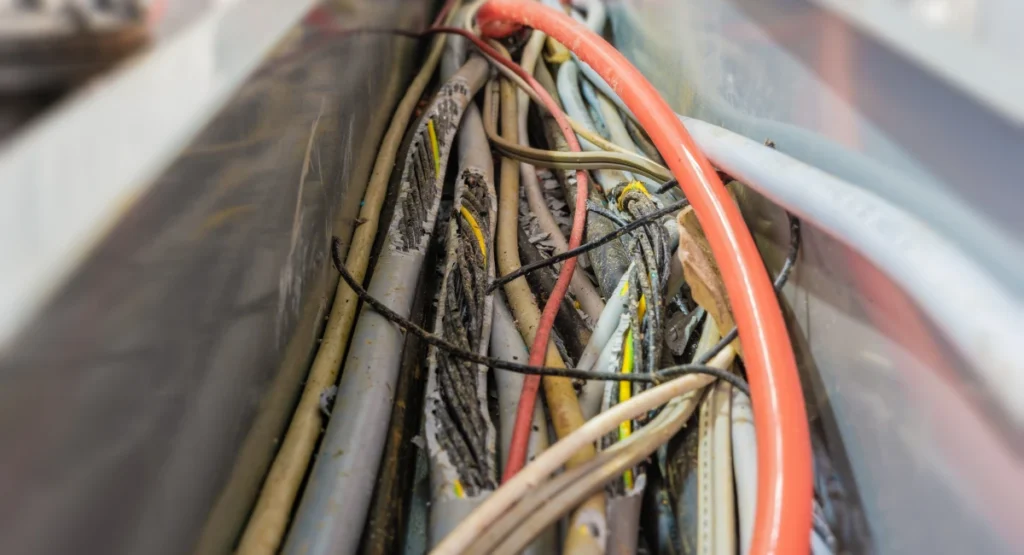
For regulated sites, delayed detection can raise serious concerns. The U.S. Centers for Disease Control and Prevention explains that rodents can spread disease and contaminate food and surfaces through droppings, urine, and gnawing. In food and beverage settings, this may require immediate action. In any sector, rodents can damage wiring and insulation, leading to safety issues and unplanned downtime. Missing records or delayed action may also create problems during an audit.
Why “Gadget” Is the Wrong Word
Some people see digital rodent monitoring as a gadget rather than an important part of a pest management program. In practice, it helps teams identify rodent activity sooner and direct resources where they are most needed.
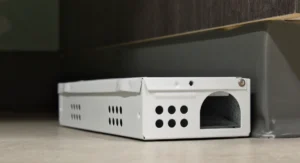
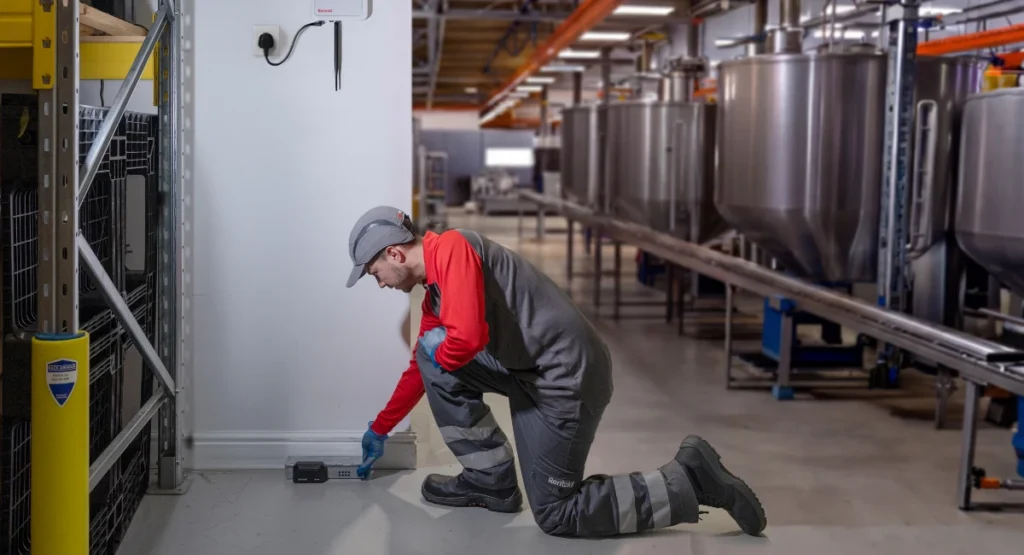
Florida Pest Control’s PestConnect monitoring service provides real-time rodent monitoring and capture using machine learning. Its connected devices monitor for rodent activity 24 hours a day. When a sensor detects movement, it sends an encrypted cellular alert to the pest management team. This creates a service call out, allowing a qualified technician to respond with a targeted intervention. The devices work independently of a site’s WiFi, so they do not rely on the facility’s network.
PestConnect uses machine learning to identify rodent-specific movement and size patterns. This helps separate likely rodent activity from other movement, reducing unnecessary alerts. As a result, technicians receive clearer information about where attention may be needed.
Digital monitoring does not replace the technician’s role. It helps direct their time and expertise. On a campus with several buildings, technicians can focus on areas showing activity rather than relying solely on a fixed inspection route. This approach can resolve rodent activity up to twice as fast as non-connected methods and may reduce rodenticide use by up to 60%.
The Data Auditors Now Expect
Auditors and certification bodies need more than proof that a pest control visit took place. They may also need to see that rodent activity is identified, recorded, and addressed promptly between scheduled visits.
PestConnect supports this through its connection to the PestNetOnline reporting system. This gives facilities one location to access pest management records, including rodent activity, materials used, and trends over time. Rather than relying on separate service reports, teams can use this information to build a clearer view of activity across the site.
The service is compliant with many common third-party audit schemes. Its technology is also ISO 27001 certified, follows GAMP guidelines, and uses secure connectivity standards through the LoRa Alliance.
This is particularly useful in high-risk environments. Food and beverage processing facilities face strict inspections and high contamination risks, so clear records and fast action are vital. The same applies across large campuses, where healthcare buildings, laboratories, and foodservice areas may each have different compliance needs. A single, detailed monitoring record can help support audit readiness across the site.

Monitoring as Part of a Bigger Plan
Digital monitoring works best as one part of a wider Integrated Pest Management (IPM) plan. It does not replace the basic steps that help prevent rodent activity in the first place. The U.S. Environmental Protection Agency defines IPM as an approach that combines prevention, monitoring, and control to manage pests with the least possible risk.
Continuous monitoring helps teams identify activity sooner. However, exclusion work, effective sanitation, and building maintenance remain essential. On a large campus, sensors can show where rodent activity occurs. Technicians can then address the likely cause by sealing entry points, improving waste or cleaning practices, or changing device placement in high-activity areas.
This combined approach is especially valuable for sites that store bulk goods or dry products, where early detection and expert follow up can help protect stock and support daily operations.
Why September is a Good Time to Review Your Rodent Plan
The September weather increases pressure around loading docks, service entrances, waste areas, and other potential entry points, especially when several buildings are under pressure simultaneously. A program based only on scheduled checks may not provide the visibility needed when rodent activity changes quickly.
Early autumn is a useful time to review whether your current rodent control program matches the needs of your site. Reviewing monitoring, exclusion, sanitation, and response procedures before seasonal pressure increases can help teams make informed decisions.
Next Steps for Campus Rodent Control
Florida Pest Control has supported commercial operations across Florida for more than 75 years. Our PestConnect monitoring service combines continuous rodent monitoring with technician-led response, helping complex and regulated sites identify activity and focus action where it is needed.
Understanding rodent behavior and the areas most at risk across your campus is a sensible place to begin. Florida Pest Control’s rodent identification and pest information resources can also support an internal review.
If your buildings require stronger visibility, clear documentation, and timely response, consider discussing how PestConnect could complement your existing rodent control program before seasonal pressure increases.
Written by Nicola Gordon-Seymour
September 17th, 2026