
Most Florida homeowners feel like they’ve earned a break from pest season by the time September arrives. Yet this is precisely when our technicians field some of the year’s most puzzling calls, such as itchy bites with no visible source, patches of lawn dying for no obvious reason, and sudden swarms clouding a lakeside porch.
There are, in fact, three lesser-known Florida pests that stay active well into fall, and make a nuisance of themselves: mole crickets, no-see-ums, and blind mosquitoes. Each one thrives on the warm, storm-driven moisture that defines a Florida September.
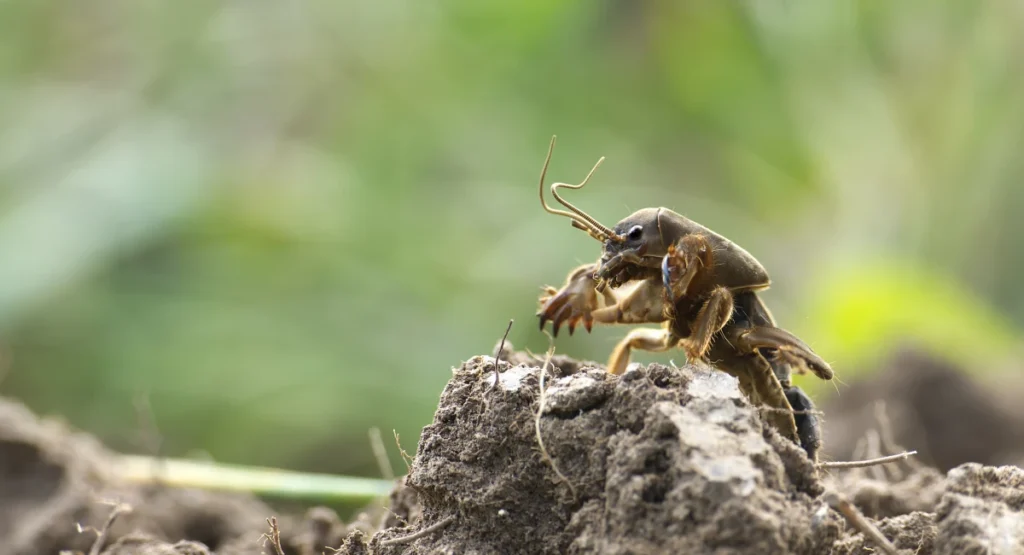
Mole Crickets: The Lawn Damage That Isn’t Drought
If your St. Augustine or Bahia lawn is developing spongy, browning patches just as summer winds down, drought and disease are often blamed. However, the real cause is possibly hiding underground.
Mole crickets tunnel just beneath the surface, severing grass roots and pushing the soil upward as they feed. According to UF/IFAS research on mole crickets, damage peaks twice a year in Florida—in spring and again from late August into early October, when the latest cohort matures into aggressive feeding adults, which is why lawns can decline so suddenly.
“Homeowners tell us they’ve been watering more, not less, and the lawn is still dying,” notes Florida Pest Control Consultant, Charlee Ellenberg. “That lawn damage with no clear cause is almost a signature of mole crickets—people rarely think to look for an insect that lives underground.”
An easy way to confirm if the source of damage is indeed mole crickets is to mix a small amount of dish soap into a couple of gallons of water and pour it over an affected patch. If mole crickets are present, they’ll surface within a few minutes.
If the source does turn out to be mole crickets, professional lawn insect control is usually the more reliable way to confirm and resolve the problem, as they can resist most over-the-counter products.
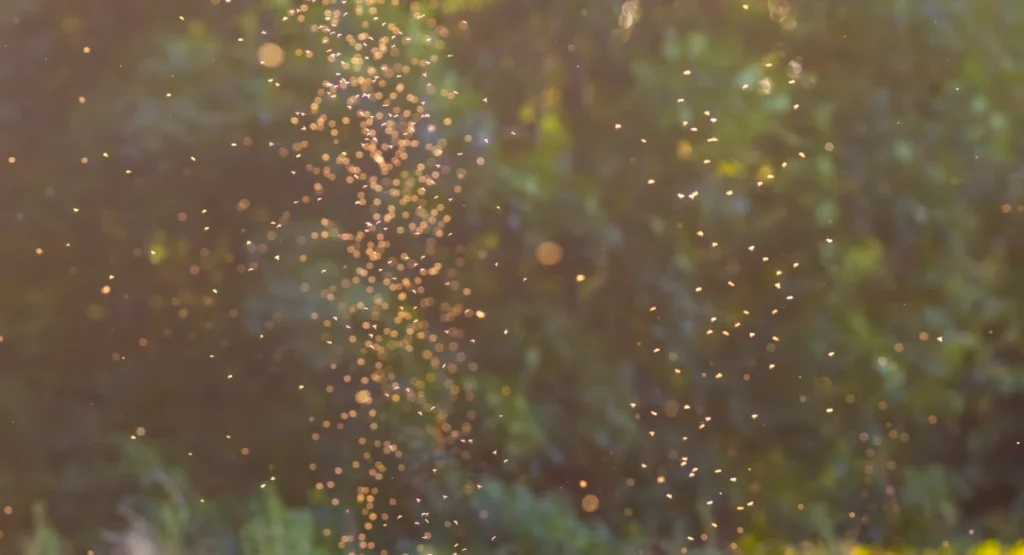
No-See-Ums: The Bites You Feel Before You See
If you’re being bitten outdoors by something you can’t see, that’s the hallmark of the no-see-um—a biting midge barely one to two millimeters long.
Also known as sand flies, these tiny flies are small enough to pass straight through standard window and patio screens, which is why homeowners are often bitten on a screened lanai they assumed was sealed. They’re most active around dawn and dusk, in calm, humid conditions, and are more active after rain, making a wet Florida September prime biting weather.
“We hear the same line constantly: ‘I can’t figure out what’s biting me,'” says Charlee. “People assume mosquitoes, but there’s nothing there. Once we explain it’s a midge slipping through the screen mesh, there’s real relief—they finally know they’re not imagining it.”
No-see-ums breed in damp soil, mulch, and organic debris rather than open standing water, so coastal and canal-side homes tend to feel them the most. Reducing moisture, trimming dense vegetation, and running outdoor fans (they’re weak fliers) all help. Persistent biting around the same patio or dock, however, usually signals a nearby breeding source that warrants a professional assessment, along with mosquito control.
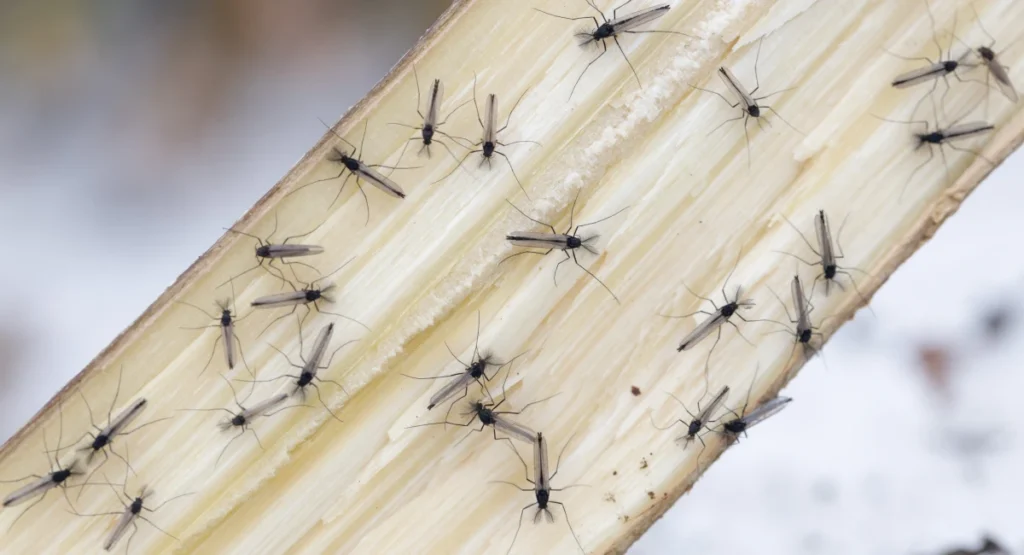
Blind Mosquitoes: Swarms With No Source—and No Bite
For homeowners near a lake, pond, or retention basin, September brings dense clouds of mosquito-like insects that blanket walls, cars, and porch lights at dusk. These are likely “blind mosquitoes”, or chironomid midges, that don’t bite, suck blood, or transmit disease.
They are, nevertheless, a genuine nuisance. Their larvae develop in the nutrient-rich muck at the bottom of warm, still water, and adults emerge in enormous numbers during Florida’s warm seasons. When they die, decaying swarms can stain walls and stucco and give off a fishy odor.
“Blind mosquitoes are the definition of a swarm with no obvious source,” Charlee explains. “People think their home is being invaded when really it’s a nearby pond producing midges. Our technicians see this constantly around retention lakes—it surprises homeowners every fall.”
Since the larvae live in lake sediment, treatment can be difficult. To prevent swarms, the best advice is to switch off unnecessary exterior lights at dusk and convert bright porch lights to motion-activated fixtures, as the adults are strongly drawn to light.

Why These Pests Catch Florida Homeowners Off Guard
Florida homeowners are caught off guard for two reasons: timing and mistaken identity. The heat, humidity, and heavy rainfall of hurricane season keep standing water and soggy soil present far longer than most people realize, allowing these three pests to stay active much longer.
Moreover, the signs are easily misread. Mole cricket damage looks like drought, no-see-um bites look like mosquitoes, and blind mosquito swarms look far more threatening than they are. Each one also tends to prompt the wrong response: more watering, the wrong repellent, or unjustified alarm.
“Locals are used to the climate, but newcomers aren’t,” says Charlee. “People moving to Florida are often surprised there are pests they’ve never heard of—mole crickets, no-see-ums, blind mosquitoes—or by how large populations can get. A big part of our job is simply educating customers on what they’re seeing, so they know how to react.”
When Professional Support Makes Sense
A one-off bite or a passing swarm is often just a product of the weather. Ongoing lawn damage, repeated bites in the same outdoor spot, or swarms that keep returning to the home, however, usually signal an underlying issue worth looking into.
If any of these late-summer surprises are showing up around your property, our team is happy to investigate what’s actually happening—and what, if anything, needs to be done. Sometimes peace of mind is knowing a swarm is harmless; other times, it’s catching a hidden problem before it spreads. Either way, starting a conversation with Florida Pest Control is a reasonable place to begin.
Written by Nicola Gordon-Seymour
September 17th, 2026