
No one wants rats running wild around their property, but Florida’s warm climate, plentiful food sources, and year-round vegetation support several rat species. While some of these live mainly outdoors, others readily enter homes and businesses to drink, steal food, or scavenge for leftovers.
Knowing the different types of rats you may be dealing with can help you recognize the warning signs and take appropriate action before professional rodent intervention is required.
Let’s take a look at three of the most common types of rats in Florida.
Common Rat Species in Florida
The two rat species most commonly associated with residential and commercial pest problems in Florida are roof rats and Norway rats, but wood rats and hispid cotton rats are also fairly common in the area. These rodents usually live in natural areas, grasslands, wooded locations, and dense ground cover rather than inside occupied buildings.
However, disturbed habitats, heavy rainfall, outdoor clutter, stored materials, and accessible food can bring wildlife closer to a property.
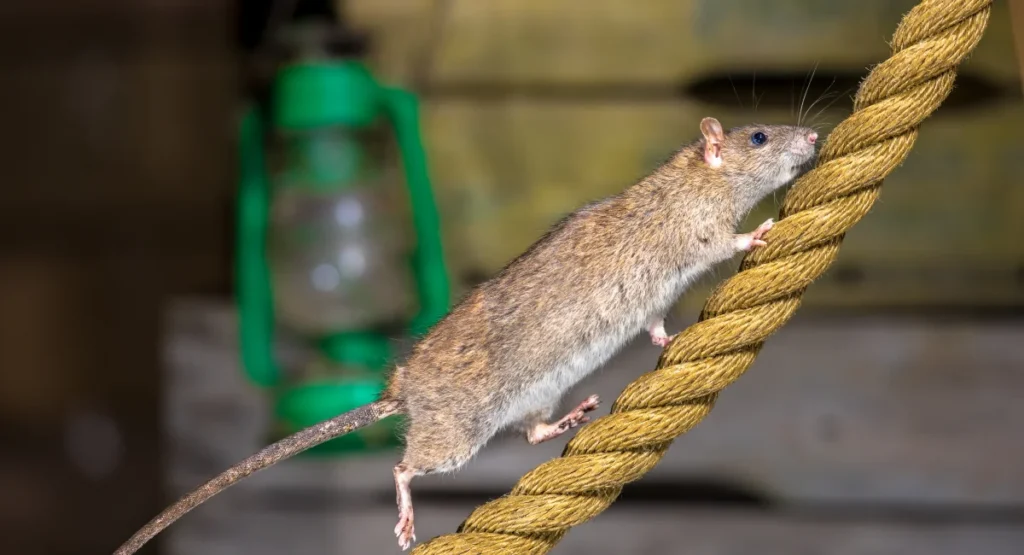
Roof Rat (Rattus rattus)
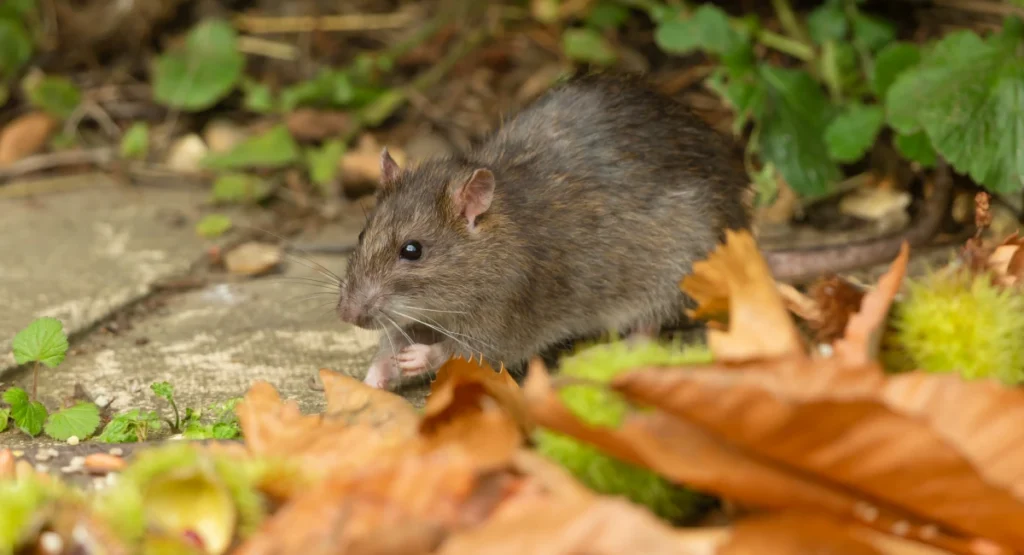
Roof rats, also called black rats, are fairly common around properties in Florida. They are so-named for their climbing agility and their ability to use trees, utility lines, fences, and roofs to reach buildings.
Roof rats are typically:
- Slender, with a pointed nose and large ears
- Dark brown, black, or gray in color
- Around 6 to 8 inches long, excluding the tail
- Recognizable by a tail that is usually longer than the head and body combined
Norway Rat (Rattus norvegicus)
Norway rats are another common type of rat that can invade Florida homes and businesses. They are generally larger and heavier-bodied than roof rats and are more likely to stay at ground level.
Norway rats are often:
- Brown or gray with a shaggy appearance
- Larger and stockier than roof rats
- Equipped with small ears and a blunt nose
- Identified by a tail that is shorter than the head and body combined
These rats may burrow beneath foundations, patios, rubbish areas, sheds, and landscaping features. Indoors, they are often found in basements, crawl spaces, ground-floor storage areas, kitchens, and near plumbing.
Wood Rat (Neotoma Floridana)
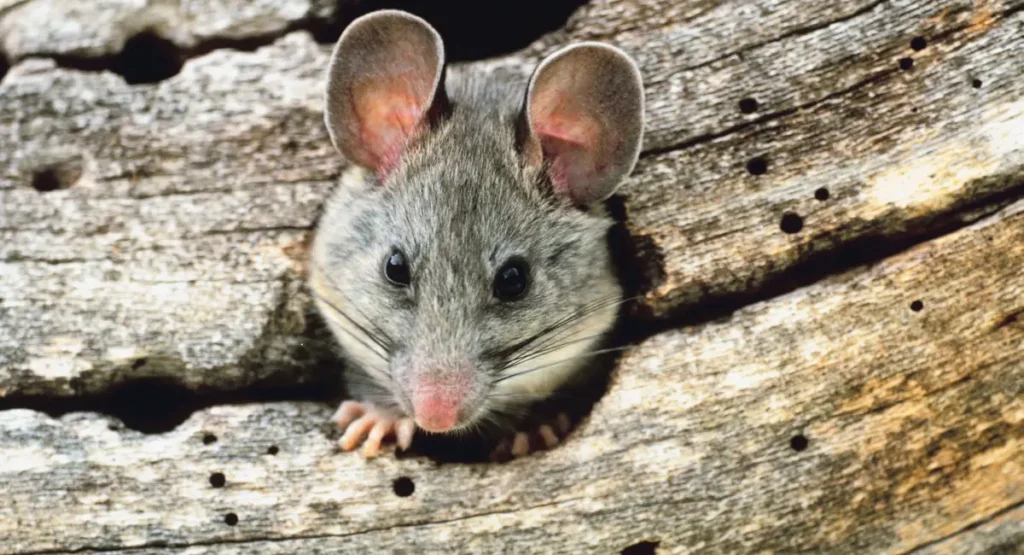
Wood rats are native to Florida’s more wooded and rural areas, but homeowners and business owners based near forests or dense greenery might come across them. They are often called “pack rats” because of their unique behavior in collecting and packing nesting materials, including shiny objects, twigs, and debris.
Wood rats are typically identified by:
- A charcoal-gray or brownish coat with a white underbelly and feet
- A furry or “hairy” tail, which distinguishes them from the hairless, scaly tails of Norway or roof rats
- Large, rounded ears
- The construction of large, complex “middens” or stick nests in rock crevices, hollow logs, or abandoned outbuildings
While they prefer natural habitats, wood rats can become a nuisance if they decide to nest in sheds, parked vehicles, or crawl spaces, where their hoarding can cause property damage or create fire hazards.
Hispid Cotton Rat (Sigmodon Hispidus)
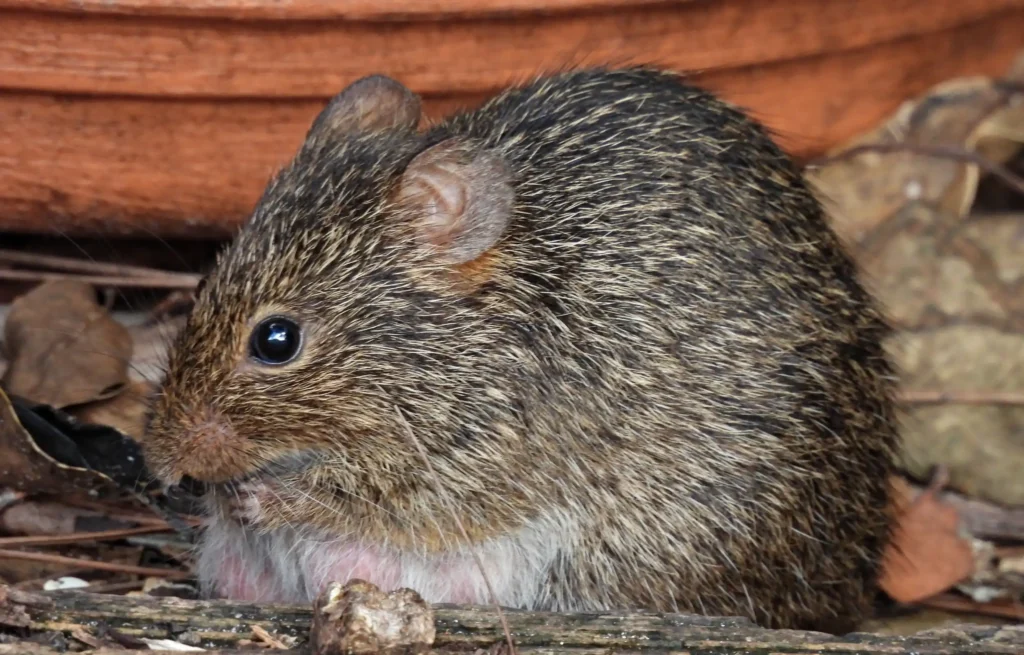
Hispid cotton rats are frequently found in Florida’s overgrown fields and marshes. They are easily distinguished by their coarse, ‘hispid’ fur, which has a rough, salt-and-pepper appearance. Hispid rats create runways through vegetation to travel safely between their nests and food sources.
A hispid cotton rat can be identified by:
- Coarse, almost prickly-looking, fur
- A stout, almost hunched appearance
- A shorter tail compared to other common rats
- Nests constructed out of grass
These outdoor rats can be immensely destructive in agricultural settings, but form an integral part of the natural order as they are preyed upon by larger predators.
Keeping Rats Away From Your Property
It’s important to remember that rats can carry viruses and parasites that can be transmitted to humans and other animals. Their fur, droppings, and urine can contaminate surfaces, food, and other goods. Not only that, rats can cause costly damage to properties by gnawing on wiring or structural components.
If you’re having trouble keeping rats away from your property, Florida Pest Control can help identify the species, locate the conditions allowing them to remain active, and develop tailored plans to keep them away.