With nearly invisible bodies and quick, spider-like movements, ghost ants can be hard to spot. Known scientifically as Tapinoma melanocephalum, they are attracted to sinks, break rooms, and storage areas, or anywhere moisture and food sources are available.
Identification
Commonly called “black-headed ants,” ghost ants crawl across countertops, baseboards, and floors, searching for sweets, grease, or food. They follow scent trails left by worker ants, making them appear in lines or clusters.
Though small, they’re not a solitary pest. A visible trail often indicates a much larger ghost ant colony nearby, which could have hundreds or thousands of ants hidden in hard-to-reach spots.
Habitat
Outside, ghost ants nest in soil, under rocks, in leaf litter, or inside rotting wood. You can find them near foundations, under porches, or in pool enclosure frames. Indoors, they prefer humid, hidden areas like wall voids, baseboards, potted plants, or between cabinets. They can even nest in shower rods and bread boxes. Ghost ants enter buildings through tiny cracks around windows, doors, and other openings.
Ghost Ants in Florida
Florida’s warm climate suits ghost ants, making them a year-round problem. This ant species prefers to nest indoors for stable conditions and easy access to food and moisture. Their colonies can be moderate to large, ranging from 100 to over 1,000 ants, and usually have multiple queens. In homes, ghost ants can be seen foraging on kitchen counters, floors, and bathroom sinks.
Ghost Ants Behaviors, Threats, or Dangers
The ghost ant does not sting and only bites when threatened. Indoors, activity is typically concentrated in the kitchen, although any room can be infested. Ghost ant behavior can be frustrating as they trail from room to room under the edge of carpeting.
In kitchens and pantries, they prefer to forage on sweets but will also feed on grease. They tend homopterans (a sucking insect) for honeydew and feed on both live and dead insects. Since ghost ants need moisture, they often trail to shower stalls, bathtubs, sinks, and toilets. If you suspect a ghost ant infestation, it is best to consult a professional ant exterminator.
Are Ghost Ants Hard to Get Rid of?
Yes, they are. Their colonies often spread across multiple locations, making DIY methods only partly effective. Killing foraging ants doesn’t remove the queens or core nest, so the problem can return without thorough treatment. Professional ghost ant control involves finding entry points and nesting sites and using slow-acting baits that the ants carry back to the colony.
How Many Ghost Ants Count as an Infestation?
Even a few visible ants can mean hundreds more are nearby. Ghost ant infestations can be subtle and worsen over time. Frequent sightings near food or moisture could suggest a larger hidden population elsewhere.
Ghost ants are drawn to moisture and food. Kitchens and bathrooms provide both. Even small crumbs or leaky pipes can attract them.
How Do Ghost Ants Enter Buildings?
They get inside through tiny gaps in foundations, windows, doors, and utility access points. They might also travel in from nearby plants touching your home.
What Do Ghost Ants Eat?
Their diet includes sugars, greases, honeydew from insects, and other insects. Indoors, they’re attracted to sweets, crumbs, and anything with protein or fat.
How Can I Prevent A Ghost Ant Infestation?
Keeping a clean home, especially in food prep and wet areas, is key. Sealing cracks, removing standing water, and storing food in airtight containers can help lower the risk.
Are Ghost Ants Dangerous?
While they don’t pose serious health risks, ghost ants can contaminate food and surfaces. Their persistent nature and large colonies make them a significant nuisance, especially in homes, restaurants, and healthcare facilities.
The sawtoothed grain beetle (Oryzaephilus surinamensis) is a widespread stored product pest commonly found in homes, grocery stores, food warehouses, and grain storage facilities. These beetles are flat-bodied and brownish in color, growing to about 2.5 to 3 mm in length. One of their distinguishing features is the six saw-like projections on each side of their thorax, which give them their name. Unlike the merchant grain beetle, the sawtoothed grain beetle cannot fly or jump, but its flattened body allows it to easily penetrate broken kernels of grain and improperly sealed food packaging.
Sawtoothed grain beetles infest grains, flour, sugar, nuts, and other dry goods, often causing significant contamination and moisture buildup that leads to mold. They are persistent pests, thriving in a variety of environments where food products are stored. Their presence can often go unnoticed until infestations are well established, as they are small and tend to hide in cracks and crevices.
What Habitats Are Sawtoothed Grain Beetles Found In?
Sawtoothed grain beetles are typically found in food manufacturing plants, grain storage facilities, retail stores, and home pantries. They are drawn to environments where dry goods such as bread, cereal, pasta, dried fruits, nuts, and candies are stored. These pests thrive in warm, humid conditions and are particularly attracted to areas with poorly sealed food packaging or spills.
Once inside, they infest food through cracks in containers or improperly stored goods. Their flattened bodies enable them to access even tightly packed food products. Pantries with infrequent cleaning, exposed food items, or damaged packaging are prime hotspots for these pantry pests. If left unchecked, infestations can spread quickly, contaminating multiple food sources.
How Does An Infestation of Sawtoothed Grain Beetles Begin?
Sawtoothed grain beetle infestations often originate from contaminated food purchased at grocery stores. When bought, items such as grains, cereals, or nuts may already harbor eggs, larvae, or adult beetles. Once brought home, these pests can quickly spread through boxed or bagged goods in the pantry.
Their small size allows them to infiltrate cracks in packaging and transfer from one item to another. Over time, a minor presence can escalate into a full-blown infestation, particularly if food storage practices are lax. In severe cases, sawtoothed grain beetles may even spread to other parts of the home, such as closets or cupboards, where they seek additional food sources.
Are Sawtoothed Grain Beetles Dangerous?
Sawtoothed grain beetles are not harmful to humans or pets as they do not bite, sting, or spread diseases. However, they are a significant nuisance pest due to their ability to contaminate and damage food. Adult beetles can penetrate sealed cardboard boxes and soft plastic packaging, rendering food products unusable.
The primary danger comes from their contamination of stored food products, which can lead to waste and mold growth caused by moisture buildup. Ingesting infected food may pose indirect health risks, especially if mold or bacteria develop as a result of the infestation. For this reason, it is crucial to inspect and discard contaminated items immediately.
If you have sawtoothed grain beetles in your Florida property, contact your local pantry pest control experts for help.
What Is The Sawtoothed Grain Beetle Life Cycle?
The life cycle of the sawtoothed grain beetle consists of four stages: egg, larva, pupa, and adult. Female sawtoothed grain beetles can lay up to 250 eggs over their lifetime, often depositing them in cracks or crevices within grain kernels or food products.
Once hatched, larvae emerge and begin feeding on the food product, causing the most damage during this stage. Larvae eventually pupate within the same food source, and adult beetles emerge after a short period. Under optimal conditions, the life cycle can be completed in 3 to 4 weeks, allowing infestations to grow rapidly.
Adult beetles can live up to six to ten months, making them long-lasting pests. Their ability to reproduce quickly and thrive in various environments makes them challenging to eliminate without professional assistance.
How To Prevent Sawtoothed Grain Beetles
Preventing sawtoothed grain beetles requires diligent food storage and pantry pest maintenance. Here are key steps to reduce the risk of infestation:
Inspect Food Items: Before purchasing, carefully check grains, cereals, and other dry goods for signs of infestation.
Use Airtight Containers: Store food in sealed glass or plastic containers to prevent access.
Clean Your Pantry Regularly: Remove food crumbs and spills that could attract beetles.
Freeze Susceptible Goods: Place newly purchased grains, flour, or nuts in the freezer for at least three days to kill any eggs or larvae.
Seal Cracks and Gaps: Address any crevices in your pantry or food storage areas to limit entry points.
Even with preventative measures, infestations may still happen. If you suspect a sawtoothed grain beetle infestation, reach out to Florida Pest Control for pantry pest control expert treatment and guidance on effective removal.
Sawtoothed grain beetles are small, brownish beetles measuring 2.5 to 3 mm in length. They are characterized by six saw-like teeth along each side of their thorax.
Are Sawtoothed Grain Beetles Harmful?
While they do not bite, sting, or transmit diseases, their presence can contaminate food and lead to waste.
Do Sawtooth Grain Beetles Bite?
No, sawtoothed grain beetles do not bite humans or pets.
How To Get Rid Of Sawtoothed Grain Beetle Infestation?
Eliminating infestations involves discarding infested food, cleaning pantries, sealing food in airtight containers, and contacting professional pantry pest control services.
The merchant grain beetle is a common stored product pest found throughout the United States in homes, grocery stores, food warehouses, and grain storage facilities. Similar in appearance to the sawtoothed grain beetle, the merchant grain beetle has the ability to fly, while the sawtoothed grain beetle does not. They are incapable of attacking sound grain kernels and often occur in food previously infested by other stored product pests. Their flattened body allows them to easily penetrate broken kernels of grain and packaged materials. Not only do they contaminate food, they often cause mold problems due to moisture build-up.
Merchant grain beetles are common in Florida, particularly in areas with high humidity and temperature fluctuations. They are frequently found in homes and businesses that store dry goods, making Florida a prime environment for infestations. These pests are known for their rapid reproduction and ability to spread quickly through infested food products.
What Habitats Are Merchant Grain Beetles Found In?
Merchant grain beetles are commonly found in food manufacturing, storage, retail facilities, and home pantries. These stored product pests can infest and contaminate a variety of dry foods, including breakfast foods, cereals, macaroni, candy, chocolate, sugar, cake mixes, brownie mixes, nuts, dried pet food, bread, rolled oats, biscuits, cornmeal, and more. A single female beetle can lay up to 250 eggs within cracks of kernels of grain. While the larvae cause the most damage by feeding on the infested food, the adults are the most commonly encountered stage of the beetle. A merchant grain beetle infestation is often first noticed when adult beetles are discovered crawling around pantry areas, especially in foods that have been left in open containers.
How Does An Infestation of Merchant Grain Beetles Begins?
Merchant grain beetle infestations usually begin when infested products are brought into a home or business. Most commonly, these pests are already present in products purchased from grocery stores, with the larvae or adults hitching a ride in the packaging. Once the beetles are inside, they can quickly reproduce, especially in warm, dry environments. It only takes a few beetles to start an infestation, and the problem can escalate rapidly if left unchecked.
Warning signs of an infestation include the presence of small beetles crawling around dry food packages and finding holes or signs of damage in stored grains. Additionally, if you discover mold or a musty smell in pantry areas, it could be a sign of merchant grain beetles or other pantry pests. The risks of transporting grain in unsafe ways—such as moving it in open, non-airtight containers—can exacerbate infestations, leading to a broader problem once the pests spread.
Are Merchant Grain Beetles Dangerous?
Merchant grain beetles do not bite or sting and are not known to carry or transmit any diseases to humans. They are nuisance pests and will contaminate and damage food that is stored in the home. Adults can readily enter sealed cardboard boxes and soft plastic packaging. Merchant grain beetles typically enter homes in products purchased from grocery stores that are already infested with larvae or adults. The primary infestation usually originates at the manufacturing facility where the product was produced. If you suspect a merchant grain beetle issue on your property, contact your local pantry pest control experts.
What Is The Merchant Grain Beetle Life Cycle?
The merchant grain beetle has four stages in its life cycle: egg, larva, pupa, and adult. The cycle begins when a female lays up to 250 eggs in cracks or crevices of damaged grain kernels. The eggs hatch into larvae, which feed on the grain and continue to grow. As larvae mature, they pupate and eventually emerge as adult beetles.
A single merchant grain beetle can live for several months, with a full life cycle taking anywhere from 4 to 6 weeks, depending on environmental conditions like temperature and humidity. Because of their rapid reproduction and short life cycle, these beetles can quickly spread throughout a storage area, infesting additional food products. Understanding the stages of the merchant grain beetle life cycle can help you recognize and address an infestation before it becomes too widespread.
How To Prevent Merchant Grain Beetles
Preventing merchant grain beetles from infesting your home or business begins with proper food storage. Store dry goods such as flour, oats, and other grains in airtight containers to keep pests out. Regularly check food products for signs of infestation, including holes in packaging or visible beetles.
It’s also a good idea to clean pantry shelves frequently, removing any spilled food or debris that could attract beetles. Additionally, keep pantry areas dry and cool, as moisture can attract pests and foster mold growth, which is often associated with merchant grain beetles.
Merchant grain beetles are not directly harmful to humans, but they can cause contamination in stored food products, potentially leading to illness if consumed.
What Kills Merchant Grain Beetles?
To eliminate merchant grain beetles, it’s essential to remove any infested food and properly dispose of it. Cleaning pantry areas and using airtight containers for food storage can help prevent re-infestations. If necessary, professional pest control treatments can be used to eradicate the beetles.
What Is The Difference Between A Sawtooth And A Merchant Grain Beetle?
While both pests are similar in appearance, the main difference between the sawtoothed grain beetle and the merchant grain beetle is that the latter can fly, while the sawtoothed grain beetle cannot. Additionally, the merchant grain beetle typically has a more flattened body shape and a slightly different color pattern.
Can Merchant Grain Beetles Fly?
Yes. Merchant grain beetles can fly, allowing them to spread more easily between different food storage areas and locations.
Fire ants belong to the genus Solenopsis and are among the most aggressive and dangerous ant species in the United States. These pests love the warm, humid Florida climate. They deliver painful stings and build large, dome-shaped mounds. Fire ants can harm people, pets, wildlife, and property.
Identification
A key step in fire ant identification is spotting their distinctive mounds. These dome-shaped nests can reach up to 18 inches tall and usually have no visible opening at the top. You’ll most often find them in sunny, open areas like lawns, parks, and fields. Disturbing a nest can trigger an aggressive response, as worker ants swarm out to defend it. If you notice a mound near your home or business, it’s best to contact a professional ant exterminator to assess the situation and recommend next steps.
Fire Ant Habitat
Attracted to moisture, fire ants nest near rivers, well-watered lawns, and potted plants. Fire ants build mounds that help to regulate temperature and moisture conditions in the colony. Mounds act They also act as an above-ground nursery and provide excellent temperature and moisture conditions.
Undisturbed fire ant mounds are frequently located in sunny open areas, such as pastures, parks, lawns, and fields. Being omnivores, fire ants feed on both plants and animals. When foraging for food, aggressive fire ants can gain access to homes through cracks, crevices, gaps under doors, windows, or walls.
Fire Ants in Florida
Fire ants are a common year-round nuisance in Florida. The red imported fire ant (Solenopsis invicta) is the most widespread and dangerous species. Its name comes from the intense burning sting it delivers. These pests are very invasive and have pushed out many native ants, building colonies with thousands of workers. When you disturb a mound, hundreds can swarm and sting at the same time.
Fire ants hunt other insects, eat plant matter, seeds, and small animals, and can damage electrical systems. They chew through wiring and nest in outdoor equipment like AC units and well pumps, creating fire hazards.
Fire Ant Behaviors, Threats, or Dangers
The painful sting can be a health risk to humans and pets. Most venomous ants bite and then spray acid into the wound; fire ant behavior is a bit different. They bite and then use their stinger, located on their abdomen. For most people, the burning sensation goes away in a few minutes. Hive-like bumps occur at the sting site within 30 minutes and pimples with yellow fluid occur within 24 hours after being stung. Always consult a healthcare provider if symptoms appear.
Large colonies can damage plants, lawns, and outdoor electrical fixtures. If a mound is located, leave it alone and contact a professional ant exterminator.
Are Fire Ants Hard to Get Rid of?
Getting rid of fire ants can be tough. They are very resilient, with some colonies having multiple queens. Many DIY methods fail to eliminate entire nests, especially if they target only visible mounds. Effective, long-term eradication requires a multi-step approach:
Even one visible mound may indicate a fire ant infestation. A mature colony can have up to 500,000 ants. Signs of an escalation include multiple mounds, frequent indoor sightings, or repeated stings.
If you’re unsure about an infestation, we recommend scheduling a professional inspection. Our technicians use proven integrated pest management techniques for fire ant extermination to protect your property.
Fire ants are attracted to moisture, food sources, and warm, sunny environments. They’re also drawn to electrical currents, which makes outdoor wiring and equipment particularly vulnerable.
Where Are Fire Ants Commonly Found?
They are typically found in open, sunny areas such as lawns, gardens, parks, and fields, where they build large dome-shaped mounds. They also nest near structural foundations, potted plants, and electrical boxes, especially in moist or disturbed soil.
How Can I Identify Fire Ants?
You can identify fire ants by their reddish-brown color, frenzied activity when disturbed, swarming behavior, and characteristic mounds.
Are Fire Ant Stings Dangerous?
Yes, fire ant stings are painful and can cause burning, blisters, and in some cases, allergic reactions. Their coordinated attacks make them dangerous to children, pets, and other individuals with allergies. Having said that, most people only experience a localized reaction to fire ant stings, and symptoms disappear within a few days. If your symptoms persist after a few days or you have a severe reaction seek medical advice.
Can Fire Ants Damage My Property?
Yes, they can damage electrical equipment, air conditioners, and outdoor fixtures by nesting inside and chewing through wiring. Fire ants can also destroy lawns, harm plants, and undermine structural foundations with their extensive tunnel systems.
Florida’s humid, warm climate offers the perfect conditions for termites to nest and breed. It starts with a small clue, maybe a hollow window frame or a strange pile of sawdust near a baseboard. You might shrug it off, but these signs can hint at a subterranean termite infestation. This silent intruder can live in your home for years without being seen, slowly gnawing through wooden material. If you notice signs of termites, contact your local technician to prevent further damage to your property.
Eastern Subterranean Termite Identification
Like other termite species, there is a hierarchy in eastern subterranean termite colonies. Each caste looks and behaves differently, with its own role in the group. Workers build nests and search for food, soldiers protect the colony from threats, and reproductives (winged termites)are responsible for breeding new colonies. These different behaviors can help identify and confirm if the termites you’re seeing are eastern subterranean termites.
Eastern Subterranean Termites in Florida
The eastern subterranean termite is a social insect and the most common and widely distributed termite in North America. Because of this, it is considered the most economically significant and damaging species in the U.S. Termites consume cellulose, the main structural component of plant cells. Any wood matter in a home is a potential food source, but they may also damage other materials in search of food. Termites as a group rarely show themselves in the open, making infestations difficult to detect until the damage becomes severe.
Eastern Subterranean Termite Habitat
They livein walls, basements, crawl spaces, and other damp areas. The reproductives (winged termites) swarm in the spring to find a mate. These are attracted to light and will swarm around doors and windows. After fluttering about for a short time,their wings break off and they group into pairs, becoming king and queen of a new termitecolony. A common sign of termites is the presence of mud tubes, inside or outside homes. Termites make these earth-colored tubes primarily as a protected runway from their nests tofood sources.
Eastern Subterranean Termite Behaviors, Threats, or Dangers
Because termites consume cellulose, any wood-based structures or materials in a house are ideal targets. Termites are secretive, and when damage is detected, it is usually the result of years of infestation. The presence of swarming termites or their wings alone is a sign that termites are at work. Winged termites are often confused with winged ants; however,while ants in homes area nuisancemost species (with the exception of carpenter ants) do not damage the wood.
Florida Pest Control develops tailored termite treatments to control active infestations, using baiting traps and prevention techniques to protect your property now and in the future.
Eastern subterranean termites live underground in moist soil, often close to homes and buildings. In Florida, they’re especially drawn to areas with excess moisture, like leaky outdoor faucets, clogged gutters, or mulch beds that stay damp. These termites often build their colonies near wood that touches the ground, such as fence posts, deck supports, or wood siding. Cracks in foundations or expansion joints can also give them direct access to a structure.
What Do Subterranean Termites Eat?
Subterranean termites feed on cellulose, a material found in wood. This includes structural lumber, paper, cardboard boxes, fabrics, and drywall. This can eventually damage walls, floors, and the wooden structural components of your home.
Are All Termites Subterranean?
No. Not all termites need soil contact to survive. In Florida, you may also come across drywood termites and dampwood termites. Drywood termites can live entirely inside the wood they feed on, while dampwood termites prefer moist, decaying wood. Unlike these types, eastern subterranean termites rely on wet soil to survive. They build mud tubes to stay protected while they travel between their colony and a food source.
How To Get Rid Of Eastern Subterranean Termites?
A professional inspection is the best way to identify and treat an infestation. These termites often build hidden colonies and enter homes through underground tunnels, so DIY methods may not reach the source. For long-term protection, it’s best to bring in a trained technician.
Bigheaded ants get their name from their worker’s unusually large heart-shaped head. Considered one of the world’s worst invasive ant species, they are difficult to control as they reproduce year-round. Building large nests in the sand throughout a lawn or landscape, bigheaded ants remove soil, bringing it up through crevices in driveways, patios, and pavers on the exterior of homes. Most species build nests next to foundations where they construct mud tubes, which can be mistaken for subterranean termite activity. Colonies can reach a tremendous size, with huge extended nests and multiple queens.
Bigheaded Ant Habitat
Most bigheaded ants are soil-nesting ants that live on a diet of small insects, and sweet honeydew found in the landscape. Nests are often constructed in the soil next to foundations. Bigheaded ants move quickly and build large colonies with distinct nests, frequently nesting in disturbed habitats like driveways and lawns. They will also nest in leaf litter, firewood, fences, and walls. Infestations typically originate from outside or under a slab foundation. Potted plants are common nest sites that can result in colonies being transported indoors.
How to Identify Bigheaded Ants
Bigheaded ant identification is all in the name.They’re named bigheaded because of the large heads of their main workers, which are used to crush seeds and defend the colony. Minor workers are much smaller, and they do most of the foraging. These ants are typically reddish-brown and about one-sixteenth of an inch long. You’ll often find large numbers trailing along pavement or foundation walls. To identify Bigheaded ants, check for two different sizes in the colony. Also, look for soil pushed out around cracks or expansion joints.
Bigheaded Ant Nests
Florida bigheaded ants prefer nesting in loose soil, under rocks, or near structures. Their nests are often shallow but widespread, and you might see small piles of soil around cracks in concrete. Indoors, they may nest in wall voids, insulation, or behind baseboards, especially if they can access food and moisture. These ants can quickly spread if left untreated, so early detection is crucial.
Bigheaded Ant Behaviors, Threats, or Dangers
Bigheaded ants do not generally bite unless disturbed. While they are capable of biting, their bites are not typically known to cause significant pain. Reactions may vary from person to person, but in most cases, any discomfort is considered mild. As nuisance pests, bigheaded ants are frustrating to homeowners as they create piles of dirt and sand and forage into bathrooms, kitchens, doors, windows, walkways, and driveways. Infestations can be found near structures, ornamental plant bases, and sidewalks. Residents of infested commercial buildings typically complain of finding hundreds of both live and dead ants. Elimination is difficult, as the entire super colony needs to be treated for complete eradication. If you suspect a bigheaded ant issue, it is best to contact a professional ant exterminator.
To control an infestation of bigheaded ants, you will need more than over-the-counter bait. Their colonies can grow large quickly, and with both minor and major workers performing different roles, treatment needs to address the whole nest, not just the surface activity.
For long-term elimination, it’s best to work with a professional ant exterminator. At Florida Pest Control, we inspect the entire property, locate nests, and apply targeted treatments that help reduce activity and prevent the ants from returning. DIY efforts may offer short-term relief, but they often don’t solve the root cause of the problem.
Frequently Asked Questions
Are Bigheaded Ants Invasive?
Yes, bigheaded ants are considered invasive in many areas. Their colonies often include many major workers, which are larger ants with strong jaws used to defend the nest. These ants spread quickly and forage in large numbers, usually taking over outdoor spaces and pushing out nativeinsectspecies. They build nests in loose soil, cracks, and under debris, making them hard to remove without professional help.
Can Bigheaded Ants Sting?
Big-headed ants do not sting, but their major workers can bite if disturbed. While their bites are not usually dangerous, they can still be unpleasant. These ants are more of a nuisance because of how aggressively they forage for food and how quickly they can spread through soil and landscaping.
Where Do Bigheaded Ants Come From?
Big-headed ants likely originated in Africa or Asia but have now spread to many parts of the world, including the southern United States. They thrive in warm climates, nesting in soil, under stones, or near building foundations. Their foraging habits and the number of major workers in each colony make them tough to manage withoutexpert help. Like other invasive insect species, they adapt quickly and often go unnoticed until they become a larger problem.
The fall webworm is native to North America and is found throughout most of the United States and southern Canada. Caterpillars construct large, unsightly webs on the outer ends of tree branches while they feed in late summer and early autumn. They are distinctly different from the Eastern Tent-Caterpillar, which prefers to create webs in the crook of tree branches. Webworms feed on the leaves of at least 80 species of shade, nut, and fruit trees. Although they don’t cause permanent damage, their webs can be unsightly in large amounts.
Webworm Habitat
The fall webworm lives in areas where host trees occur, namely hardwood forests and landscapes. Infestations are most common on trees growing in open areas, such as along roadsides, in yards, and on forest edges. Fall webworm moths are attractive white moths emerging between May and July to mate. Female moths lay several hundred eggs on the undersides of leaves, and when the eggs hatch, young larvae construct a nest by webbing leaves together. Larvae feed on foliage enclosed by the nest, which expands as the larvae develop.
Webworm Behaviors, Threats, or Dangers
Webworms do not bite, are not poisonous, and are considered to be more of a nuisance pest. Although the webs are unsightly, defoliation by fall webworms usually causes little harm to the tree. Most trees are already preparing for winter dormancy, so few energy reserves or nutrients are lost. However, most property owners prefer to eliminate webworm nests. Since fall webworms are not considered harmful, their webs can be removed by using a long branch to open the web itself.
Honey bees (Apis mellifera) are among the most important pollinators in the world, playing a vital role in ecosystems and agriculture. Known for their intricate social structures and honey production, these insects live in highly organized colonies that can persist for years. Understanding their behaviors and nesting habits can help you identify honey bees and coexist with them safely.
What Do Honey Bees Look Like?
Queen honey bees are slightly larger than male honey bees, also known as drones. Worker honey bees, the most common colony members, are about 1/2 inch long with golden-brown bodies featuring black and pale orange or yellow bands on their abdomens. They have six legs, two pairs of translucent wings, and a pair of segmented antennae.
Queens are distinguished by their longer, more tapered abdomens, while drones are bulkier with rounded abdomens and no stingers. The bees’ dense hair-like structures help them collect pollen during foraging trips. This makes them vital to pollination.
Signs of a Honey Bee Infestation
The presence of honey bees is usually indicated by a constant buzzing sound or seeing bees flying in and out of a single location. Honey bee nests may be found in trees, walls, chimneys, or attics, where they build wax combs to store honey and house their colony.
Another sign includes honey dripping from walls or ceilings, which could mean a hidden nest inside your property. Swarming activity, where groups of bees move together to find a new nesting site, is another obvious sign of honey bee presence. Keeping this in mind will help with honey bee identification and spotting their nests.
Honey bees are adaptable insects that thrive in a variety of environments, from natural landscapes to urban areas.
Where Do Honey Bees Live?
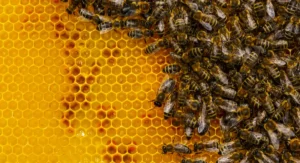
Honey bees crawl on a honeycomb
Honey bees are found all over the nation and pollinate more than 100 types of crops. They often build their nests in tree crevices, but will occasionally build nests in attics or chimneys. They are most visible in summer and late spring when new queens leave their old colonies along with thousands of workers to build new nests in tree hollows or crevices. At this time, large groups of bees can be seen swarming together to find a new nesting place. It takes a swarm approximately 24 hours to locate a new nesting site.
Honey bees can also be kept in an apiary, which is anywhere beehives are kept for honey production and honey bee conservation. Trained beekeepers ensure the honey bees remain healthy and productive while collecting the honeycombs they produce.
While most swarms are harmless, certain species of bees, like the Africanized honey bee, are extremely aggressive and may attack unprovoked.
Diet
Honey bees feed on nectar and pollen collected from flowering plants, collected using pollen baskets. These are small structures on the hind legs of the honey bees. Nectar provides them with carbohydrates for energy. The pollen supplies essential proteins and nutrients needed for growth and development.
The collected nectar is processed into honey, which serves as a food source for the colony during colder months when flowers are scarce. Honey bees also sustain themselves on bee bread, a combination of bee pollen, nectar, and saliva. Larvae and queen bees are also fed royal jelly, a milky substance made from pollen which is secreted through glands in their heads. Worker bees play an important role in gathering these resources to sustain the hive.
Life Cycle
The honey bee life cycle consists of four stages: egg, larva, pupa, and adult. A queen lays eggs in individual wax cells in the hive, and depending on the diet fed to the larvae, they develop into workers, drones, or queens. Worker bees live for approximately six weeks during peak foraging season, while queens can live for several years. Drones, whose primary role is to mate with queens, die shortly after mating. The cycle continues year-round in warmer climates like Florida, with peak activity occurring in spring and summer.
Behaviors
Africanized honey bees and European honey bees are two of the most common species of beesfound in Florida. The Africanized bees are much more aggressive. Honey bees are highly social and organized insects. Worker bees perform specific tasks such as foraging for food, caring for the young, and protecting the hive.
Honey bees make use of ocelli – three eyes on their head that can only detect light – to orientate themselves towards the sun and navigate. They communicate through movements known as the “waggle dance,” which helps other bees locate food sources. Honey bees also release pheromones through multiple glands to communicate and help recruit bees to the hive.
They are most active during the day and return to their hives at night. During swarming, honey bees temporarily group together while scouting for a new nest location. Despite their cooperative nature, honey bees will defend their colony if they feel threatened.
As with the mud dauber wasp, honey bees can sting but are unlikely to do so. Only female bees are capable of stinging and are not likely to sting when foraging for nectar and pollen in the backyard. They can also only sting once. Bee stings generally happen when these docile bees are provoked or accidentally crushed. The stinger of the honey bee, having barbs, will remain in the skin unless physically removed.
Removing the stinger as quickly as possible is the most important thing. The method of removing the stinger, either grasping with fingers, tweezers, or scraping from the skin, is up to the individual. Honey bee stings are quite painful and even life-threatening to a small percentage of people who are allergic to venom. If a honey bee nest is suspected on your property, it is always best to contact a professional bee removal companylike Florida Pest Control.
How to Get Rid of Honey Bees?
The safest and most effective way to remove honey bees is to contact a professional bee removal service. Experts can safely relocate the bees and their hives without causing harm to the colony. Attempting to remove bees yourself can be dangerous and may provoke the hive. Avoid using pesticides, as they are harmful to honey bee populations, which are essential pollinators. If you notice a nest on your property, keep a safe distance and refrain from disturbing the bees.
Honey Bee Prevention Tips
To prevent honey bees from nesting on your property, seal cracks and crevices in walls, chimneys, and attics. Remove potential nesting sites such as hollow trees or unused equipment. Planting flowers at a distance from your home can encourage bees to forage away from living spaces. Regularly inspect your property for signs of bee activity and address any infestations promptly by contacting a professional.
Need Help With Bees, Wasps, or Hornets?
If you’re dealing with honey bees, wasps, or hornets on your property, Florida Pest Control can help. Contact us today for professional pest control solutions tailored to your needs.
Yes, honey bees can sting, but only female worker bees are capable of stinging. Honey bees usually sting when provoked or threatened. After stinging, the bee’s barbed stinger remains in the skin, and the bee dies shortly afterward.
Are honey bees endangered?
Honey bees are not officially endangered, but their populations face significant threats from habitat loss, pesticides, climate change, and diseases like colony collapse disorder. Efforts are being made globally to protect and support honey bee populations.
Why do honey bees swarm?
Honey bees swarm when their colony becomes too large for its current hive. This natural process allows the colony to split, with the old queen bee and a group of worker bees leaving to establish a new nest. Swarms are often seen in spring and early summer.
Are honey bees native to North America?
No, honey bees are not native to North America. European settlers brought them over in the 17th century. Native bees, such as bumblebees, have coexisted with honey bees since their introduction.
Are honey bees aggressive?
Honey bees are generally docile and not aggressive unless provoked or their nest or hive is threatened. They are focused on foraging for nectar and pollen and rarely sting unless they feel endangered.
Clothes moths are textile-damaging pests and rank among the rare creatures capable of breaking down keratin, a fibrous protein present in animal skin, hair, feathers, and horns. In North America, there are two main species of clothes moths: the webbing clothes moth and the casemaking clothes moth. The larval stage of these moths can cause significant harm, as both species feed solely on animal-based materials such as wool, fur, silk, feathers, felt, and leather. Severe infestations can go unnoticed in homes, leading to significant and irreversible damage to garments and decorative heirlooms.
Clothes Moth Habitat
Unlike many other moth species, clothes moths are rarely seen because they tend to avoid light. They thrive in dark, undisturbed spaces such as closets, basements, and attics. Inside homes, clothes moth larvae are often found on wool garments, carpets, upholstered furniture, and old wool rug scraps stored in attics. Accumulated lint from wool rugs and pet hair hidden behind baseboards or in floor cracks can also attract infestations. A common spot for egg-laying is under furniture, such as beneath the back legs of a sofa—areas that aren’t typically reached by vacuuming. While adult moths do not feed on fabric, their presence indicates that eggs are likely to be laid, leading to fabric-damaging larvae.
Clothes Moth Behaviors, Threats, or Dangers
Clothes moths commonly damage or destroy items such as sweaters, scarves, coats, blankets, rugs, down-filled pillows and comforters, upholstery, stuffed toys, decorative pieces, and taxidermy displays. Their larvae prefer feeding in dark, undisturbed spaces like closets, storage chests, and boxes where woolens and furs are kept for extended periods. Clothing and blankets that are frequently used are rarely affected, as are rugs that experience regular foot traffic or routine vacuuming. Typically, areas such as the edges and undersides of rugs or spots beneath furniture are more vulnerable to attack. If you suspect an infestation, it’s advised to reach out for a free pest consultation.
The meadow vole, often referred to as the “meadow mouse” or “field mouse,” is a common rodent found throughout North America. Unlike rats and mice, it has a shorter tail and a thick, cylindrical body. Meadow voles are poor climbers and seldom enter homes, preferring to inhabit underground tunnel systems that can damage lawns and landscaping. They breed rapidly and primarily feed on plants like grasses and seeds.
Meadow Vole Habitat
While meadow voles sometimes appear above ground, they mainly inhabit shallow, compact burrows. Their nests, constructed from grass, stems, and leaves, are often tucked beneath dense vegetation. Clearing this cover may reveal runways that lead to their nesting sites. Evidence of their activity includes freshly cut grass and greenish droppings, about 3/16 inch long, scattered near their burrows.
Meadow Vole Behaviors, Threats, or Dangers
Although meadow voles seldom come into contact with humans and pose minimal health threats, they are capable of spreading diseases such as plague and tularemia. While they typically avoid entering homes, they are significant pests for homeowners, often damaging orchards, tree plantings, and crops during their foraging. Their burrowing weakens the stability of plants and trees, and they can also harm tree trunks, lawns, golf courses, and ground covers.