
Once a rare sight in North America, raccoon populations have exploded in the last century. It’s these numbers, combined with their nocturnal habits and scavenging activity, that cause many to wonder about their connection to rodents. Although both are mammals, raccoons are more closely related to bears and weasels than they are to mice or rats.
Let’s take a closer look at some of the similarities between rodents and raccoons.
Similarities and Differences Between Raccoons and Rodents
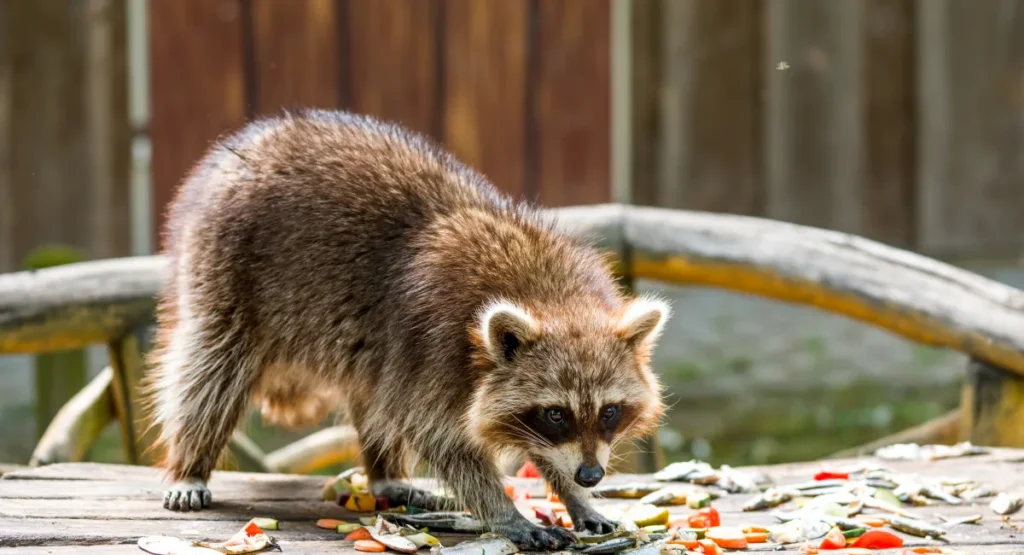
The common raccoon, sometimes also known as the North American raccoon, lives throughout the U.S., Canada, and Central America. They’re known for their distinctive “eye mask” facial patterns, horizontal-striped tails, and agile front paws. In contrast, mice and rats are known for their long, often hairless, scaly tails.
Rodents belong to the order: Rodentia, and raccoons to Carnivora. Underneath that, there are different families and species of rodents, including rats, mice, and squirrels. Rodents in the order Rodentia are primarily characterized by their ever-growing front incisors, which is why they constantly gnaw on materials.
Carnivora, meanwhile, refers to mammals that are primarily carnivorous (flesh-eaters). Although raccoons, as we’ll get into shortly, are more opportunistic scavengers than the typical predatory carnivores.
That said, there are some physical and behavioral similarities between raccoons and rodents that cause many to wonder about a possible biological link.
Raccoons and Rodents Are Similar in Scavenging Behavior
Like raccoons, wild rodents such as mice, rats, and squirrels are scavengers. They are attracted to easy food and often raid unsecured garbage—in the case of raccoons, this has earned them the popular nickname “Trash Panda” over the years. Both will also forage for and eat pet food, birdseed, fruit from trees, growing vegetables, and anything else left lying around.
Both raccoons and rodents can also adapt well to living close to people, and use sheds, garages, crawl spaces, and roof voids for shelter or to build nests. Many are active at night, except for most squirrels, so property owners may notice signs of their activity before seeing the animals themselves.
Broader Differences in Physical Appearance
Raccoons are much larger than most rodents and have several important physical differences. Rodents have large front incisors that grow continuously and use them for gnawing. On the other hand, raccoons have canine teeth and molars—much like humans—that are more suited to their omnivorous diet of fruit, insects, eggs, small animals, and human food waste.
Although some rodents, such as squirrels, possess relatively nimble front paws, a raccoon’s manual dexterity is far superior. Their sensitive, hand-like paws allow them to grasp, pull, and manipulate objects with ease, enabling them to open lids and rummage through trash cans in ways most rodents cannot. This specialized ability often explains why the sound of a raccoon foraging near a home at night can be loud and deliberate enough to be mistaken for an intruder.
The Raccoon Habitat in Florida
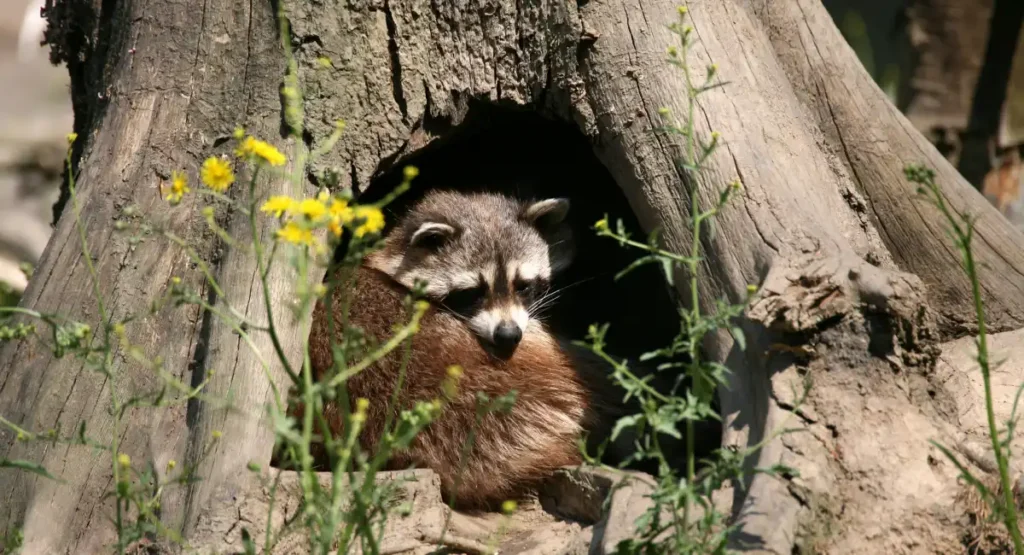
A raccoon’s natural habitat includes forests, wetlands, marshes, grasslands, and areas close to rivers, lakes, or streams. Raccoons are strong climbers and capable swimmers, and they may shelter in hollow trees, fallen logs, dense vegetation, rock crevices, or abandoned burrows.
Because they are highly adaptable, and towns and cities can provide the sources they need to survive, they also thrive in suburban and urban environments. Florida’s abundance of greenery, marshes, and lakes, combined with its developed towns and cities, provides ideal living conditions.
It’s generally accepted that their population has exploded in North America in recent decades due to rapid urbanization. In developed areas, they may make dens in attics, chimneys, sheds, garages, under decks, or beneath other structures that provide warmth and shelter.
Dealing with Raccoons on Your Property
If you encounter wild raccoons around your property, do not approach them, attempt to handle them, or move them on by yourself. Despite their cute appearance, raccoons can be dangerous to humans and animals. They don’t tend to attack unprovoked, unless feeling threatened or to protect their young, but can carry diseases and parasites, including rabies. There have been several alerts throughout Florida this year, with cases of infected raccoons reported, including one that infected an unvaccinated cat in Spring Hill.
If you need help dealing with nuisance wildlife control, rodent identification, or extermination, get in touch with our experts.