
Let’s be honest. The moment you spot a cockroach in your home, something primal takes over. The rational, measured adult who handles spreadsheets and parallel parks without incident suddenly finds themselves standing on a chair, wielding a flip-flop, making decisions they’ll have to think carefully about before describing to anyone.
The cockroach, for its part, has survived roughly 300 million years of extinction events and is apparently unimpressed by your shoe. So what actually works? Here’s a clear-eyed look at your options, ranked by effectiveness and your likelihood of emerging from the encounter with your dignity more intact than the cockroach.
The Immediate Response: When It’s Right There
The most immediate temptation is the direct approach: something flat, applied rapidly and firmly. This works, up to a point. A rolled magazine or a shoe might end the encounter, although some cockroaches seem to be able to scuttle away from any impact short of a wrecking ball. But the aftermath isn’t pleasant. Cockroaches can carry bacteria on their bodies and, when crushed, may release the contents of their digestive tract and any egg cases they were carrying onto whatever surface you just used as a battlefield. It’s effective in the narrowest sense of the word.
A considerably cleaner option is soapy water. This sounds like the sort of tip a slightly eccentric neighbor might offer, but it has genuine science behind it. Cockroaches breathe through tiny openings along their bodies called spiracles. Soapy water coats those openings and suffocates the insect, typically within a minute or two.
Fill a spray bottle with water and a good squeeze of dish soap or shampoo, aim directly at the cockroach, and apply generously. No half measures here, though; you need enough solution to coat the body thoroughly. The American cockroach, of which Florida has an inexhaustible supply, is large and determined and may require a sustained effort. The upside is that your floor smells faintly of citrus when you’re done.
Short-Term Solutions That Actually Work
For cockroaches you can’t see (but you know are present), gel bait is one of the most effective tools available without a professional license. Applied in small amounts in the dark, warm spaces where cockroaches live and feed, specifically behind appliances, inside cabinet hinges, and along the back of under-sink areas, it draws roaches in and kills them through ingestion. The active ingredient is then spread through the population when other cockroaches come into contact with or consume the remains. It’s systematic rather than satisfying, but it gets results.
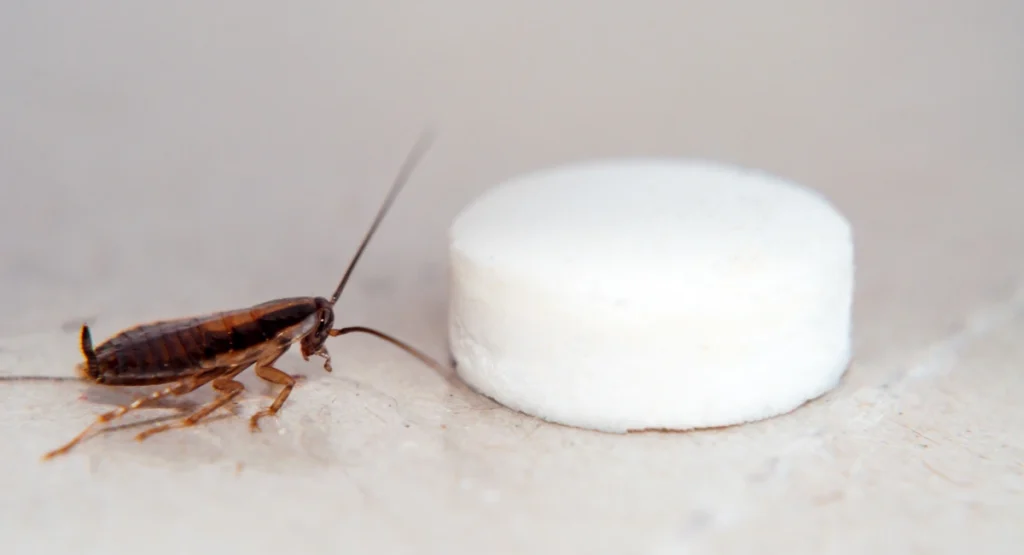
Boric acid applied as a light dust in dry, concealed spaces is another strong option. Cockroaches pick it up on their legs as they walk through it and ingest it when they groom themselves. The key word is light. Like diatomaceous earth, they’ll avoid a thick layer. A fine, barely visible coating in crevices, along baseboards, and around drains works with the cockroach’s own behavior rather than against it. Boric acid is also slow-acting, so don’t expect an immediate result; give it a week and reassess.
What Doesn’t Work as Well as People Think
The internet has no shortage of cockroach-killing folk remedies, and most of them range from mildly useful to entirely optimistic. Essential oils, white vinegar sprays, and ultrasonic devices have enthusiastic advocates and limited actual evidence. Vinegar as a surface cleaner removes scent trails and is worth doing for that reason, but it won’t kill a cockroach on contact. Ultrasonic repellents have been studied repeatedly and the findings are, to be polite, underwhelming.
Contact sprays kill cockroaches you can see, but cockroach populations are mostly invisible. The insects hiding in wall voids, behind refrigerator motors, and inside cabinet panels are untouched by a spray aimed at a single individual on the kitchen floor. Overuse of contact sprays can have the opposite effect: they can scatter cockroach populations into new areas of your home rather than eliminating them. They have their place in an integrated approach, but as a standalone strategy, they’re a perfect example of addressing the symptom without touching the cause.
What to Do When One Isn’t Really One
Spotting a cockroach in daylight is worth taking seriously. Cockroaches are nocturnal by nature, and one visible during the day often means the population in the dark has grown large enough to displace individuals from their usual hiding spots. At that point the DIY toolkit, while still useful for containment, is unlikely to be sufficient on its own.
Start with the fundamentals: remove food sources by sealing everything in airtight containers, clean surfaces every night, fix any leaking pipes or dripping faucets, and eliminate clutter. Especially clutter in the form of cardboard boxes, which cockroaches use as both shelter and breeding material. Seal gaps around baseboards, pipes and plumbing, and door frames. Florida’s warmth and humidity create ideal conditions for cockroaches year-round, and an unmanaged entry point will simply replace whatever population you’ve cleared.
For anything beyond a very isolated encounter, the most time-efficient and effective response is professional treatment. Florida Pest knows which species are active in your area, where they’re likely to be living, and which combination of treatments will clear them rather than just move them around. Get in touch with our team and let us take it from there.