

In April 2026, a dozen Central Florida restaurants were forced to close after failing state health inspections, and small flies played a direct role in several of them. Roughly 60 small flying insects were found landing on unwashed onions and peppers in one Orlando location. In each case, the business had to stop operating until it met inspection standards again.
For commercial kitchens across the state, these closures serve as a stark warning. Small flies are a significant threat to your business, yet many operators underestimate their power to force a total facility shutdown. This risk only intensifies in July, when excessive heat drives rapid pest population growth.
Why High-Humidity Drives Fly Activity
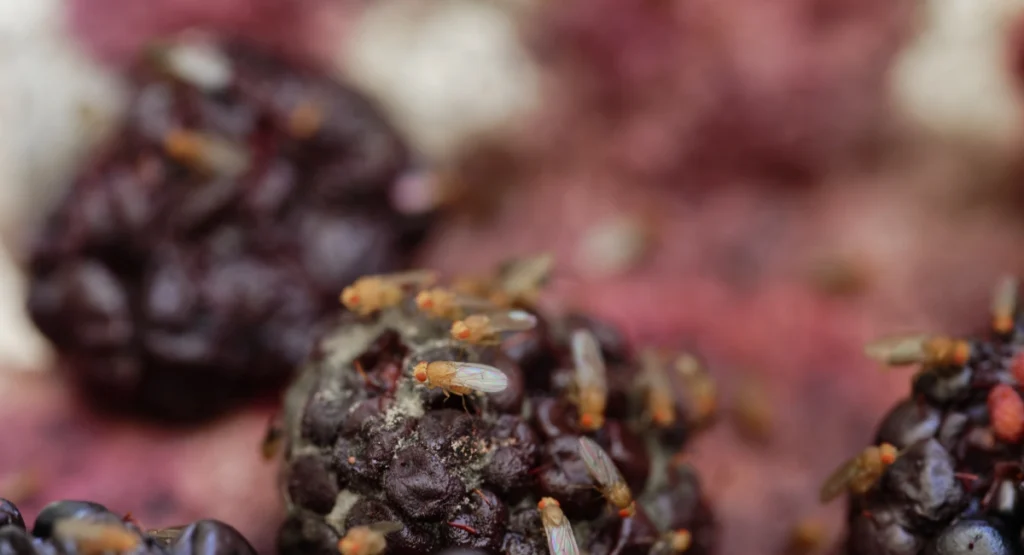
When outdoor temperatures climb in July, commercial heating, ventilation, and air conditioning (HVAC) systems and refrigeration units work overtime to keep buildings cool. This heat transfer generates heavy condensation. As a result, water constantly drips and pools along baseboards, beneath ice machines, around drain covers, and inside the cabinets of beverage dispensing stations. The moisture mixes with tiny amounts of daily food waste, spilled liquids, and grease to form a thick organic film that attracts small flies, such as drain and fruit flies.
Adults lay their eggs inside this moist film. Because the indoor temperature is warm and the moisture is constant, the larvae hatch and mature quickly. A single fly can lay hundreds of eggs, meaning a minor moisture problem can evolve into a severe active infestation in under a week.
What Florida Inspectors Now Expect
Florida food service operations are regulated by two state agencies. The Florida Department of Business and Professional Regulation (DBPR) oversees restaurants, catering companies, and other venues where food is prepared and served, while the Department of Health (DOH) regulates institution-based food services, such as schools and hospitals. Both maintain a strict, zero-tolerance approach to live pests in food-handling areas.
Modern enforcement evaluates a facility’s overall operational readiness relating to three areas:
- Documented sanitation protocols that show cleaning is scheduled, consistent, and recorded
- Structural exclusion that physically blocks pests from entering or breeding
- Targeted pesticide use that limits chemical exposure in areas where food is handled
In practice, this means a facility cannot rely on spraying pesticides after a problem appears. Inspectors look for proof that kitchens are actively eliminating the root causes of pest infestations. A clean-looking surface is not enough if the organic buildup driving fly activity is still present in drains and hidden gaps.
Where Flies Actually Breed in Commercial Kitchens
The recent closures reveal a clear pattern: fly activity and larvae are typically concentrated in specific, predictable areas rather than out in the open. During Florida’s humid summer months, the following locations are most likely to harbor pests and lead to inspection failures:
- Floor drains and grease traps, where organic film coats the inside walls
- Drip pans and condensation lines beneath refrigeration and ice machines
- Gaps and voids beneath fixed equipment, including beverage dispensing stations and cook lines
- Cracks in flooring and grout, where spilled liquid and food collect
- Mop sinks and storage areas, where standing water and residue gather
When health inspectors shine their flashlights beneath handwashing sinks or into cracks in the grout, they are looking for hidden breeding sites. If water and organic waste are left to stagnate in these overlooked structural gaps because standard cleaning routines skipped them, a health violation is almost inevitable.

Why Standard Cleaning Is Not Enough
Most kitchen teams perform routine surface sanitation well. They wipe preparation areas, mop floors, and apply chemical sanitizers at the end of a shift. When flies appear, the common reaction is to pour bleach or boiling water down the floor drains. While this is a baseline operational standard, it will not permanently solve a fly problem because it ignores the biological root of the infestation.
Small flies do not breed in standing water alone; they require a biological structure known as a biofilm. To permanently break the reproductive cycle, facilities must understand how this material works and how to physically dismantle it:
- The Formation of a Biofilm: Flies need a thick, gelatinous layer that forms when fats, oils, grease, and food particles bind with active bacteria. This water-resistant film coats the inner walls of plumbing lines, the undersides of drain covers, and the bottom of damaged floor grout. Female flies deposit their eggs directly into this protective layer, where the larvae feed on the trapped bacteria until they mature.
- The Problem with Bleach and Liquid Flushes: Bleach is a chemical disinfectant designed to kill bacteria on clean, hard surfaces; it is not an organic solvent or degreaser. Because a biofilm is dense, hot water and liquid bleach simply glide over its surface. This may kill adult flies on contact, but it leaves the protective coating—and the hundreds of eggs embedded safely inside it—completely intact.
- Mechanical and Microbial Disruption: Breaking the cycle requires physically destroying the breeding material. First, maintenance teams must use stiff-bristled drain brushes to physically scrape the interior walls of pipes, tearing open the protective matrix. Second, they must apply bio-enzymatic foaming cleaners. These foams expand to coat the entire pipe, using specialized bacteria to consume the proteins and hydrocarbons until the pipe surface is completely bare.
This specific combination of physical scraping and chemical digestion is the exact difference between routine daily cleaning and regulatory-level deep sanitation.
How Deep Cleaning Beats High Humidity Fly Risks
Deep cleaning targets the hidden, moisture-heavy areas where flies actually develop. A strong summer program for a Florida commercial kitchen usually includes the following steps:
- Treat drains with bio-enzymatic cleaners. Unlike bleach, these products use enzymes to break down and remove the organic film that lines drain walls. This eliminates the breeding surface rather than just rinsing over it.
- Clean beneath and behind fixed equipment. Coolers, cook lines, and beverage stations should be moved or accessed on a set schedule so technicians can reach the gaps where moisture and residue collect.
- Empty and sanitize drip pans and condensation lines. Because these fill constantly during humid weather, they need frequent attention.
- Seal cracks and structural gaps. Repairing damaged grout, flooring, and voids supports the structural exclusion that state inspectors expect.
Deep cleaning, combined with professional commercial disinfection and sanitation support, helps convert high-risk areas into low-risk areas.
Just as important is keeping a sanitation record. A written log of what was cleaned, when, and by whom provides the documented sanitation evidence that inspectors increasingly look for. In the event of an isolated pest issue, the record demonstrates the facility is managing risk responsibly.
Protecting Your Operation This Summer
July brings significant challenges, but state health violations remain preventable. By understanding fly breeding sites, recognizing the limits of standard cleaning, and enforcing documented deep sanitation, food service leaders can maintain compliance ahead of inspections.
While minimizing moisture is a vital first step for summer sanitation, managing every structural gap and biofilm layer during busy shifts can be overwhelming. Often, a robust defense requires professional support. Florida Pest Control provides expert commercial services to help managers pinpoint hidden breeding sites, allowing us to design targeted, well-documented sanitation programs to keep your facility safe all summer long.