
July brings intense heat, high humidity, and heavy sun exposure to Florida, creating a harsh environment for your grass. When spreading yellow or brown patches suddenly appear in your yard, it is entirely normal to assume the midday sun is simply baking the grass. However, summer heat stress and damage from destructive lawn pests look nearly identical to the untrained eye.
Treating pest damage as if it were just a severe water shortage can ruin your lawn care. Equally, applying extra water and fertilizer to a pest-infested yard often feeds the problem, accelerating the damage rather than fixing it.
Symptoms of Heat Stress: Grass turns grayish-blue, individual blades fold in half to conserve moisture, and footprints remain clearly visible long after someone walks across the yard.
Symptoms of Pest Damage: Expanding yellow circles with completely dead, brown centers. You may also notice physically chewed grass blades, flying moths at dusk, or soil that feels strangely spongy and bulging under your feet.
Learning to read these clues correctly is the single most valuable lawn skill a Florida homeowner can have in the summer.
Clue #1: Is Your Lawn Just Thirsty?
Before blaming insects, it is smart to rule out the most common July culprit—plain old heat and drought stress. Florida grasses like St. Augustine and Bahia are tough, and they have natural ways of telling you when they are struggling against the sun.
The earliest warning sign is a change in color. A healthy lawn is bright green, but a water-starved lawn slowly fades to a dull, grayish-blue shade before it ever turns brown. If you look closely at the individual blades, you will notice they begin to fold in half down the middle, almost like a book closing. This is the grass protecting itself, shrinking its surface area to hold onto every drop of moisture it has left.
The easiest way to confirm thirst is the “footprint test.” Walk across your lawn in the afternoon, then turn around and look behind you. A well-watered lawn springs right back up. But if your footprints stay pressed into the grass long after you have passed, your lawn is telling you it desperately needs water. In most cases, deep watering in the early morning will bring a heat-stressed lawn back to life within a day or two.
If you have been watering properly and the brown patches keep spreading anyway, it is time to start looking for bugs.
Clue #2: Meet July’s Most Destructive Pests
When water is not the answer, an insect almost certainly is. The hot, humid Florida summer promotes rapid breeding of several lawn-destroying pests, each leaving its own unique calling card.
Southern Chinch Bugs
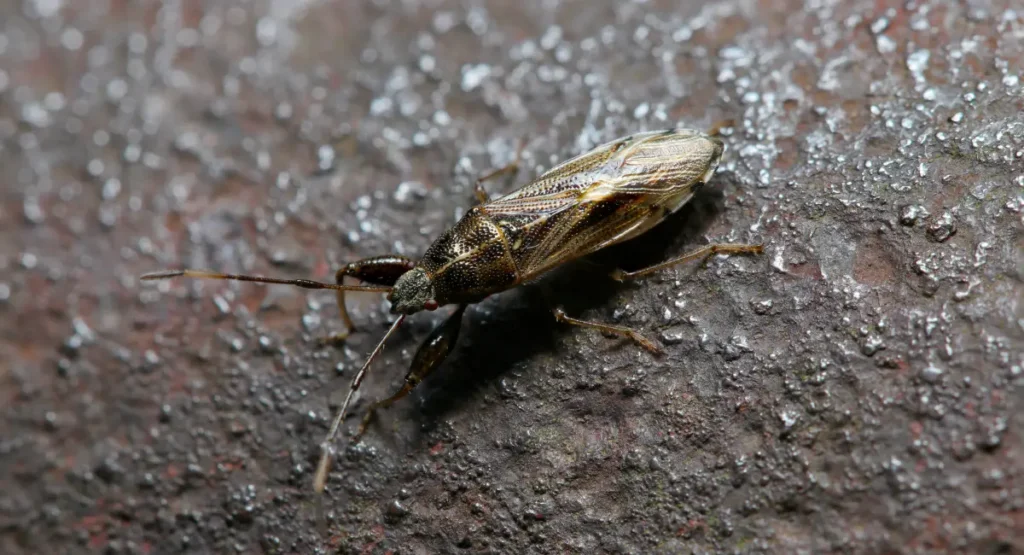
Chinch bugs are the number one enemy of St. Augustine grass in Florida. These tiny insects love the hottest, driest spots in your yard—usually along driveways, sidewalks, and curbs where the pavement radiates extra heat.
They feed by piercing the grass and draining its fluids, while injecting a toxin that blocks the plant from moving water through its system. The result is a spreading ring of yellow grass surrounding a dead, brown center. If you part the grass right where the brown meets the green, you can often catch the tiny black-and-white adults or their bright orange young moving near the soil.
Tropical Sod Webworms
While chinch bugs drink your grass, sod webworms eat it. These pests are the caterpillar (larval) stage of a small, pale moth that you will often see fluttering low over the lawn at dusk. The moths themselves are harmless, but the caterpillars they leave behind are not.
Feeding mostly at night, young sod webworms scrape the surface of the blades, leaving see-through “windows” in the leaves. As they grow, they chew the blades into ragged, notched edges, eventually making the lawn look as if it were scalped by a mower set far too low. Look for small piles of bright green droppings tucked down in the thatch as confirmation of sod webworms
Mole Crickets
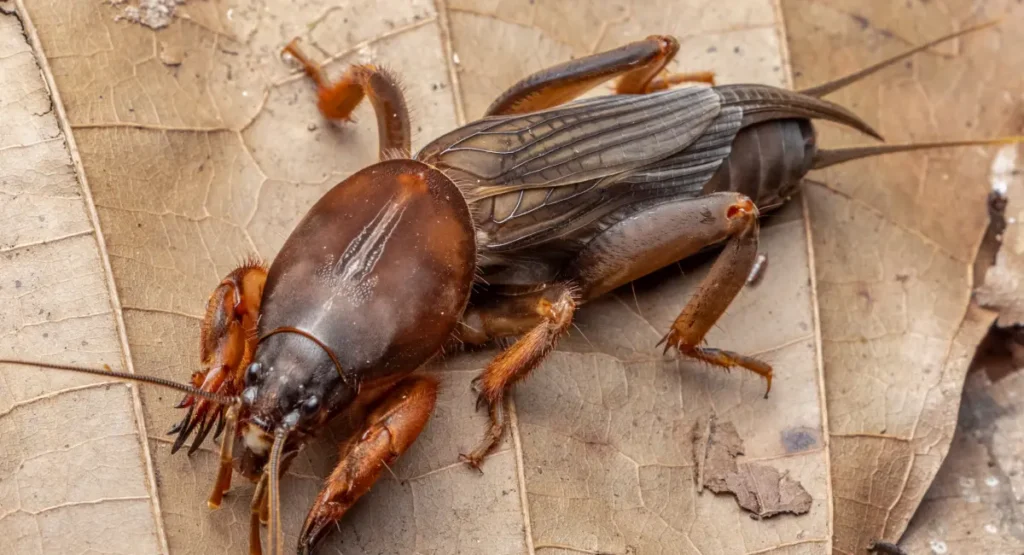
Mole crickets attack from below. With shovel-like front legs built for digging, they tunnel just beneath the surface, slicing through grass roots as they go.
You can usually feel mole crickets before you see their damage. As they burrow, they push the soil upward, leaving the ground feeling strangely spongy and loose under your feet. Because the roots are cut off from the soil, the grass dries out and dies in ugly, irregular brown streaks.
These destructive pests are among the lawn insects targeted by professional lawn insect control programs designed specifically for Florida turf.
The Costly Mistake for Homeowners
When most people spot a brown patch, their instinct is to water more and toss down some fertilizer to “green things up.” If the problem were truly heat stress, that might help. But if pests are the real cause, you may have just made everything worse.
Extra water creates the warm, humid environment that sod webworms love. Moreover, nitrogen-rich fertilizer produces soft, sugary new growth—which happens to be a chinch bug’s favorite meal. In other words, watering and feeding an infested lawn is like throwing a feast for the very pests destroying it.
To avoid this expensive mistake, try the “tug test” on your damaged patches:
- Grab a handful of yellowing grass at the edge of a brown spot
- Pull straight up with firm, steady pressure
- If the grass holds tight and resists, you are likely dealing with heat stress or surface-feeding sod webworms
- If the grass lifts away easily, like peeling up loose carpet, the roots have been destroyed by mole crickets or advanced chinch bug damage
This one simple test can instantly point you toward the right solution—and away from the wrong one, giving you the bandwidth to take action before the damage spreads.
Professional Lawn Care Services
Reading the clues yourself is a great first step, but in the Florida summer, the window between mild damage and a dead lawn can be just a few short weeks. Pests multiply fast in the heat, and generic store-bought sprays often miss the real culprit, leaving you with a damaged yard and an expensive sod replacement bill.
Florida Pest Control understands exactly how our state’s seasonal weather, soil conditions, and pest biology work together to stress your lawn. Instead of guessing and hoping, allow our specialists to pinpoint the true cause of your brown patches. We invite you to request a professional lawn care service inspection and give your grass the targeted care it needs to stay healthy, green, and resilient all summer long.