Asian Termite

Asian subterranean termites are a formidable threat to Florida homes. Their large colonies and aggressive feeding mean that damage can build up quickly. To identify and control Asian termites, it helps to understand their habitat, lifecycle, and how they differ from other species of termites.

Scientifically known as Coptotermes gestroi, Asian subterranean termites are an aggressive and destructive underground species. Their ability to form huge colonies and feed rapidly makes them one of the most threatening termites in the state. 

If you suspect Asian subterranean termites on your property, act quickly and contact us today to schedule a termite inspection. Our termite experts will thoroughly inspect your property and develop a customized treatment plan to help prevent the damage from escalating.

Asian Termite Identification

Asian subterranean termites are light brown to dark brown in color, with swarmers (alates) having dark wings with dense hair. Workers are ghostly white and about a half‑inch long, while soldiers have large, rounded heads and strong mandibles (pincer-like jaws), distinguishing them from other termite species. Winged swarmers appear in spring and early summer, and discard their wings once they have found a mate. 

Asian Termites in Florida

In Florida, Asian Termites are among the most formidable subterranean species. These highly destructive termites are originally from Southeast Asia. First noted in South Florida in the 1990s, they have since expanded throughout coastal regions. This species thrives in Florida thanks to the constant heat and high humidity.  

Asian Termite Habitat

Asian termites prefer living in the soil, close to moisture and food sources. While they usually prefer trees, they are experts at finding weak points or holes in structures. These pests don’t limit themselves to decaying wood like some termites; they’ll attack any wood that has come in contact with the soil.

To reach food sources, Asian termites  construct mud tubes to move above ground without drying out, and build vast networks of tunnels. These can contain  millions of termites that work tirelessly, damaging wooden structures from the inside out. These tubes maintain a humid environment for termite survival. Colonies do well near foundations, patios, decks, and anywhere wood meets soil. Their soil‑based lifestyle distinguishes them from drywood and dampwood termites, which can live entirely within wood.

Asian Termite Behaviors, Threats or Dangers

The Asian termite is a highly destructive pest; these invasive, wood-eating bugs are  a major concern for Florida homes. They form massive colonies, consume wood rapidly, and can damage structures faster than most other termite species. They are known to eat and weaken supporting structural beams of a house, causing thousands of dollars of damage to your home if left untreated. Due to their subterranean nature, Asian termite infestations can be difficult to spot until they have done significant damage. 

The first signs may be during the spring, when winged alates leave the colony to reproduce. Finding swarms of alates is a clear indication that termite colonies are close and should be dealt with quickly. If you  see signs of termites, contact your local termite control company for professional advice, identification, and elimination services. 

Asian Termite Lifecycles

Their lifecycle begins with winged swarmers emerging in spring or early summer. After pairing and shedding wings, they mate, establishing new colonies underground. Queen termites lay the eggs while workers feed and care for the young. Asian termites can reproduce quickly, laying up to 1,000 eggs daily, creating large, highly destructive colonies that can easily reach over a million termites. Depending on colony size, soldiers maintain tunnels and protect the group. 

Eggs develop into mature workers in around six weeks. Colonies can spread and multiply as years go by, making early detection essential for successful termite control.

Frequently Asked Questions


What Should You Know About Asian Termites, Including Where They Live And The Risks They Pose?

Asian subterranean termites live below ground in moist soil near wood structures like beams, decks, and mulched areas. They form large colonies that quickly feed on structural wood. Their feeding can hollow out beams and undermine foundations, making them a serious threat. Spotting small mud tubes or discarded wings is a sign you may have an infestation on your hands. Contact a professional if you spot any signs to help prevent further damage.

How Do Asian Termites Compare To Other Termite Species?

Asian termites have larger colonies than Formosan, Eastern subterranean, and dry wood termites. They also chew through wood more quickly and are more aggressive underground feeders than many other species in Florida.

How Do You Get Rid Of Asian Termites?

Eliminating these termites requires professional termite control methods. This might include applying liquid soil treatments around the property for a protective barrier or installing bait systems that workers take back to the colony.

What Is The Difference Between Formosan And Asian Termites?

Asian and Formosan (Coptotermes formosanus) termites are both aggressive subterranean species, but Asian termites form larger colonies and cause damage more quickly. Asian swarmers have darker wings with more hair, while Formosan swarmers have lighter, golden wings. Their soldiers also differ slightly in head shape.

What Time Of Year Are Asian Termites The Worst?

These termites are most active during the swarming season, which runs from spring through early summer. During this period, winged swarmers emerge, seek mates, and begin new colonies. While swarming provides a clear visual sign, colony activity remains consistent year‑round due to Florida’s warm climate.

What Attracts Asian Termites?

Moist soil, wood-to-soil contact, mulch, and leaky landscape irrigation attract Asian subterranean termites. They seek humid environments to build their mud tubes and nesting galleries. Any untreated wood in contact with soil is a potential target. To make areas less appealing, keep good drainage, reduce moisture, and keep wood off the soil.

Asian Lady Beetle

Asian Lady Beetles in Florida

The multicolored Asian lady beetle (Harmonia axyridis) was introduced into the United States from Asia to control aphids, scale, and other crop pests from 1978 to 1981. They are part of the Coccinellidae family, often mistaken for the native ladybug or other lady beetle species. They’re one of the most common beetle species found in Florida. 

It is now widely distributed across the nation. Asian lady beetles may enter homes in large numbers and have become consistent overwintering pests in buildings and homes. That’s because Asian lady beetles cannot survive sub-freezing temperatures, so they seek out warmth and humidity inside. 

What Do Asian Lady Beetles Look Like?

Asian lady beetles are multicolored, ranging from yellow to deep red, with black spots on their elytra (wing covers). The pronotum, located behind the head, often features a distinctive black “M” or “W” shape. 

Asian lady beetle larvae look different from the adults. They are dark with orange markings and soft, spiky bodies. The pupal stage resembles a small, orange-brown shell.

Signs of an Asian Lady Beetle Infestation

While these beetles can help with biological control in crops, they can become a significant nuisance pest indoors.

Signs of infestation often occur in fall when the beetles seek warm, sheltered areas to overwinter. You may notice large numbers of beetles clustering on walls, windows, or ceilings, especially near light sources. They sometimes enter living areas by squeezing through cracks or wall voids.

Habitat, Diet, Life Cycle & Behaviours


Where Do Asian Lady Beetles Live?

Asian lady beetles live in many places, such as agricultural crops, forests, and gardens. They originally came from eastern Asia but have adjusted well to Florida’s warm weather. These beetles like being outdoors where they can eat soft insects like aphids. 

In fall, beetles seek out crevices and protected areas around homes to spend the winter, congregating in attics, wall cavities, cracks around door frames, and within soffits and wall voids. They are often found on siding or near light, as they are drawn to bright areas. 

Hundreds and even thousands of these beetles have been found in and on homes. 

Diet

Asian lady beetles are predators that help with biological control by eating aphids, scale insects, and other pests in agricultural crops.. When food is hard to find, they might also eat fruits or nectar. 

This species is a fierce predator of crop pests. It can produce several generations each year. These insects often gather in groups and can enter buildings, making them major structural pests. While Asian Lady Beetles are good to have outdoors, large numbers indoors can cause problems.

Life Cycle

The life cycle of an Asian lady beetle has four stages: egg, larva, pupa, and adult. 

Females lay yellow eggs in clusters on leaves near food. The eggs hatch into larvae that look like small, spiny alligators and eat lots of pests. Once they grow, the larvae enter the pupal stage, where they develop inside a protective shell. Then, an adult beetle emerges, ready to reproduce. 

The entire cycle can take as little as a month, allowing beetle numbers to grow quickly.

Behaviors

Asian lady beetles often gather in large numbers in cooler months as they seek shelter. 

They are attracted to light and may swarm on sunny walls or windows. Asian lady beetles are usually harmless. But, they can be frustrating in living areas. Some people may be allergic to them. 

Asian lady beetles are highly adaptable, which helps them thrive in various environments. Their search for warmth makes them a fall nuisance for homeowners.

Are Asian Lady Beetles Dangerous?

Although Asian lady beetles may bite, their bite does not seriously injure humans or spread diseases.  If handled or crushed, they will emit a foul odor and leave a stain. This liquid can stain surfaces and may cause allergic reactions, like rhinoconjunctivitis, in sensitive individuals. If this happens, please call your doctor.

If a large number of beetles gain access inside of homes, they can also stain drapery and clothing, making them more of a nuisance than dangerous.

How to Get Rid of Asian Lady Beetles?

Professional pest control  is the most effective solution. Our experts can safely apply insecticidesand seal cracks around windows and walls to stop beetles from re-entering. 

If beetles hide in hard-to-reach spots like wall voids or behind baseboards, our l experts can safely locate and remove them. We provide long-term protection by addressing these problem spots, ensuring that beetles don’t return and infest your living spaces again. 

Contact Florida Pest Control for help with getting rid of Asian lady beetles today.

Asian Lady Beetle Prevention Tips

To prevent Asian lady beetles from invading your home, try taking these steps:

  • Seal entry points, such as cracks, window frames, and vents.
  • Install tight-fitting screens on doors and windows.
  • Use caulk to close gaps in siding or around pipes.
  • Keep outdoor lights off or use yellow bulbs to reduce their attraction to light.

Preventing access to wall voids and living areas is key. Regular maintenance and cleaning will also reduce the chances of an infestation. 

For the most effective prevention, talk with our experts at Florida Pest Control

Do You Have a Beetle Infestation Problem? We Can Help.

If you are dealing with an infestation, always contact a licensed beetle exterminator. Let Florida Pest Control handle the problem ad help to keep beetles away from your property for good.

FAQs

Do Asian lady beetles bite?

Asian lady beetles can bite, but their bite is harmless and doesn’t spread diseases. 

Are Asian lady beetles invasive?

Yes, Asian lady beetles are invasive. Introduced for biological control, they have become widespread and often invade homes, especially during the fall to overwinter.

Are Asian lady beetles poisonous?

No, Asian lady beetles are not poisonous. However, they can cause allergic reactions like rhinoconjunctivitis in sensitive individuals.

Are Asian lady beetles harmful to plants?

No, Asian lady beetles do not harm plants. They are beneficial insects that feed on pests like aphids, making them valuable for agricultural crops.

What attracts Asian lady beetles?

Asian lady beetles are attracted to light, warm areas, and food sources like aphids. They may also be drawn to homes seeking shelter for the winter, especially in wall voids or cracks.

Argentine Ant

Argentine Ants in Florida

Argentine ants (Linepithema humile) are major household and garden pests in Florida. When searching for food, they leave scent trails everywhere they go, not just between their nest and the food. This habit ensures they never visit the same area twice.

Workers from different Argentine ant colonies cooperate with each other, allowing them to form large super-colonies. The colonies can become so large that they can take over whole city blocks. They are ranked among the most stubborn home-infesting pests, contaminating and spreading bacteria wherever they forage.

Argentine Ant Characteristics

Argentine ants are small, usually about one-sixteenth of an inch long, ranging in color from light to dark brown. Argentine ants bite, but they don’t hurt and don’t pose any health risk. Unlike many other species, Argentine ants don’t fight among colonies, which means several nests may work together as one large supercolony. This trait, plus their ability to displace native ants, makes them a real nuisance, especially in areas close to food and water.

Argentine Ant Habitats

Argentine ants prefer to nest under sun-baked soil and may even clean the nest area of vegetation in order to warm their nests. Drip irrigation lines provide a perfect source of water for the ants and can serve as superhighways for ants to form new colonies. Setting up quarters anywhere close to food, Argentine ants nest in the ground, in concrete wall cracks, and at the base of trees. When the weather gets too dry or wet, Argentine ants invade homes through cracks and crevices. They are also found near water pipes, sinks, and potted plants. Once inside, they forage for food, feeding on meat, eggs, oils, fats, and sweet items like fruit.

How to Identify Argentine Ants

When it comes to Argentine ant identification, there are a few key things to look for. Argentine ants may look like the stereotypical average ant: small with dark brown bodies. They’re usually only 2.6 to 3.2mm long. The worker ants are all uniform in shape and size, moving in well-defined trails. They have a slightly greasy, musty odor when crushed. Although the Argentine ant bite is not painful, they will bite readily when feeling threatened.

Argentine Ant Behaviors, Threats, or Dangers

Although they don’t pose any serious health threats, the sheer population size of an Argentine ant colony is enough to cause chaos in any household. Because they need water to survive, bare dirt borders near irrigation ditches can be chronically infested with ants. Most ants only deposit pheromone trails on their way back to the nest from the food source. However, Argentine ants leave behind pheromone trails to and from a food resource. Because colony size increases quickly, they can rapidly form interconnecting colonies that can lead to a massive infestation. If an Argentine ant infestation is suspected, it is best to contact a professional ant exterminator.

Best Ways to Control Argentine Ants

You’ll need more than store-bought products to get rid of Argentine ants. Since they often build satellite nests and support large colonies with multiple queens, eliminating one nest won’t fix your problem.

The best way to handle an infestation is with professional help. Our trained technicians can identify nesting sites, treat the problem at its source, and help prevent future activity. DIY solutions might help for a while, but for longer-lasting results, it’s better to hire experts. At Florida Pest, we understand the habits of Argentine ants in Florida and our professional ant exterminators can help you keep your ant infestations under control. So give us a call today. 

Argentine Ant FAQ’s


How To Control Argentine Ants

To control Argentine ants, you need to find and disrupt their colony. These ants follow strong scent trails to and from food sources, often entering homes through tiny cracks. Cleaning crumbs, sealing entry points, and trimming vegetation can reduce access. However, due to the large size of their colonies and how each worker cooperates in foraging, DIY steps are often temporary. We can help by creating a treatment plan tailored to Argentine ant (Linepithema humile) infestations for long-term relief.

How Do I Spot An Argentine Ant Invasion?

An infestation usually starts when Argentine ants form large supercolonies with thousands of workers group together. They spread quickly, especially in warm climates, often outcompeting native ants. These ants seek out consistent food sources, so they’re usually found in kitchens or around outdoor pet bowls. Because their numbers grow fast, professional help is the most reliable way to reduce and manage an infestation.

What Eats Argentine Ants?

Several animals prey on Argentine Ants, including birds, some spiders, and other predatory insects. However, due to their large numbers and ability to quickly relocate their colony, natural predators don’t usually reduce infestations in homes or yards. Removing food sources and limiting outdoor attractants is more effective in preventing ant activity around your property.

Where Are Argentine Ants From?

Argentine ants are native to South America. They were introduced to the United States in the late 1800s, likely through shipping routes. Since then, they’ve spread throughout many states, thriving in warm, moist environments. Their workers form large interconnected colonies, which is why they can become such a stubborn problem once established.

Africanized Honey Bee

Africanized Honey Bees in Florida

The Africanized honey bee (Apis mellifera scutellata Lepeletier) is popularly known as the “killer bee” and sometimes simply the “AHB”. They are a result of matings between the African bee subspecies and European honey bees. These bees are not easily distinguished from domestic honey bees and have spread throughout the southern United States. These bees can be found in Southern California, southern Nevada, Arizona, Texas, New Mexico, Louisiana, and central and southern Florida.

What Do Africanized Honey Bees Look Like?

Africanized honey bees closely resemble European honey bees in size and appearance. They are about ¾ of an inch long, covered in fine fuzz, and have brownish bodies with dark stripes. Their stripes are less distinct than those found on wasps or hornets, making them easy to distinguish from species like the bald-faced hornet. Learning Africanized honey bee facts and how they differ from other common bees, wasps, and hornets in Florida will help you to identify them.

Signs of an Africanized Honey Bee Infestation

If bees react quickly and in swarms, they may be Africanized honey bees. Unlike European honey bees, Africanized honey bees are more likely to sting multiple times and pursue perceived threats relentlessly.

Their nests are often hidden in unusual places, such as utility boxes, tree cavities, attics, sheds, old tires, or even underground holes. A constant, loud buzzing sound near these areas can indicate a nearby colony. Frequent sightings of swarms moving or searching for new nesting sites may also be a sign of infestation. Africanized honey bees also tend to become more aggressive over time, reacting strongly to vibrations and loud noises, for example, a lawnmower or strimmer.

Habitat, Diet, Life Cycle & Behaviors

Africanized honey bees share many traits with European honey bees but differ in their nesting habits, behavior, and defensiveness. Understanding where they live, what they eat, and how they behave can help in identifying and safely managing encounters with these aggressive bees.

Where Do Africanized Honey Bees Live?

A common difference between Africanized and European honey bees is their choice of nest locations. Africanized honey bees are less selective when seeking out a potential nesting site. Colonies are smaller and have been found in water meter boxes, cement blocks, barbecue grills, cavities in the ground, and hanging exposed from tree limbs. European honey bees are rarely found in these locations as they prefer larger nesting sites like chimneys and tree hollows. 

Humans inadvertently provide nesting sites for these bees. This is partly why Africanized honey bees are frequently encountered by humans.

Diet

Like all honey bees, Africanized honey bees primarily feed on nectar and pollen collected from flowers. They also use the nectar to produce honey, which serves as a food source for their colony. The diet of Africanized honey bees plays a vital role in pollination, helping to fertilize plants and crops.

Life Cycle

The life cycle of an Africanized honey bee includes four stages: egg, larva, pupa, and adult. The queen lays eggs in wax cells, and workers feed the developing larvae. After pupating, adult bees emerge and assume roles as workers, drones, or queens. Africanized honey bee colonies reproduce through swarming, with a queen and a group of worker bees leaving the hive to establish a new colony.

Behaviors

Africanized honey bees are highly defensive and quick to respond to perceived threats. Unlike European honey bees, they can aggressively chase people over long distances. Sometimes, this can be up to 500 feet. They are also more likely to abandon their nests when disturbed, making them more unpredictable in behavior.

Are Africanized Honey Bees Dangerous?

Africanized honey bees can be a public health concern because they are more likely to sting than “typical” honey bees. They are more unpredictable and defensive than domestic honey bees. They generally react only when their nests are threatened, though. 

Africanized honey bees usually attack sources of loud noise and vibrations. They can also attack large, dark-colored moving objects that occur within 50-150 feet of the colony. Children, the elderly, and handicapped individuals are at the highest risk of an attack. This is due to their inability or hampered ability to escape an attack.

Africanized honey bee venom is no more dangerous than domestic honey bees. However, these bees will attack in greater numbers, which poses more danger to humans. If an Africanized honey bee hive is suspected, it is recommended to contact a professional bee removal company.

How To Get Rid of Africanized Honey Bees?

Trying to remove an Africanized honey bee hive without proper training and equipment can be extremely dangerous. It is critical to contact a professional pest control service like Florida Pest Control which specializes in bee removal. Experts have the knowledge and tools to safely handle infestations, ensuring both your safety and that of the bees. Contact us today for a free quote.

Africanized Honey Bee Prevention Tips

There are several steps you can take to try to prevent Africanized honey bees from invading your property:

  • Inspect your property often for potential nesting sites such as hollow trees, outdoor equipment, or small cavities in structures.
  • Seal cracks and openings in walls, roofs, and utility boxes to remove possible entry points.
  • Remove debris or clutter around your property that may serve as a nesting location.
  • Limit strong floral or sweet scents that may attract bees to your yard.
  • Educate family members and neighbors about Africanized honey bees and the risks they pose.

Need Help With Bees, Wasps or Hornets?

If you suspect the presence of Africanized honey bees or other stinging insects on your property, Florida Pest Control is here to help. Our experienced professionals will provide Africanized honey bee identification and expert removal service, ensuring your home or business remains safe. Contact us today for a free estimate or to schedule an inspection.

Frequently Asked Questions

Can Africanized bees kill you?

Yes, Africanized honey bees can be deadly in certain situations, especially if they attack in large numbers. While their venom is no more potent than that of European honey bees, they are far more aggressive and likely to sting repeatedly. This can overwhelm the victim. People with allergies to bee stings, children, and the elderly are particularly at risk.

Do Africanized bees make honey?

Yes, Africanized honey bees produce honey just like European honey bees. They are less desirable for commercial beekeeping, though. This is because their aggressive nature and smaller colony size make them unattractive to beekeepers.

Where did Africanized honey bees come from?

Africanized honey bees are a hybrid of African and European honey bees. African bees were brought to Brazil in the 1950s to be crossbred with European honey bees. Before the crossbreeding began, some African bees escaped and bred with European honey bees in the wild.

Where are Africanized bees located?

Africanized honey bees live in the southern United States, including in Florida, Texas, Arizona, California, Nevada, and New Mexico. They are also widespread in Central and South America.

Can Africanized bees sting more than once?

No, like all honey bees, Africanized honey bees can only sting once. Their stinger becomes lodged in the skin, and they die shortly after stinging. However, their heightened aggression means many bees from the colony are likely to sting in a single attack.

How did the Africanized honey bee get to America?

Once the African bees and European honey bees crossbred in the wild, they spread to South and Central America. They then spread to many states in the US.

Webworm

Webworms in Florida

The fall webworm is native to North America and is found throughout most of the United States and southern Canada. Caterpillars construct large, unsightly webs on the outer ends of tree branches while they feed in late summer and early autumn. They are distinctly different from the Eastern Tent-Caterpillar, which prefers to create webs in the crook of tree branches. Webworms feed on the leaves of at least 80 species of shade, nut, and fruit trees. Although they don’t cause permanent damage, their webs can be unsightly in large amounts.

Webworm Habitat

The fall webworm lives in areas where host trees occur, namely hardwood forests and landscapes. Infestations are most common on trees growing in open areas, such as along roadsides, in yards, and on forest edges. Fall webworm moths are attractive white moths emerging between May and July to mate. Female moths lay several hundred eggs on the undersides of leaves, and when the eggs hatch, young larvae construct a nest by webbing leaves together. Larvae feed on foliage enclosed by the nest, which expands as the larvae develop.

Webworm Behaviors, Threats, or Dangers

Webworms do not bite, are not poisonous, and are considered to be more of a nuisance pest. Although the webs are unsightly, defoliation by fall webworms usually causes little harm to the tree. Most trees are already preparing for winter dormancy, so few energy reserves or nutrients are lost. However, most property owners prefer to eliminate webworm nests. Since fall webworms are not considered harmful, their webs can be removed by using a long branch to open the web itself.

Tawny Crazy Ant

Native to East-central South America, the tawny crazy ant (or Nylanderia fulva) is now commonplace in Florida. It is a small yet aggressive ant species that can overwhelm native insect populations. Early detection is key to avoid infestations.

Tawny Crazy Ant Identification

Tawny crazy ants are one of several species dubbed “crazy ants” because of their long legs and sporadic movements. Nests can have multiple queens, meaning colonies can reach mammoth proportions and disrupt local ecosystems. Their disorganized trails do, however, make them easy to spot when active. Drawn to electrical equipment, they are often found inside televisions, computers, and other appliances, where they can cause significant damage.

Tawny Crazy Ant Habitat

They nest in leaf debris, waste, damp soil, or structural gaps and crevices. Although predominantly outdoors, colonies enter properties looking for meat and sweets. Nests may appear in potted plants, stumps, and electrical equipment. Tawny crazy ants tend aphids and eat their honeydew, hunt live animals, and scavenge dead ones.

Tawny Crazy Ants in Florida

Much like other ants, tawny crazy ants in Florida follow pheromone trails. They have been known to displace the red imported fire ant (Solenopsis invicta) in the U.S., using a formic acid “shield” that neutralizes the venom of S. invicta. Their activity can result in the destruction of grass and local ecosystems in urban and rural settings.

Tawny Crazy Ant Behaviors, Threats, or Dangers

Tawny crazy ants swarm food sources and form massive, hard-to-control colonies. Their foraging behavior leads them into buildings, where they are drawn to electrical equipment. As they chew on insulated wires in televisions, stereos, or computers, they can cause short circuits and malfunctions, creating dangerous fire hazards. Tawny crazy ants bite but don’t sting. The pain from a bite is mild and goes away quickly. Nevertheless, if you suspect a tawny crazy ant infestation, it’s best to consult a professional ant exterminator.

Are Tawny Crazy Ants Hard to Get Rid of?

Large colonies build hidden nests, making them difficult to locate and eliminate. For this reason, DIY methods can be unreliable in the long term. While some solutions may help to reduce numbers, complete tawny crazy ant control usually requires professional services. 

How Many Tawny Crazy Ants Count as an Infestation?

Fast-moving trails are a sign of trouble. Because tawny crazy ant colonies can grow into the millions, even a small group can quickly multiply. If you notice heavy activity inside or outside your property, it is best to act immediately to avoid a full infestation.


Frequently Asked Questions


Do tawny crazy ants pose any danger to humans?

While tawny crazy ants can bite, they aren’t considered medically dangerous. Bites are usually mild but can cause irritation. Anyone who experiences an allergic reaction or symptoms after a bite should seek medical advice. These ants are more of a danger to electrical systems than to people.

Why are they called ‘crazy’ ants?

They are called “crazy ants” because of their rapid, erratic movement. Unlike other ants that follow straight lines, tawny crazy ants appear to move randomly, making their behavior seem chaotic.

How do tawny crazy ants affect electrical equipment?

Tawny crazy ants are known to infest electrical units, like air conditioners, circuit breakers, and computers. Large infestations can cause electrical shorts and serious equipment damage.

What is the size of a tawny crazy ant?

Tawny crazy ants are small, measuring about 1/8 inch long. Their size is similar to other common household ants, but they can be identified by their reddish-brown color and erratic movement.

 Are tawny crazy ants active indoors?

Yes, tawny crazy ants can be active indoors, especially during dry periods when they seek moisture. They often enter properties through small cracks, looking for water and food sources. 

Odorous House Ant

Odorous house ants (Tapinoma sessile) are small, fast-moving ants that form large colonies and build nests in wall voids, beneath mulch, and inside structural gaps. Infestations can lead to food contamination, and the strong, unpleasant odor they release makes them unwelcome guests in any property.

Identification

An odorous house ant infestation can easily go unnoticed. If disturbed, they’ll scatter, making detection more difficult. One subtle feature is the uneven shape of their thorax when viewed from the side, and the smooth, uniform appearance. Unlike some other ant species, they don’t have stingers or strong jaws, but their numbers and activity can increase rapidly once they locate a steady supply of food indoors.

Habitat

Warm areas with plenty of moisture are especially attractive. Outdoors, odorous house ants shelter beneath items that provide cover, such as garden stones, boards, piles of mulch, or yard debris. Inside, they like to settle in hidden, damp spaces behind tiles, under sinks, or within structural gaps near plumbing lines. Capable of relocating quickly, colonies may shift locations in response to weather, environmental disturbances, or changes in food access.

Odorous House Ants in Florida

Florida has the ideal climate for odorous house ant habitats. During wet seasons, they may leave outdoor nests and search for dry shelter and steady food sources inside. Their outdoor diet includes honeydew from insects like aphids and mealybugs, while indoors, sugary and greasy foods become targets. There is little conflict between colonies, allowing them to expand rapidly across multiple locations.

Odorous House Ants Behaviors, Threats, or Dangers

Odorous house ants do not sting or carry venom, but their presence indoors can still cause problems. A key aspect of odorous house ant behavior is their use of scent trails during foraging, which guides large numbers from the same ant colony to a food source. This means indoor activity can quickly escalate. Though small, these ants can contaminate food, which can be a health risk. When you notice trails of ants around entry points, countertops, or storage areas, it’s time to speak with an experienced pest control professional.

Are Odorous House Ants Hard to Get Rid of?

The ants can move around and nest in hidden spots. This makes getting rid of them hard without specialist equipment. DIY methods generally target visible ants and miss the main colony. For better results, reach out to our ant exterminators.

How Many Odorous House Ants Count as an Infestation?

A single odorous house ant colony can include thousands of individuals; seeing more than a few foraging at once should not be ignored. It may indicate an extensive odorous ant infestation is close by. Trails that appear consistently in the same area, particularly near food or water, are usually the first clue.

Frequently Asked Questions


What Attracts Odorous House Ants To Your Property?

Access to moisture, sweets, and carbohydrates draws them indoors. Spills, open food containers, or dripping faucets can make your property more appealing.

Where Are Odorous House Ants Commonly Found?

You’ll find them under appliances, behind walls, near sinks, or around structural gaps and crevices. Outdoors, they gravitate toward shaded spaces and debris piles.

Are Odorous House Ants Dangerous?

They do not pose a physical threat, but they can contaminate food and create hygiene concerns in sensitive environments, like restaurants and hospitals.

Do Odorous House Ants Cause Damage?

The species doesn’t tunnel through wood or wiring, but their activity in food storage or preparation areas may lead to safety and cleanliness issues.

How Do You Get Rid Of Odorous House Ants? 

The process starts with identifying the nesting sites and understanding the extent of the infestation. Professional-grade treatments and exclusion techniques are the best route to full resolution.

Mosquito

Mosquitoes in Florida

Mosquitoes pose a greater threat to human health and existence than any other animal. They are an annoyance because of the itchy bites they leave, however, they also transmit many dangerous diseases, like malaria, West Nile, and Zika Virus. According to the World Health Organization (WHO), mosquito bites result in the deaths of more than 1 million people every year, with the majority of these deaths due to malaria. There are about 200 different species of mosquitoes found throughout the United States, with habitats ranging from deserts at or below sea level to mountain meadows with elevations of 10,000 feet or higher.

Mosquito Habitat

Mosquitoes lay eggs in stagnant or slow-moving water, so they are commonly found around marshes and lakes. However, needing only a half-inch of standing water to breed, mosquitoes are often found around homes, in kiddie pools, metal buckets, flower pots, and any object that collects rainwater or excess water from irrigation systems. This underscores the importance of homeowners regularly checking their property for containers that could be collecting water, providing a safe harbor for mosquito populations to breed and grow.

Mosquito Behaviors, Threats, or Dangers

Most mosquito species require a blood meal before they can reproduce a batch of eggs. Many people and animals are bitten by mosquitoes with no side effects except the typical itchy welt. And, while a large number of mosquito bites can reduce the quality of life, the diseases these insects can transmit can be serious. Most people infected with mosquito-transmitted viruses show no symptoms or only mild, flu-like symptoms that may not result in a visit to the doctor. However, severe symptoms following infection occur in a small percentage of people. Mosquitoes are also responsible for transmitting heartworm in dogs.

Mosquitoes can be dangerous, which is why it’s so important to contact a professional mosquito exterminator for exclusion and control services to protect your Florida property.

Honey Bee

Honey Bees in Florida

Honey bees (Apis mellifera) are among the most important pollinators in the world, playing a vital role in ecosystems and agriculture. Known for their intricate social structures and honey production, these insects live in highly organized colonies that can persist for years. Understanding their behaviors and nesting habits can help you identify honey bees and coexist with them safely.

What Do Honey Bees Look Like?

Queen honey bees are slightly larger than male honey bees, also known as drones. Worker honey bees, the most common colony members, are about 1/2 inch long with golden-brown bodies featuring black and pale orange or yellow bands on their abdomens. They have six legs, two pairs of translucent wings, and a pair of segmented antennae. 

Queens are distinguished by their longer, more tapered abdomens, while drones are bulkier with rounded abdomens and no stingers. The bees’ dense hair-like structures help them collect pollen during foraging trips. This makes them vital to pollination.

Signs of a Honey Bee Infestation

The presence of honey bees is usually indicated by a constant buzzing sound or seeing bees flying in and out of a single location. Honey bee nests may be found in trees, walls, chimneys, or attics, where they build wax combs to store honey and house their colony. 

Another sign includes honey dripping from walls or ceilings, which could mean a hidden nest inside your property. Swarming activity, where groups of bees move together to find a new nesting site, is another obvious sign of honey bee presence. Keeping this in mind will help with honey bee identification and spotting their nests.

Habitat, Diet, Life Cycle & Behaviors

Honey bees are adaptable insects that thrive in a variety of environments, from natural landscapes to urban areas.

Where Do Honey Bees Live?

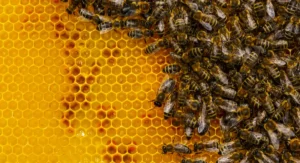
Honey bees crawl on a honeycomb

Honey bees are found all over the nation and pollinate more than 100 types of crops. They often build their nests in tree crevices, but will occasionally build nests in attics or chimneys. They are most visible in summer and late spring when new queens leave their old colonies along with thousands of workers to build new nests in tree hollows or crevices. At this time, large groups of bees can be seen swarming together to find a new nesting place. It takes a swarm approximately 24 hours to locate a new nesting site.

Honey bees can also be kept in an apiary, which is anywhere beehives are kept for honey production and honey bee conservation. Trained beekeepers ensure the honey bees remain healthy and productive while collecting the honeycombs they produce.

While most swarms are harmless, certain species of bees, like the Africanized honey bee, are extremely aggressive and may attack unprovoked.

Diet

Honey bees feed on nectar and pollen collected from flowering plants, collected using pollen baskets. These are small structures on the hind legs of the honey bees. Nectar provides them with carbohydrates for energy. The pollen supplies essential proteins and nutrients needed for growth and development.

The collected nectar is processed into honey, which serves as a food source for the colony during colder months when flowers are scarce. Honey bees also sustain themselves on bee bread, a combination of bee pollen, nectar, and saliva. Larvae and queen bees are also fed royal jelly, a milky substance made from pollen which is secreted through glands in their heads. Worker bees play an important role in gathering these resources to sustain the hive.

Life Cycle

The honey bee life cycle consists of four stages: egg, larva, pupa, and adult. A queen lays eggs in individual wax cells in the hive, and depending on the diet fed to the larvae, they develop into workers, drones, or queens. Worker bees live for approximately six weeks during peak foraging season, while queens can live for several years. Drones, whose primary role is to mate with queens, die shortly after mating. The cycle continues year-round in warmer climates like Florida, with peak activity occurring in spring and summer.

Behaviors

Africanized honey bees and European honey bees are two of the most common species of bees found in Florida. The Africanized bees are much more aggressive. Honey bees are highly social and organized insects. Worker bees perform specific tasks such as foraging for food, caring for the young, and protecting the hive.

Honey bees make use of ocelli – three eyes on their head that can only detect light – to orientate themselves towards the sun and navigate. They communicate through movements known as the “waggle dance,” which helps other bees locate food sources. Honey bees also release pheromones through multiple glands to communicate and help recruit bees to the hive.

They are most active during the day and return to their hives at night. During swarming, honey bees temporarily group together while scouting for a new nest location. Despite their cooperative nature, honey bees will defend their colony if they feel threatened.

Are Honey Bees Dangerous?

As with the mud dauber wasp, honey bees can sting but are unlikely to do so. Only female bees are capable of stinging and are not likely to sting when foraging for nectar and pollen in the backyard. They can also only sting once. Bee stings generally happen when these docile bees are provoked or accidentally crushed. The stinger of the honey bee, having barbs, will remain in the skin unless physically removed.

Removing the stinger as quickly as possible is the most important thing. The method of removing the stinger, either grasping with fingers, tweezers, or scraping from the skin, is up to the individual. Honey bee stings are quite painful and even life-threatening to a small percentage of people who are allergic to venom. If a honey bee nest is suspected on your property, it is always best to contact a professional bee removal company like Florida Pest Control.

How to Get Rid of Honey Bees?

The safest and most effective way to remove honey bees is to contact a professional bee removal service. Experts can safely relocate the bees and their hives without causing harm to the colony. Attempting to remove bees yourself can be dangerous and may provoke the hive. Avoid using pesticides, as they are harmful to honey bee populations, which are essential pollinators. If you notice a nest on your property, keep a safe distance and refrain from disturbing the bees.

Honey Bee Prevention Tips

To prevent honey bees from nesting on your property, seal cracks and crevices in walls, chimneys, and attics. Remove potential nesting sites such as hollow trees or unused equipment. Planting flowers at a distance from your home can encourage bees to forage away from living spaces. Regularly inspect your property for signs of bee activity and address any infestations promptly by contacting a professional.

Need Help With Bees, Wasps, or Hornets?

If you’re dealing with honey bees, wasps, or hornets on your property, Florida Pest Control can help. Contact us today for professional pest control solutions tailored to your needs.

FAQs

Can honey bees sting?

Yes, honey bees can sting, but only female worker bees are capable of stinging. Honey bees usually sting when provoked or threatened. After stinging, the bee’s barbed stinger remains in the skin, and the bee dies shortly afterward.

Are honey bees endangered?

Honey bees are not officially endangered, but their populations face significant threats from habitat loss, pesticides, climate change, and diseases like colony collapse disorder. Efforts are being made globally to protect and support honey bee populations.

Why do honey bees swarm?

Honey bees swarm when their colony becomes too large for its current hive. This natural process allows the colony to split, with the old queen bee and a group of worker bees leaving to establish a new nest. Swarms are often seen in spring and early summer.

Are honey bees native to North America?

No, honey bees are not native to North America. European settlers brought them over in the 17th century. Native bees, such as bumblebees, have coexisted with honey bees since their introduction.

Are honey bees aggressive?

Honey bees are generally docile and not aggressive unless provoked or their nest or hive is threatened. They are focused on foraging for nectar and pollen and rarely sting unless they feel endangered.

Ground Beetle

Ground Beetles in Florida

Ground beetles make up one of the largest groups of beetles in North America, with more than 2600 species. They are a common beetle species in Florida and an important natural predator in pest control. These beetles are part of the Carabidae family (which includes many species, such as Calosoma, Carabus, and Agonum) and contribute to biological control, helping to reduce pest populations. They are very common outdoor insects that occasionally become pests by wandering into houses and buildings by mistake.

What Do Ground Beetles Look Like?

Most ground beetles are shiny, black or brown, and sometimes iridescent. Because they are both dark and move quickly, they are often mistaken for cockroaches. 

However, ground beetles are harmless, while cockroaches  can cause bigger problems. 

Ground beetles vary in size, usually 0.5 to 1 inch long. They have metallic or iridescent bodies; some species have shiny elytra (wing covers). Ground beetle larvae (baby beetles) are smaller and look different from the adults. These larvae have mandibles to hunt and feed on other insects.

Signs of a Ground Beetle Infestation

If you have a ground beetle infestation, you may see live beetles in and around your home, especially near windows or doors. Once inside, they might be found in soil or around weed seeds. 

Adult ground beetles are mostly active at night and prefer dark places. During the day, they hide in cracks, crevices, or under debris. You might also spot ground beetle larvae, which feed on smaller pests inside your home.

Habitat, Diet, Life Cycle & Behaviors


Where Do Ground Beetles Live?

Ground beetles are commonly found outdoors under objects such as wood, logs, rock, and other debris on the ground. During the summer, in many parts of the country, ground beetles appear in tremendous numbers. They feed mostly at night and are attracted to porch lights and other exterior lights.

Ground beetles can become an annoyance by crawling into homes and buildings through small cracks or openings, or through open doorways and windows. Once inside, they can be found in hidden, damp areas in the basement or under boxes or other objects on the floor.

Diet

Outdoors, ground beetles are actually considered beneficial because they feed on insect larvae. They play an important role in controlling pests by feeding on insects that damage plants, like caterpillars, slugs, and aphids. This makes them beneficial for gardens and agricultural crops, where they help protect plants from harmful pests.

Ground beetles are also active hunters as larvae. The larvae feed on small insects, including aphids, which helps reduce the number of pests in the environment. This hunting behavior makes them excellent for biological control, as they naturally keep pest populations in check outdoors.

Some species of ground beetles even eat weed seeds, helping to control unwanted plants!

Life Cycle

A ground beetle life cycle includes four main stages: egg, larva, pupa, and adult. 

Females lay eggs in the soil, where the ground beetle larvae hatch. The larvae hunt small insects and grow quickly.  As they grow, the larvae molt through several instars, becoming larger and stronger. After feeding for several weeks or months, the larvae enter the pupal stage, where they finally become adult ground beetles.

This cycle can take anywhere from a few weeks to several months.

Behaviors

Ground beetles are most active at night and prefer dark, moist environments. As predators, they use their sharp mandibles to capture and eat other insects, such as slugs and aphids. These beetles are fast and skilled hunters, chasing down their prey quickly. 

However, during summer, ground beetle infestations inside a home or commercial building can be overwhelming for any property owner. 

Are Ground Beetles Dangerous?

Although certain species’ of ground beetles (like Pterostichus and Calosoma) are effective predators outdoors, these beetles do not damage household structures or furniture and are harmless to people and pets. When exposed, ground beetles move quickly to find shelter but rarely fly. Although certain species have been known to release odorous secretions when threatened, none will bite or attack humans.

How to Get Rid of Ground Beetles?

If you’re dealing with a ground beetle infestation, the best and most effective way to get rid of ground beetles is by contacting our professional pest control experts. Our experts use insecticides, traps and other biological control methods to eliminate both adult ground beetles and their larvae from your home. 

Experts will also help address any entry points, like cracks in walls or foundations, to ensure these beetles don’t return.

Contact Florida Pest Control for help with getting rid of ground beetles today.

Ground Beetle Prevention Tips

Preventing a ground beetle infestation is easier when you take early steps. Here are a few tips to help keep them out of your home:

  1. Seal entry points: Check for cracks or gaps in windows, doors, and around your home’s foundation, and seal them properly to keep beetles from getting inside.
  2. Remove debris: Ground beetles hide under rocks, logs, and other debris. Keep your yard clean and remove piles of leaves or wood near your home.
  3. Limit outdoor lighting: Beetles are attracted to light, so use yellow bulbs or keep outdoor lights off during the evening to avoid drawing them near your home.
  4. Maintain your garden: Since ground beetles thrive in gardens, regularly clear out dead plants and excess weed seeds.

For the best prevention, talk with Florida Pest Control. Our beetle control experts can assess your property and suggest long-term strategies tailored to your needs.

Do You Have a Ground Beetle Infestation Problem? We Can Help.

If you are dealing with a ground beetle infestation, always contact your local beetle exterminators. Florida Pest Control has the expertise to quickly and effectively remove ground beetles and other pests from your home.

FAQs

Do ground beetles bite?

No, ground beetles do not bite humans. While they have strong mandibles for hunting other insects, they are harmless to people and pets.

Do ground beetles fly?

Some ground beetles can fly, as they have functional wings under their elytra (wing covers). However, most prefer to stay on the ground and rarely take flight.

Are ground beetles harmful to plants?

No, ground beetles are not harmful to plants. In fact, they are beneficial because they prey on pests like aphids and caterpillars that can damage crops and gardens.

How long do ground beetles live?

Ground beetles typically live for about a year. Their life span includes four stages: egg, larva, pupa, and adult, with adults often living several months.

What are ground beetles attracted to?

Ground beetles are attracted to moist environments, lights, and places with plenty of prey, like gardens or soil rich with insects. They may also enter homes seeking shelter.