

Rats are known to spread disease, damage property, and contaminate food. If they gain entry to your home or business, they can cause an infestation and introduce other unwelcome parasites, such as fleas, lice, and ticks.
Taking action at the first sign of an indoor rat can reduce the time needed to control a looming infestation. Understanding how to prevent rats is key to stopping them before they become a problem. Below, we look at the causes of a rat infestation, signs of rats in your home, and offer some prevention tips.
How Rats Get into Your Home
Rats can find their way into your house through any external opening in your roof, doors, or siding, and can squeeze through a hole the size of a quarter. If that doesn’t work, they have very strong teeth to gnaw on the opening to make it larger. It can be difficult to get rid of rats once they are in your home. If not controlled right away, it only takes a couple of rats to quickly breed and create an infestation, at which point you’ll need a professional to eliminate it and prevent it from spreading further.
Places Rats Like in Your Home
Rats love to make your house their home, both inside and outside. They can make any space a nest utilizing your leftover scraps. Black rats love to nest in attics and lofts, whereas brown rats make their nests under your deck or in any crawl space.
Kitchens and Pantries
Kitchens and pantries are prime locations for rat activity. You might notice chewed food packaging and small droppings in cabinets, where products are stored, or behind appliances.
Attics and Roof Spaces
Rats often seek shelter in attics and roof spaces, especially during colder months. In these areas, you may hear scratching or scurrying sounds, particularly at night when rats are most active. Look for nests made of shredded loft insulation, paper, or fabric, as rats gather soft materials to build nests.
Basements and Crawl Spaces
These low-traffic areas give rodents a quiet place to nest away from humans and predators, while gaps in foundations, vents, and plumbing lines provide easy entry points. Crawl spaces, in particular, tend to trap humidity and provide access to insulation, wood, and stored materials that rats use for nesting, as well as moisture and hidden food sources. Combined with Florida’s warm, humid climate, these spaces create the ideal harborage for rats to thrive year-round.
Signs of a Rat Infestation in Your Home
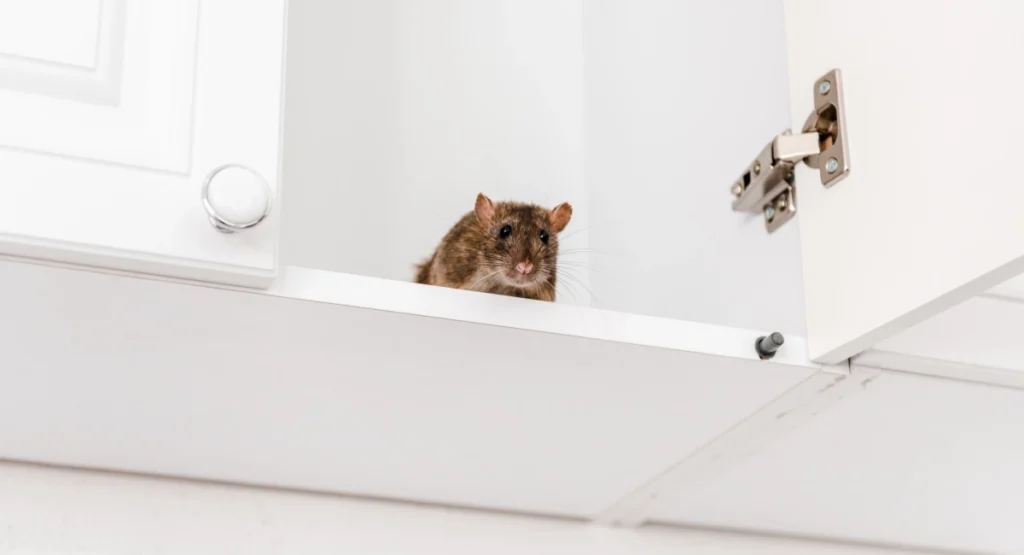
The most obvious sign of rats in your home is finding a live or dead rat. They typically stay out of sight, so seeing one out in the open is usually a good indication that the nest became overpopulated, leading to a migration into your home. Below, we highlight the main signs of a rat infestation in and around your property.
Rat Droppings
Rat droppings are usually found in concentrated areas as they produce up to 40 droppings per night. Brown rat droppings are dark brown and tapered, spindle-shaped, about 12mm – 19mm long. They can resemble a large grain of rice. Black rat droppings can be up to half an inch long and are capsule-shaped. Rat droppings can carry pathogens that can transmit diseases, such as Hantavirus, to humans.
Noises
Are you hearing noises on your roof? Black rats are agile climbers, which is where they get their common name: the roof rat. Hearing scratching noises on your roof is typically a sign of this pest, as black rats can easily gain access into attics, loft spaces, and upper floors of buildings.
Brown rats, on the other hand, are less adept climbers. You may hear them scurrying under your decking, sheds, or floorboards. They are more likely to be identified by a grinding noise they make with their teeth, known as bruxing.
Footprints
It is common to see footprints and tail marks in dusty, less-used areas of buildings. Shining a strong flashlight at a low angle should reveal any rat tracks. To determine whether an infestation is active, sprinkle fine flour or talc along a small stretch of the floor near the footprints and check for fresh tracks the next day.
Rub Marks
Rats use established routes along baseboards and walls due to their poor eyesight. Grease and dirt on their bodies leave smudges and dark marks on the objects and surfaces they repeatedly brush against.
Gnaw Marks
Rats have continuously growing teeth, so they need to gnaw on wood, metal, or concrete to keep them trimmed. You may notice ripped food packaging, as they tear open food, leaving visible teeth marks. They also have the potential to cause fires by chewing through electrical cables.
Rat Nests
Rats build nests in warm, hidden places using shredded material such as newspaper and fabric. Nests will often contain their young and are usually located close to a food source. You may find a nest in your kitchen or laundry room behind or under appliances. They can also be found in lofts, attics, under eaves, and even in cavity walls.
Rat Holes
Brown rats are well known for digging and excavating extensive burrow systems for shelter, food storage, and nesting. Look for burrows in compost heaps, under decking or garden sheds, or in garages.
Smells
One of the telltale signs of a rat infestation is a strong, musty odor. Rats leave behind droppings, urine, and nesting materials, all of which emit an unpleasant scent that may permeate the area they inhabit. In enclosed spaces or areas with poor ventilation, this smell can become especially noticeable and persistent.
Pet Behavior
Cats and dogs have keen senses and may become noticeably more alert or anxious around areas where rats are active. Pets might scratch at walls, floors, or specific spots they don’t normally focus on. A dog’s barking, or a cat’s stalking behavior near the same area, could be a sign they’ve detected rats moving or nesting nearby.
Florida Pest Control Can Help with Your Rat Problem
If you think you have a rat-infested house, it is important to act quickly to control the infestation and reduce the health risks posed by these rodents.
At Florida Pest Control, our qualified local specialists are supported by advanced technology and product innovation. We can provide the most effective services to eliminate rats. We can also advise you on how to deter rats and avoid a rat infestation in your home or business.
Learn more about the common types of rats in Florida.